
Huawei provides AI to monitor white-headed langur conservation in Guangxi
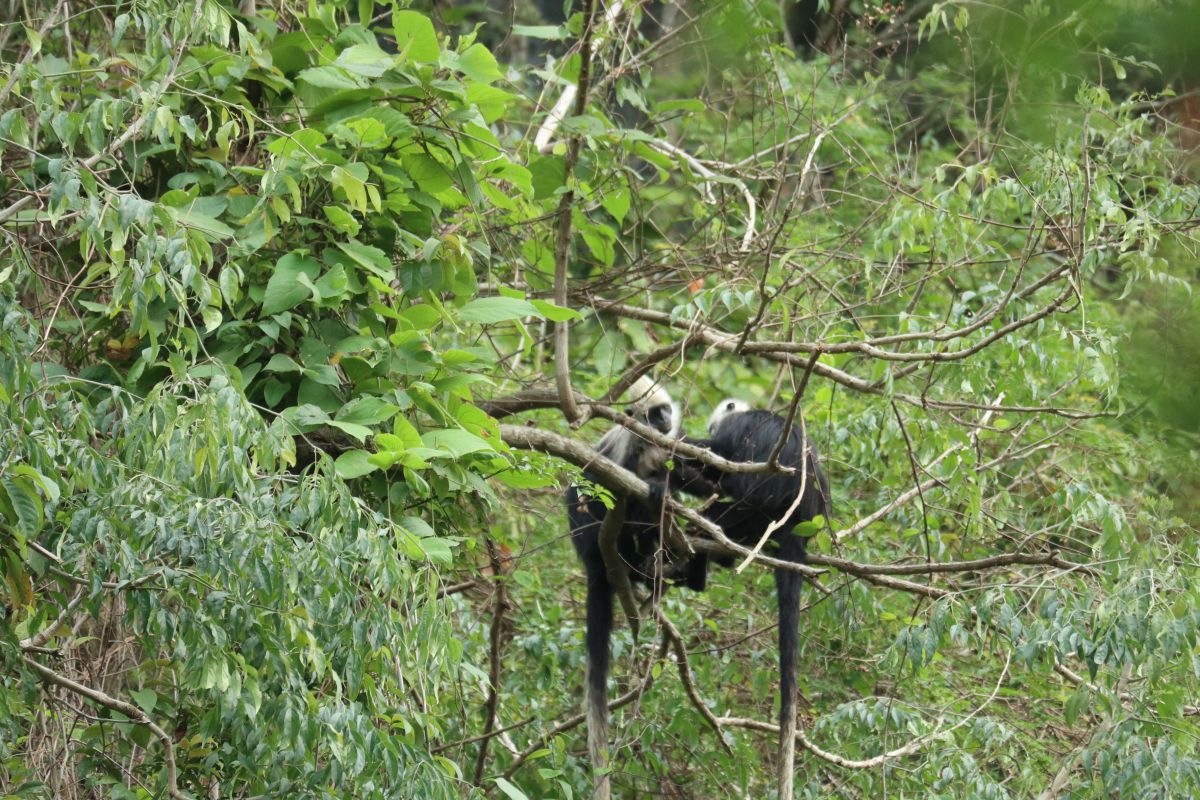
Beijing (ANTARA) - Chinese technology company Huawei is providing an artificial intelligence (AI) system to support the protection of white-headed langurs in the Chongzuo National Nature Reserve, Guangxi Zhuang Autonomous Region.
The white-headed langur (Trachypithecus leucocephalus) is an endemic species found only in Chongzuo, Guangxi, and is critically endangered, even rarer than the giant panda, with a current population of 1,300-1,400 individuals, 90 per cent of which are in the 256-square-kilometre Chongzuo Guangxi White-headed Langur National Nature Reserve.
“White-headed langur conservation involves close collaboration between the government providing formal legal protection, academics providing empirical data, and technology provided by the private sector. Digital technology enables more precise observation of langurs in conservation areas, allowing for better protection,” said Nong Dengpan, Director of the Chongzuo Guangxi White-headed Langur National Nature Reserve, in Chongzuo on Friday (27/3) local time.
The white-headed langur is a “distant relative” of the Javan langur (Trachypithecus auratus), which migrated north during the ice age to the karst (limestone) region of Guangxi, using caves in steep cliffs as sleeping and shelter spots, earning it the nickname “mountain stone fairy”.
These langurs live in family groups of 5-30 individuals, typically consisting of one dominant male, several adult females, and their offspring. The species’ rarity stems from their strict matrilineal society, which prohibits inbreeding, requiring young males to leave their group to form new families elsewhere, while the original group must bring in males from outside for breeding.
In the reserve, there are special groups of strong young males who often challenge the dominant male leading a family group.
As folivores, they particularly favour leaves from plants such as orange jasmine, Chinese chestnut, kapok tree, and paper mulberry. Their lives are highly regimented: foraging in bushes at the base of cliffs in the morning, resting in caves or trees during the day, and returning to caves at night.
However, to address the challenges of rugged karst terrain and difficulties in traditional patrols and monitoring, the Chongzuo Nature Reserve has partnered with Huawei and the China-ASEAN Artificial Intelligence Application Cooperation Centre to develop an intelligent monitoring “platform” powered by AI computing.
Thanks to video-based animal monitoring devices installed along the cliffs, the system can collect real-time data on langur distribution, surrounding environmental conditions, and activity patterns.
Under the framework of the Chongzuo White-headed Langur Habitat Protection Regulations established by the central government, 77.6 hectares of land have been restored as langur habitat, two drinking water sources and 18 drinking points for langurs have been built, and two ecological corridors.
As a result, the white-headed langur population has now increased to more than 1,400 individuals spread across 130 groups, up from 300 in the 1980s.
“Early monitoring with cameras in 2016 used cables or optical fibres running along the edges of agricultural land, so sometimes local people intentionally or unintentionally cut the camera cables, but that hasn’t happened again recently because the surrounding community also benefits from the reserve through increased tourist numbers, which boosts their economy,” Nong explained.
Nong acknowledged that the collaborative model between government, academics, and the private sector in the reserve represents an ideal approach that could also be applied in Indonesia.
“In the 1990s, China prioritised development while environmental conservation was a secondary priority, but with improving economic quality, we now have the capacity to support environmental conservation, so I believe government support is primary in conservation, both in terms of legality and funding,” Nong stated.
However, with the rapid advancement of science and technology in China, especially in recent years, including AI and the application of “big data”, these have become very helpful in protecting rare animals.
Meanwhile, Tian Yongsheng, Deputy General Manager of Huawei Guangxi, said the company collaborates with global partners to support ecosystem conservation by leveraging digital technologies such as 5G, cloud computing, and artificial intelligence.
“The success of this white-headed langur project demonstrates the great value of artificial intelligence in processing complex geographic data and the vast volume of species data. Huawei will continue to use innovative technology to protect biodiversity and promote harmonious coexistence between humans and nature,” Tian said.
By the end of 2025, Huawei’s digital inclusion projects for environmental protection will have been implemented in 65 protected areas worldwide. These projects significantly enhance the efficiency of biodiversity conservation as well as the sustainable utilisation and management of natural resources.