
Huawei Expands 1,500 kW Charging System in China
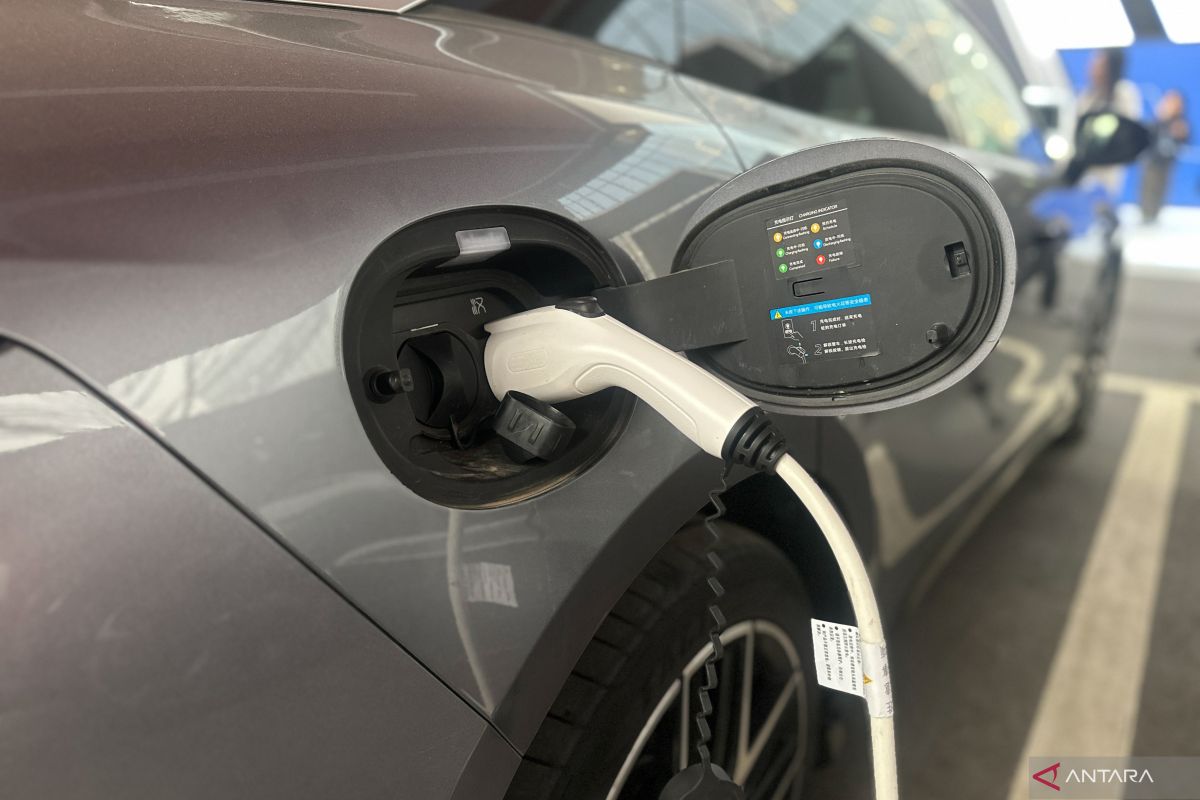
China (ANTARA) - Huawei’s 1,500 kW megawatt charging system was first introduced in 2025 as a high-power solution for heavy vehicle electrification scenarios with high utilisation rates. The system supports a peak output of up to 1,500 kW and a current of 2,400 A, enabling the charging of approximately 300 kWh batteries in around 15 minutes under certain operating conditions. By 2026, the system is no longer positioned as a new product but as part of a broader implementation strategy focused on deployment scale and infrastructure integration. According to Carnewschina’s report on Sunday, at the ongoing Beijing Auto Show 2026 in Beijing, China, Huawei Digital Energy unveiled that its charging system integrates solar power coordination for storage and charging to improve grid utilisation and enable more flexible deployment across various infrastructure conditions. This architecture combines photovoltaic generation, energy storage, and charging infrastructure to reduce peak load pressure and support more stable station operations. For passenger electric vehicles, Huawei has introduced an upgraded ultra-fast charging terminal supporting outputs of up to 800 A. For high-load corridors and commercial usage, systems in the 1,000 kW class and above are deemed suitable for logistics centres and high-throughput charging environments. This separates charging needs from direct grid supply, allowing faster station construction in areas with weaker electrical infrastructure. Huawei’s infrastructure-based approach differs from the rapid charging strategies for passenger electric vehicles by other Chinese players. BYD’s Flash Charging 2.0 integrates high-speed battery chemistry with peak charging power of up to 1,500 kW, enabling charging from 10 per cent to 70 per cent in about five minutes under certain conditions. Meanwhile, CATL’s Shenxing focuses on battery-level innovations, claiming the system can achieve a full charge in around six minutes when paired with compatible charging infrastructure. In contrast, Huawei’s system prioritises infrastructure scalability, multi-vehicle compatibility, and grid buffering over battery-side integration. Megawatt-level charging is increasingly developed alongside advancements in battery chemistry in China. Passenger electric vehicle systems target charging times under 10 minutes, while infrastructure providers focus on grid stability, implementation speed, and multi-scenario applications. According to China EV DataTracker, electric vehicle battery installations in China reached 124.8 GWh in the first quarter of 2026, down 4.2 per cent year-on-year. LFP batteries accounted for 99.1 GWh (79.4 per cent share), while ternary NMC batteries reached 25.8 GWh (20.7 per cent share), indicating the continued dominance of LFP chemistry in fast charging and mass electric vehicle adoption. EV Charging Stations in Indonesia For information, in Indonesia, the available electric vehicle charging infrastructure currently operates at relatively lower power levels and focuses on network expansion. Generally, public electric vehicle charging stations (SPKLU) provide AC charging of around 7–22 kW for normal charging at homes or public facilities, while DC fast charging is in the range of about 25–50 kW, and some locations now offer ultra-fast charging reaching around 100–150 kW or more. With this configuration, charging times vary, from about 4–8 hours for a full AC charge, around 30–60 minutes to reach 80 per cent on fast charging, to approximately 15–45 minutes on ultra-fast charging, depending on battery capacity and available power.