
HSBC Group CEO: Business Security Amid Turbulence (1/2)
The global economy is experiencing turbulence, a situation characterised by disruption resulting from unpredictable and uncontrollable change. Where lies business security?
The landscape of the global economy today is increasingly coloured by uncertainty. Escalating geopolitical tensions in the Middle East and fragmentation of international trade are driving further complications.
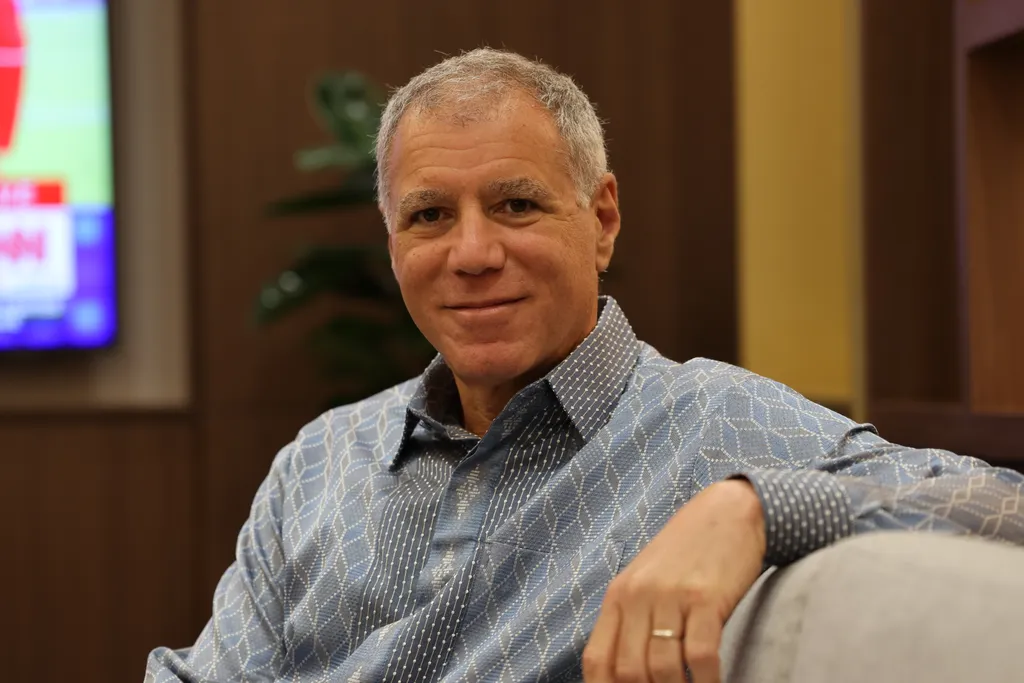
Amidst this universally challenging situation, what is Indonesia’s position, and what are its challenges and opportunities? To answer these questions from an external perspective, Kompas newspaper interviewed HSBC Group CEO Georges Elhedery at the HSBC Wealth Centre building in Jakarta on Thursday, 12 March 2026.
A number of themes were explored, including trends in the global economy and their impact on ASEAN and Indonesian markets, Indonesia’s role in the current landscape, the role of international banks in driving regional growth, and the future of banking.
The interview results are presented in two parts in question-and-answer format. The following is the first part.
How was HSBC Group’s performance in 2025 and what are its main priorities going forward?
2025 was an excellent year. We recorded pre-tax profit of $36 billion. Our revenue grew approximately 5 per cent year-on-year, so our revenue has grown for two consecutive years in 2024 and 2025.
Additionally, we have also achieved a return on tangible equity (ROTE), excluding significant items, above 17 per cent. This represents one of our best tangible equity returns since the financial crisis, and possibly exceeding that.
We are very satisfied with the progress we have achieved. Over the past 18 months, we have focused on our strategic strengths. Many decisions we have made have borne fruit. Shareholders have also shown appreciation for this as our share price performance has reflected.
Going forward, we have also set targets, particularly in increasing revenue annually over the next three years to achieve 5 per cent growth by 2028. Additionally, we have set a target return on tangible equity of 17 per cent or higher through 2028.
This is very important because we have achieved a level of confidence in our business, resilience in our business, and clarity regarding the direction of our business. This gives us space to prepare various scenarios whilst maintaining confidence to achieve these targets.
What is HSBC’s strategy for the Asia region?
We have been the leading international bank in Asia for 161 years. In Indonesia, we have operated for 142 years. As a leading international bank, our mission in Asia is to connect the various economies of nations with one another and with the world.
We are the primary connector between international investment and each country where we operate in Asia, including outbound investment. We are also the world’s trade bank. All of this essentially emphasises our strength in Asia as a connector.
Over the past several decades, the Asia region has benefited significantly from investment through its relationship with the United States and Europe. However, from our observation over the past 4-5 years, a rapidly developing trend has emerged: trade amongst Asian regional countries.
This trend is also bringing flows of investment between countries in the Asia region. If you look at China, Hong Kong and Singapore, 60 per cent of their direct investment flows of $55 billion have entered Indonesia. Now, Asia has become an important player in Indonesia’s growth.
And we are strengthening that position. We are investing in resources, capabilities, human resources, and technology, because this is truly structurally important for our growth. As you mentioned, the economy is becoming increasingly Asian.
Amidst geopolitical instability and the US-China trade war, how do you view the economies of Asia, particularly Indonesia?
The Asia region, including Indonesia, holds a position as a connector to the world economy, regardless of existing fragmentation. Moreover, Indonesia is the country with the largest economy in ASEAN. Its relationship with Singapore, with other ASEAN countries, and including with China, is also very important.
Furthermore, Indonesia also has historical relationships with India and countries in the Middle East, including Saudi Arabia. On the other hand, the Indonesia-US relationship through recent trade agreements reflects how open Indonesia’s economy is to the US.
In the short term, if the situation deteriorates further, we prioritise the safety and security of our partners and how we meet the pressing needs of our customers.
Regarding the Middle East, our strategy for countries in the Gulf Cooperation Council (GCC) remains unchanged. We remain committed to serving the needs of our customers and business partners in the GCC, and we continue to view the GCC as a long-term partnership contract.
In the short term, if the situation deteriorates further, we prioritise the safety and security of our partners and how we meet the pressing needs of our customers. However, in the medium to long term, we still see growth opportunities in all GCC relationships and in Indonesia.
How is the impact of business diversification due to the US-China trade war affecting investment in Southeast Asia?
The strategy of operational diversification or investment outside China, or the China Plus One strategy, is influenced by several factors. Beyond being driven by US-China trade tensions, countries are increasingly recognising the importance of supply chain resilience following disruptions caused by the Covid-19 pandemic.
Following the major shock of the Covid-19 pandemic, the ASEAN region has now become the primary beneficiary of business diversification as a strategy to strengthen supply chains. This is for two reasons.
First, several importers, particularly the United States and some European countries, have found ASEAN to be a location where they can diversify their supply chains.