
How to Lower Decile in the Bansos Check Application, How Long Does the Change Process Take?
Deciles, as welfare data for society in the social assistance system of the Ministry of Social Affairs (Kemensos), can change according to the latest economic conditions for each family. Therefore, data on social assistance recipients is not always fixed and can be updated if discrepancies are found.
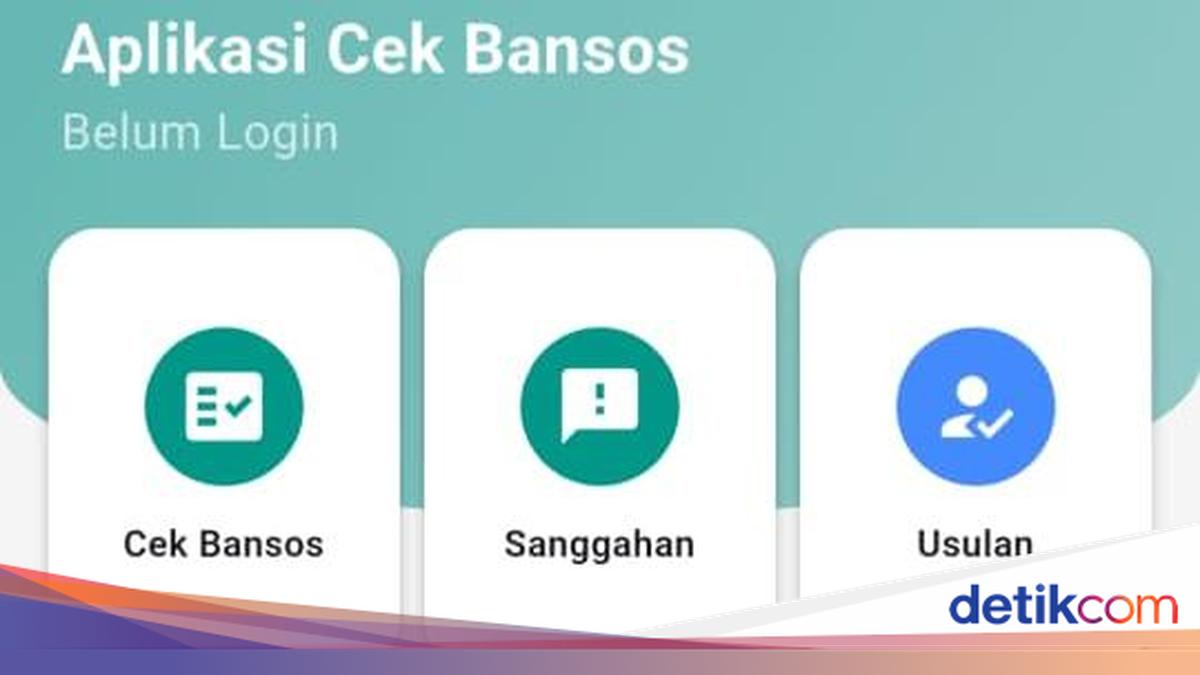
According to Kemensos, deciles are dynamic and can change based on societal economic conditions. If the data is deemed inaccurate, the public can update it through various methods provided, one of which is the Cek Bansos application.
For those wishing to lower their decile in the Cek Bansos application, it is necessary to understand the submission process, as changing decile data involves certain stages and adjustment times before the results are finalised. Here is how to lower the decile in the Cek Bansos application along with an estimate of the change process duration.
What is a Decile?
Referring to information from the Kemensos Bansos website, a decile is a group of family welfare measured based on various socioeconomic variables. The assessment includes individual details such as employment and education, housing conditions like house condition and electricity capacity, and family asset ownership. This decile is then listed in the National Single Social and Economic Data System (DTSEN), which serves as the basis for determining social assistance recipients.
Decile Division in DTSEN
Based on Kemensos’ explanation via the Instagram post @pusdatinkesos, the decile division in DTSEN is used to depict the welfare level of society. The decile division in DTSEN is based on several criteria, namely assets owned, house condition, education, employment, and number of members.
Deciles are divided into 10 groups, each representing 10% of families in Indonesia. In this system, decile 1 is the group of families with the lowest welfare level, while decile 10 is the group with the highest welfare level.
Although generally there are deciles 1 to 10, in determining social assistance recipients, the most commonly used are deciles 1 to 5. Referring to the Karang Sari Village website in Gunung Kidul, here is the detailed decile division in DTSEN.
Decile 1: Very poor group with the lowest economic condition. Characteristics include no stable employment, uncertain income, and difficulty meeting basic needs.
Decile 2: Poor group with low income and highly vulnerable to economic changes.
Decile 3: Near-poor group not classified as extreme poor, but at risk of falling into poverty.
Decile 4: Poverty-vulnerable group with relatively stable economic conditions but still susceptible to impacts from disasters, severe illness, or sudden income drops.
Decile 5: Break-even group that generally has stable employment and sufficient income, but economic conditions remain limited.
Decile 6: Lower-middle group considered sufficiently prosperous with stable income and relatively safe from poverty risks, thus not prioritised for regular social assistance.
Deciles for Kemensos Social Assistance Recipients
Deciles are used as the basis for determining targets for government social assistance. In implementation, families in the lowest deciles become the priority for various social assistance programmes.
Kemensos stipulates that the decile 1 to 4 group or the bottom 40% of society are the priority recipients of social assistance such as the Family Hope Programme (PKH) and Sembako Programme. Meanwhile, those in decile 5 still have the opportunity to participate in PBI-JK according to applicable provisions.
Here is the detail of deciles for Kemensos social assistance recipients.
Deciles 1-4: Priority recipients of PKH and Sembako Programme social assistance
Decile 5: Still eligible to become PBI-JK participants
Deciles 6-10: Not prioritised for regular social assistance
How to Check Decile
To find out which decile group you belong to in the DTSEN system, you can check it independently and online via the official Kemensos website. The steps to check decile are as follows.
Open the Kemensos cek bansos page at https://cekbansos.kemensos.go.id/
Enter the 16-digit NIK as stated on the ID card.
Type the 4-letter code (captcha) provided.
If the code letters are unclear, click the refresh button.
Click the “Search Data” button.
The system will automatically display the decile group owned.
In addition to the Kemensos cek bansos website, you can also check the decile via the Cek Bansos application from Kemensos. In this application, click the “Profile” menu to find out the decile group registered in DTSEN.
How to Lower Decile in the Cek Bansos Application
Quoted from Kemensos information, the public can propose data updates if the listed decile is deemed not in line with actual economic conditions. Such update submissions can be made through the Kemensos Cek Bansos application.
Here are the steps to propose lowering the decile via the Cek Bansos application.
Download the Kemensos Cek Bansos application via Play Store or App Store
Log in using the registered account.
If you do not have an account yet, select the new account registration menu first.
Complete the requested data starting from KK number, ID card photo, to selfie to create an account.
After the account is successfully created, log in again using the registered username or email and the password created previously.
Select the “Profile” menu on the main application page.
Click the “Request Data Update” button below the decile display.
Click “Continue” on the update confirmation notification and agree to the data accuracy statement.
Fill in all questions according to the actual economic conditions on the ground.
After the submission is sent, social companion officers will conduct ground checking or direct verification to the home.
How to Lower Decile at the Subdistrict
Although the process of proposing decile lowering can be done independently via the Cek Bansos application, the public can also propose decile changes through other methods, namely submitting proposals a