
How to Check Your Decile Without an App, Simply Use Your ID Card Number and Access This Social Assistance Link
In the distribution of social assistance (bansos), only certain groups of people receive it, and one of the determining factors is the decile. Interestingly, people can now check their decile without using an application. Here’s how.
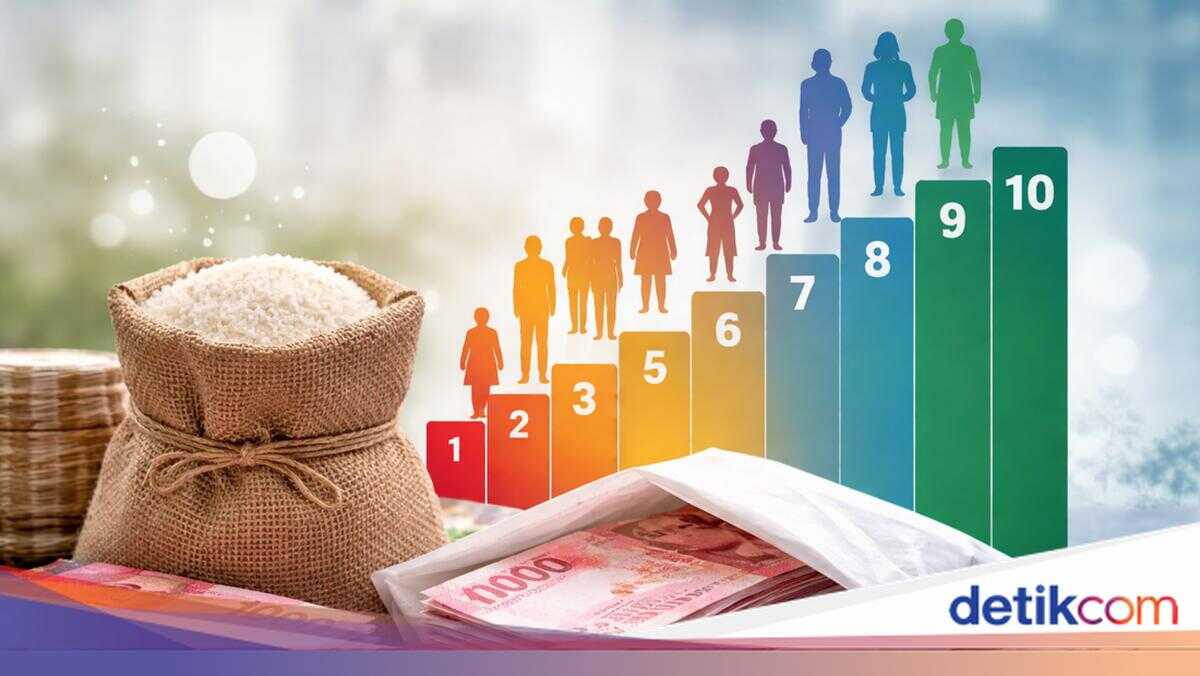
What is a decile? In short, a decile is a measure used by the Ministry of Social Affairs (Kemensos) to divide the population into 10 groups or categories based on their respective levels of economic welfare.
Within the decile system, there are 10 different levels, where a higher level indicates a more prosperous group. Conversely, a lower decile level indicates a group that is a priority for receiving assistance from the government, which in this case is distributed through the Ministry of Social Affairs of the Republic of Indonesia.
To find out which decile you belong to, there is a simple and practical way to do it. You don’t need to use an application; you can check it independently through the official website provided by the Ministry of Social Affairs of the Republic of Indonesia. Here’s the information.
Key Points:
People can check their social assistance decile status and level directly through the official website of the Ministry of Social Affairs of the Republic of Indonesia at cekbansos.kemensos.go.id by entering their 16-digit ID card number, without having to download an application.
The decile is calculated based on various socio-economic indicators such as occupation, education, home conditions, electricity access, and asset ownership. The data is dynamic and can change according to the latest conditions.
Starting in the first quarter of 2026, recipients of the BPNT will be adjusted from Decile 1-5 to Decile 1-4, while PKH will remain at Decile 1-4, to sharpen the targeting and prioritize the poorest families.
How to Check Your Social Assistance Decile Without an App
Unlike previous social assistance checks, which only showed whether the entered name was a recipient or not, the update on the official Cek Bansos Kemensos website allows you to find out your decile level. Simply access the official website and enter your 16-digit ID card number (NIK).
Automatically, the system will display the results, which include information about the decile level of the entered name. To make it easier, follow these steps:
First, visit the official Cek Bansos Kemensos website at https://cekbansos.kemensos.go.id/.
Then, enter the 16-digit NIK in the column provided. Make sure that each number entered is correct according to your ID card.
Next, fill in the letter code in the column that appears on the screen.
Then, select the Search Data option.
Automatically, the system will display the search results, which will show which decile you belong to.
Link to Check Your Social Assistance Decile Using Your ID Card Number
After reviewing the steps above, it’s time to try it yourself. Click the link below to check your social assistance decile using your ID card number:
== > Check Your Social Assistance Decile Using Your ID Card Number < ==
How is the Social Assistance Decile Determined?
As one of the criteria for determining social assistance, some people may think that the decile level is based on salary. However, there are other aspects that the Ministry of Social Affairs of the Republic of Indonesia uses to determine the decile for each family in Indonesia.
According to a post on Instagram @kemensosri, the criteria for determining the decile are not only based on people’s income or expenses. In addition, various economic aspects are also considered in determining which decile each family belongs to.
“It should be remembered that the decile is not only calculated from salary or monthly expenses. If you have seen a decile table based on income on the internet, it is not correct! Because the decile is calculated from various socio-economic conditions. Starting from occupation, education, home conditions, electricity access, to asset ownership. And the decile is dynamic. This means that the data can change according to the latest conditions in the field,” the post said.
Changes in Decile Criteria for Social Assistance Recipients
In 2026, there will be changes in the decile criteria for the distribution of regular social assistance from the government. For information, regular social assistance from the government consists of the Family Hope Program (PKH) and Non-Cash Food Assistance (BPNT).
Previously, the decile criteria for social assistance recipients were outlined in the Decree of the Minister of Social Affairs of the Republic of Indonesia Number 79/HUK/2025. In the Fourth Clause, it is clearly stated that PKH recipients are families with Decile 1-4, while BPNT is for Decile 1-5. As stated in the clause:
“a. Recipients of the family hope program use decile groups 1 to 4;
- Recipients of the food program use decile groups 1 to 5;”
However, there are changes in the decile criteria announced by the Ministry of Social Affairs through one of its official social media accounts. Referring to another post on Instagram @pusdatinkesos, starting in the first quarter of 2026, the BPNT recipients will change. Initially, it was prioritized for families with Decile 1-5. However, starting in the first quarter of 2026, it will change to Decile 1-4.
“The Ministry of Social Affairs continues to make various efforts to ensure that social assistance is targeted correctly. In addition to continuously updating the National Socio-Economic Data and the Single Data with local governments and social pillars, the Ministry of Social Affairs is also increasingly sharpening the targeting of social assistance recipients. Recipients of the Food Program, which previously were in decile 1-5, will be changed to decile 1-4 so that social assistance recipients above decile 4 can be diverted to poor people in decile 1. Meanwhile, the criteria for recipients of the Family Hope Program (PKH) remain in decile 1-4,” the post said.
With these changes, the Ministry of Social Affairs of the Republic of Indonesia will also make adjustments to the distribution of social assistance. In the first quarter of 2026, there will be a transfer for families outside of decile 1-4 to those who are more deserving.