
How TikTok Shop Monopolises and Steals Delivery Couriers' Income
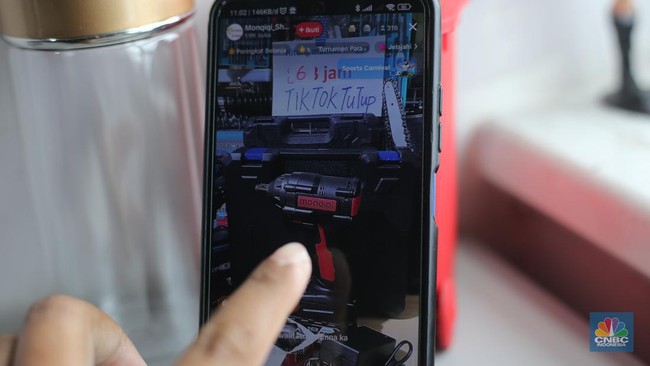
Jakarta, CNBC Indonesia - TikTok, through its shopping service TikTok Shop, has been accused of monopolistic practices in Indonesia’s e-commerce industry. The E-commerce Logistics Business Association (APLE) has reported findings of alleged monopolistic actions by the platform to the Business Competition Supervisory Commission (KPPU).
One of the findings is the alleged practice of vertical integration. This action is an effort to control market distribution from upstream to downstream.
APLE’s legal representative, Panji Satria Utama from Satya Law Firm, explained that TikTok initially was a social media platform for sharing short videos. The platform then evolved into a digital platform.
“TikTok now has a shopping feature that can be accessed either through the ‘basket’ column attached to videos circulating on TikTok’s homepage, or through the clearly displayed ‘shop’ column on the TikTok platform itself,” Panji told CNBC Indonesia on Tuesday (21/4/2026).
According to him, this practice contradicts existing regulations. One of them is Trade Ministerial Regulation No. 31/2023, Article 21 paragraph (3), which prohibits social media from facilitating payments.
In addition, they also assess there to be leniency in the practices carried out by TikTok, from being a social media to a digital buying and selling platform.
“Moreover, we assess there to be leniency that has been allowed by still ‘giving space’ to TikTok, which initially was only a social media platform, now it can be used as a digital buying and selling platform - even providing payment facilities,” he said.
TikTok is also suspected of monopolistic practices in courier services. It was found that consumers cannot choose courier services for delivering purchased goods.
“In other words, TikTok has engaged in discriminatory actions against some courier companies, because it only collaborates with certain courier services. Of course, this has the potential to cause monopolistic practices, as it closes opportunities for other courier services to enter and sell their services on the TikTok platform,” Panji explained.
TikTok is also suspected of engaging in predatory pricing practices. He gave an example that sellers on TikTok will sell at lower prices compared to those who are not.
This can impact sellers who suffer losses to the point of closing their businesses. Meanwhile, sellers on TikTok can become the sole player and potentially raise prices above market rates.
“This practice has the potential to cause unhealthy business competition practices. This has been explicitly regulated in Article 20 of Law No. 5/1999,” he stated.