
How the PRR Task Force Ensures Targeted and Effective Housing Assistance for Disaster Survivors
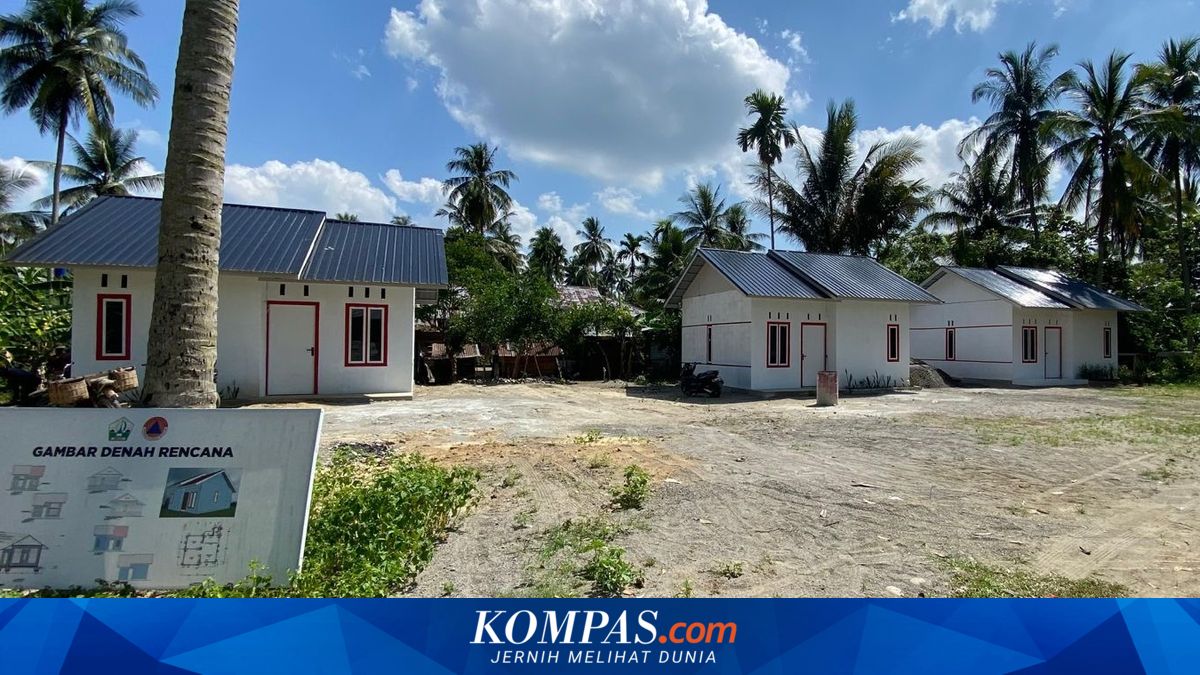
The Task Force for Accelerating Rehabilitation and Reconstruction (Satgas PRR) following the Sumatra disaster is ensuring that the distribution of housing assistance to survivors in Sumatra is both effective and targeted. This distribution is based on multi-layered verified data and schemes that align with community needs. Chairman of the Satgas PRR for the Sumatra Post-Disaster, Muhammad Tito Karnavian, emphasised that all government assistance for housing provision—whether temporary housing (huntara), permanent housing (huntap), or the distribution of housing waiting funds (DTH)—is carried out based on data collected by local governments and rigorously verified. “Data from local governments is verified by the Central Statistics Agency (BPS), which will determine whether the damage is light or moderate,” he stated in a press release received by Kompas.com on Tuesday (24/3/2026). According to Tito, this data-based approach is key to ensuring that aid is not misdirected, while also guaranteeing that every survivor receives the housing scheme most suitable to their condition and preferences. “If they want huntara, then huntara. However, if they choose to stay with family or rent, they will receive assistance from the National Disaster Management Agency (BNPB) of Rp 600,000 per month for three months,” Tito explained. Furthermore, Tito clarified that housing repair assistance is not provided uniformly but is adjusted according to the level of house damage. For lightly damaged houses, assistance of Rp 15 million is given, while for moderately damaged houses, it is Rp 30 million. Meanwhile, for houses that are severely damaged or lost, the government is preparing the construction of permanent housing. However, this assistance is disbursed in two stages to ensure funds are used appropriately. Another option is the construction of huntap. In its implementation, there are two main concepts: construction at the original location (in situ) and communal construction at relocation sites prepared by local governments (pemda). Both approaches are determined based on survey results and community choices. “Those who choose in situ will have their homes built on their land by BNPB. Meanwhile, those who choose to live in one area will have homes built by the Minister of Housing and Settlement Areas (PKP) on land prepared by pemda,” Tito revealed. To ensure data accuracy, Satgas PRR also encourages local governments to conduct direct surveys to affected residents’ homes. This data is then verified by the Central Statistics Agency (BPS) before the construction process begins.