
How Prepared is Indonesia to Face the Threat of Recession
In an increasingly interconnected global economy, the key question is no longer whether shocks will occur, but rather how prepared a country is to face them.
Jakarta (ANTARA) - In recent months, the probability of a recession in the United States has shown an increasing trend, approaching the psychological threshold of 50 percent.
This figure is not merely a technical statistic but an early warning signal that, over the past few decades, has proven to be strongly correlated with global economic slowdowns. However, recent developments indicate a more complex nuance: risks are indeed rising, but they have not fully entered “50:50” territory according to many market participants.
A report from Moody’s Analytics is even considered more pessimistic than the Wall Street consensus. On the other hand, modelling from Oxford Economics provides an important perspective: the world will only be pushed into the abyss of recession if oil prices surge to around 140 US dollars per barrel and remain there for at least two months. This means that a global recession is not an inevitability at present, but rather highly dependent on the intensity and duration of the shock, particularly from the energy and geopolitical sides.
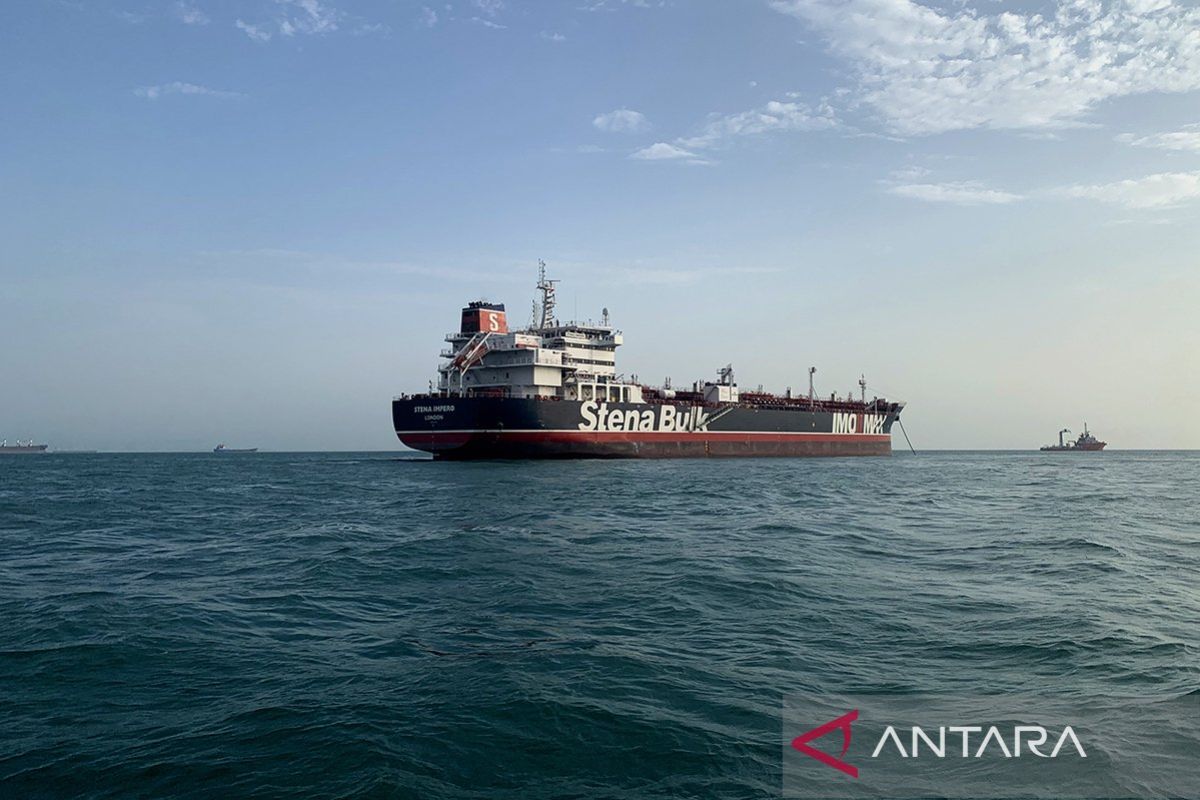
This is where the role of the Middle East region becomes crucial. Disruptions to global energy distribution routes, especially through the Strait of Hormuz, have the potential to trigger a drastic surge in oil prices.
Around 20 percent of the world’s oil supply passes through this route, so any escalation of conflict that hinders distribution will immediately be reflected in global energy prices. If that extreme scenario occurs, the impacts will quickly spread to global inflation, production costs, and consumer purchasing power in various countries.
Experience since the 1990s shows that global financial markets have relatively quickly recovered after conflicts in the Middle East subside. Nevertheless, the current conditions are different.
Persistent high global inflation and tight interest rate policies make recovery potentially slower than in previous episodes. In other words, the world is facing a more complex combination of risks: energy pressures, tight monetary policies, and intertwined geopolitical uncertainties.
The role of Bank Indonesia becomes highly strategic in maintaining this stability. However, short-term stability alone is not enough. Indonesia needs a more comprehensive strategy to face the increasingly complex global uncertainties.
History provides important lessons. In the 2008 global financial crisis, the US economic contraction quickly spread worldwide, pressuring international trade and shaking financial markets.
Indonesia, although relatively more resilient than many other countries, still experienced significant slowdowns. Exports plummeted, the rupiah exchange rate came under pressure, and economic growth fell from 6.0 percent in 2008 to around 4.6 percent in 2009. A similar situation occurred during the COVID-19 pandemic in 2020, when Indonesia’s economy even contracted to -2.1 percent.
Now, with the probability of a global recession rising again, it is important to understand that Indonesia does not stand in a vacuum. As part of an open economy, Indonesia is closely connected to global dynamics through three main channels: trade, finance, and market expectations.
First, from the trade side. Around 20–25 percent of Indonesia’s gross domestic product (GDP) is directly related to exports and imports.
Commodities such as coal, crude palm oil (CPO), and nickel form the backbone of exports. When the global economy slows, demand for these commodities tends to decline. This is usually followed by a drop in international market prices.
As an illustration, coal prices, which once reached more than 400 US dollars per tonne in 2022, fell drastically as global demand weakened. Declines in commodity prices directly erode export revenues and impact state income, given that this sector contributes significantly to tax and royalty receipts.
Second, from the financial side. An increase in recession probability is often linked to tight monetary policies in advanced countries, particularly the United States. When global interest rates rise, investors tend to withdraw funds from emerging markets to return to assets considered safer. This phenomenon is known as capital outflow.
The impact on Indonesia is quite real: the rupiah exchange rate weakens, stock markets fluctuate, and borrowing costs increase.
In such conditions, Bank Indonesia is often faced with a dilemma between maintaining exchange rate stability and promoting economic growth. Raising domestic interest rates can indeed stem capital outflows, but it also has the potential to pressure consumption and investment.
Third, market expectations. In the modern economy, perception is often as important as reality. When market participants see the probability of recession increasing, they tend to act more cautiously. Companies delay expansions, households reduce consumption, and investors hold back investments.
This psychological effect can accelerate economic slowdowns, even before the real impacts are truly felt.
Nevertheless, Indonesia has several structural advantages that make it relatively more resilient to external shocks. One of the most important is the dominance of domestic consumption. Around 52–55 percent of Indonesia’s GDP is supported by household consumption. This means that as long as people’s purchasing power remains maintained, the national economy still has a sufficiently strong buffer.
In addition, fiscal reforms in recent years have strengthened the resilience of the state budget. The government debt-to-GDP ratio remains in the range of 38–40 percent, relatively low compared to many other countries.
The fiscal deficit has also been brought back below 3 percent after it had widened during the pandemic. This fiscal space is important as ammunition if the government needs to issue stimulus to cushion the impacts of global slowdowns.
Nevertheless, resilience does not mean invulnerability.