
How Long Can Indonesia Withstand the Energy Crisis?
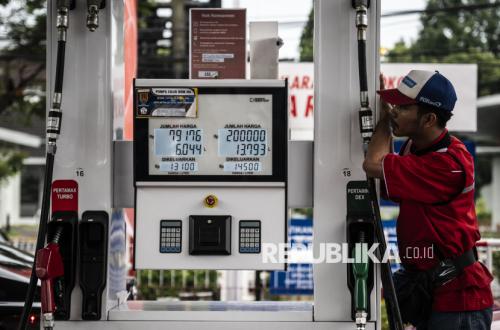
Indonesia can be considered one of the countries that has successfully withstood the impact of the energy crisis throughout the recent US and Israeli aggression against Iran over the past month. How was this achieved, and can this resilience be maintained?
Indonesia’s dependence on energy imports remains very high amid the surge in global oil prices due to geopolitical tensions. This imbalanced supply structure means that global price pressures directly affect the domestic market, ultimately burdening the State Revenue and Expenditure Budget (APBN).
Data from the Ministry of Energy and Mineral Resources (ESDM) shows that for petrol-type fuels, imports still form the main component of national needs. In 2025, total petrol needs reached 100,986 kilolitres (KL) per day, with imports accounting for 60.18%. Meanwhile, from 2026 to February, needs were recorded at 99,661 KL per day, with imports still around 59%.
This means that more than half of national fuel consumption still relies on foreign supplies. In conditions of rising global oil prices, this structure makes domestic energy costs highly sensitive to global dynamics.
The dependence is even deeper for LPG. In 2025, national LPG needs reached around 25,076 metric tons per day, with imports at 80.58%. In 2026, needs increased to 26,184 metric tons per day, while the import share rose to 83.97%. With this composition, nearly all of Indonesia’s household LPG needs are supported by imports.
The Director General of Oil and Gas at the Ministry of ESDM, Laode Syarif, emphasised that this condition reflects a structural imbalance between needs and production. “Our energy needs continue to increase, especially for transportation and households. Meanwhile, domestic production has not been able to keep up. Therefore, imports remain the backbone of national energy fulfilment,” said Laode during a Working Meeting with Commission VII of the Indonesian House of Representatives, Wednesday (8/4/2026).
In addition to the large volume, import sources are also concentrated. Around 70% of Indonesia’s LPG comes from the United States, followed by the United Arab Emirates at around 11%, with the rest from Qatar, Saudi Arabia, and other Middle Eastern countries. This structure makes Indonesia highly vulnerable to global geopolitical dynamics. Tensions in the Middle East could disrupt supplies and drive up prices, while dependence on the United States opens risks from export policies and trade.
On the upstream side, national oil production has not shown significant increases. The Head of SKK Migas, Djoko Siswanto, stated that Indonesia’s oil lifting remains around 600,000 barrels per day.
“Our production is still around 600,000 barrels per day, while national needs are much larger. To increase production, time, investment, and technology are needed,” he said.