
How Islam Regulates the Conduct of Warfare: These Are Its Principles
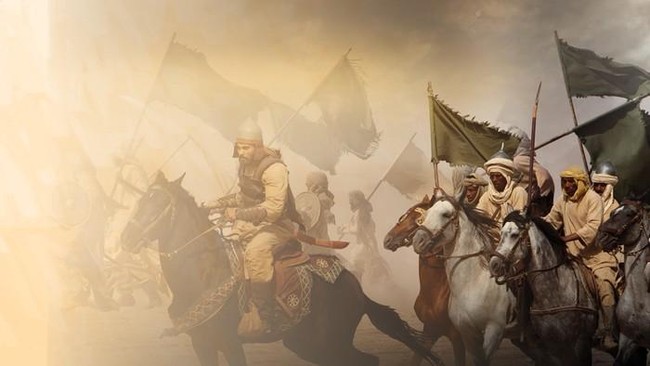
In Islamic teaching, the concept of warfare has strict boundaries and places greater emphasis on defence and maintaining peace.
Since its beginnings, Islam has been known as a religion of mercy to all creation. Its teachings place peace as the principal principle, while war is positioned as a last resort when safety and freedom of religion are threatened.
War in Islam is defensive in nature.
In Islamic literature, war is known through terms such as qital, harb, and ghazwah, referring to armed conflict in different contexts. But in principle, war is only permissible as a form of self-defence, not aggression.
Several verses of the Qur’an affirm that war is permissible when Muslims are attacked, suffer oppression, or need to defend religious freedom. In other words, war is an effort to safeguard security and stability.
In the time of Prophet Muhammad, warfare was also linked to protecting the call to religion (dawah) and the safety of the community, not to compel belief upon others.
Strict ethics during conflict
Islam also establishes strict ethics of war, including:
It is forbidden to kill women
It is forbidden to kill children
It is forbidden to kill the elderly
It is forbidden to kill those not involved in combat (including civilians)
It is forbidden to destroy crops
It is forbidden to kill livestock unnecessarily
It is forbidden to violate a peace agreement.
In Islamic teachings, war must not be conducted carelessly to the detriment of life around it. Combatants are forbidden to cut down trees without justification, destroy crops, kill animals unnecessarily, or destroy places of worship. This principle emphasises that armed conflict must still safeguard the balance of nature and the life of the community.
Islam also emphasises the importance of opening a path to peace. If the opposing side desires peace, Muslims are advised to accept it. This is stated in the Qur’an, Surah Al-Anfal verse 61, which commands to incline toward peace when the other side desires it as well.
And if they incline toward peace, then incline toward it and rely upon Allah; indeed, He is the Hearing, the Knowing.
Moreover, Islam governs the treatment of prisoners of war. They may not be tortured and must be treated humanely. This principle emphasises that even in armed conflict, human dignity must be preserved.
In the context of relations with non-Muslims, Islam differentiates several categories:
Relevance in the Modern Era
An understanding of the concept of war in Islam is important amid widespread stereotypes about Muslims. Many scholars emphasise that Islamic teachings prioritise peace and dialogue over open conflict.
Therefore, understanding historical context, ethics, and defence principles in Islam is deemed crucial so that religious teachings are not misinterpreted or used to justify violence.