
How Has the Russia-Ukraine War Evolved?
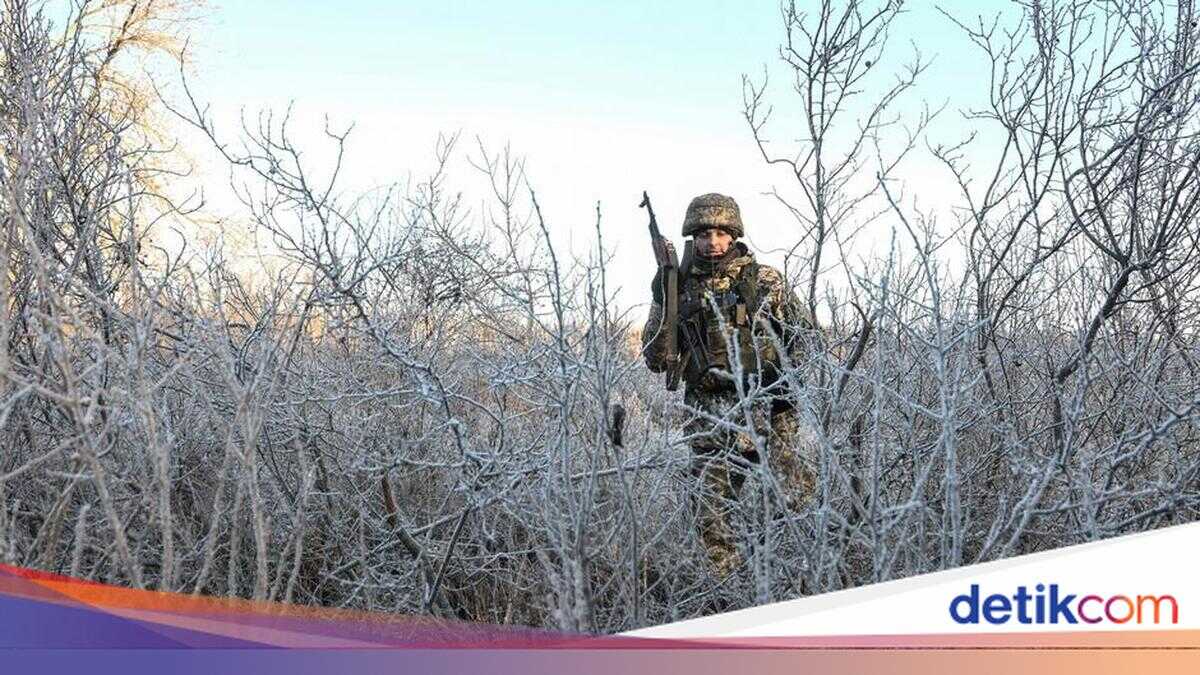
Soldiers spend weeks, even months, in killing zones stretching up to 20 kilometers, under the watchful eyes of enemy drones. There is no way to reach these positions with vehicles or to evacuate the wounded. Supplies of ammunition and food are also constantly disrupted.
This is the daily reality on the front lines of the four-year-long Russia-Ukraine war. In an interview with DW, Ukrainian military personnel describe how military operations in the war have changed.
2022: Marked by chaos, ground warfare, and Western weapons
When soldiers recall the beginning of the invasion, they remember the large number of volunteers and the long queues at recruitment offices. This now seems impossible. “I was not allowed to join the military until September 2022,” said Oleksandr Kashaba, who was 22 years old at the time.
“There was chaos on the front lines,” recalls Stanislav Kotcherha, deputy commander of a drone battalion. In early 2022, he had just completed training as an air defense soldier and immediately joined the infantry. “Many units, but not communicating with each other.”
Gradually, the front lines began to stabilize. “Then the ground war began with combat troops, tanks, heavy weapons with air defense forces as the main element. Like a typical war, as we read in books,” said Kotcherha.
In the same year, Ukraine received rocket launchers from the West, including HIMARS (High Mobility Artillery Rocket System). These rocket launchers were a decisive innovation, according to Vladyslav Urubkov of the Come Back Alive foundation, which supplies Ukrainian soldiers with vehicles, grenade launchers, and organizes educational projects. “HIMARS had a significant impact on the success of the counter-offensive in Kharkiv,” said Urubkov, who later left the military.
2023: Drones and counter-offensives
The following year, the Ukrainian military generally began to use Chinese-made Mavic quadcopter drones, initially for aerial reconnaissance and attack drones that dropped explosives.
Then there were kamikaze drones (unmanned weapons that are destroyed when they hit their target), a type of weapon widely used by both sides since the summer of 2023.
“I was lucky enough to serve in the infantry before drones became dominant,” said Kashaba, who initially led an air defense platoon before leading a machine gun platoon. Because of the dominance of drones, almost everything the soldiers did changed.
Previously, Kashaba could counterattack from a distance of 1.5 kilometers from Russian positions with a large-caliber US-made machine gun. He also traveled long distances in open areas and handled logistics with armored vehicles, including transporting ammunition, rotating personnel, and evacuating people.
At that time, wounded soldiers could also be transported about 4 kilometers by armored vehicles to an evacuation point. From there, evacuation teams took them in ordinary vehicles to a stabilization point behind the lines. Now, with much larger killing zones, this is no longer possible. “In the past, the wounded arrived a few hours after being shot. Now it takes several days,” explained a paramedic known as ‘Kazhan’.
2024: Transformation of the front lines
In February 2024, Russian troops began to advance rapidly in the Donetsk region. At that time, the shortage of troops on the front lines became apparent, recalls Kashaba, who was transferred to headquarters due to injury.
Meanwhile, drone development continued. The Ukrainian military became the first to use hexacopters (unmanned aircraft with six motors and propellers) to attack targets, lay mines, and for logistics purposes. Other electronic warfare equipment was also developed.
According to Urubkov, kamikaze drones have also changed the war. “A major change occurred in late 2023 and early 2024, when Western artillery ammunition deliveries were delayed,” he said. In the fighting in Avdiivka at that time, Ukraine used FPV drones against Russia.
For Kotcherha, the emergence of FPV drones (unmanned aircraft that display a live view as the pilot sees) was more because they were efficient and low-cost, a suitable option when ammunition was scarce. Both sides then increasingly engaged in reciprocal drone attacks.
“Units on the front lines had to adapt, camouflage, and protect their positions from drone and precision weapon threats, so that large equipment such as tanks, which used to be placed 3 km from the front lines, since 2024 has been 10-15 km from the front lines,” he explained.
As a result, combat troops have to hide underground and are less able to monitor the front lines, so that “the enemy infiltrates in small groups,” said Kotcherha.
2025: Kursk operation and ground robots
The summer of 2024 was marked by the start of the Kursk offensive. Ukrainian military advanced rapidly into Russian territory but could not hold their positions.
In the spring of 2025, Ukrainian offensive operations were unsuccessful. One of the reasons was the Russian counterattack using fiber optic drones that were resistant to electronic interference.
“At one point, Russia began to attack every vehicle heading to Kursk with these drones,” said the paramedic, Kazhan. “We drove at night, it was very scary because there was no way to counter the drones.” At the same time, the number of wounded decreased. “In Avdiivka in 2024, there were days with up to 200 wounded. Then it decreased significantly. The main problem is that the killing zone is getting wider, 20–25 km in some places. Technology makes it possible to kill people more precisely, making it difficult to evacuate the seriously wounded,” he explained.
Military doctors now assist wounded patients via video and send medicine by drone. Ground robots are also used to evacuate the wounded and deliver supplies. These robots are equipped with machine guns.
One of the developments in 2025 was the effort to “destroy the enemy’s eyes” by shooting down reconnaissance drones. Ukraine responded by developing drones.