
How Elephant Dung Saved the Global Music Industry
Fortune often works in mysterious ways. Deep in the Congo Basin, Central Africa’s second-largest tropical rainforest, that expression proves true in a pile of elephant dung.
The fate of the ebony tree (blackwood), a threatened hardwood, Cameroonian communities and a renowned US guitar manufacturer are bound together. This future was revealed thanks to a unique detection tool: elephant dung from Africa’s forests.
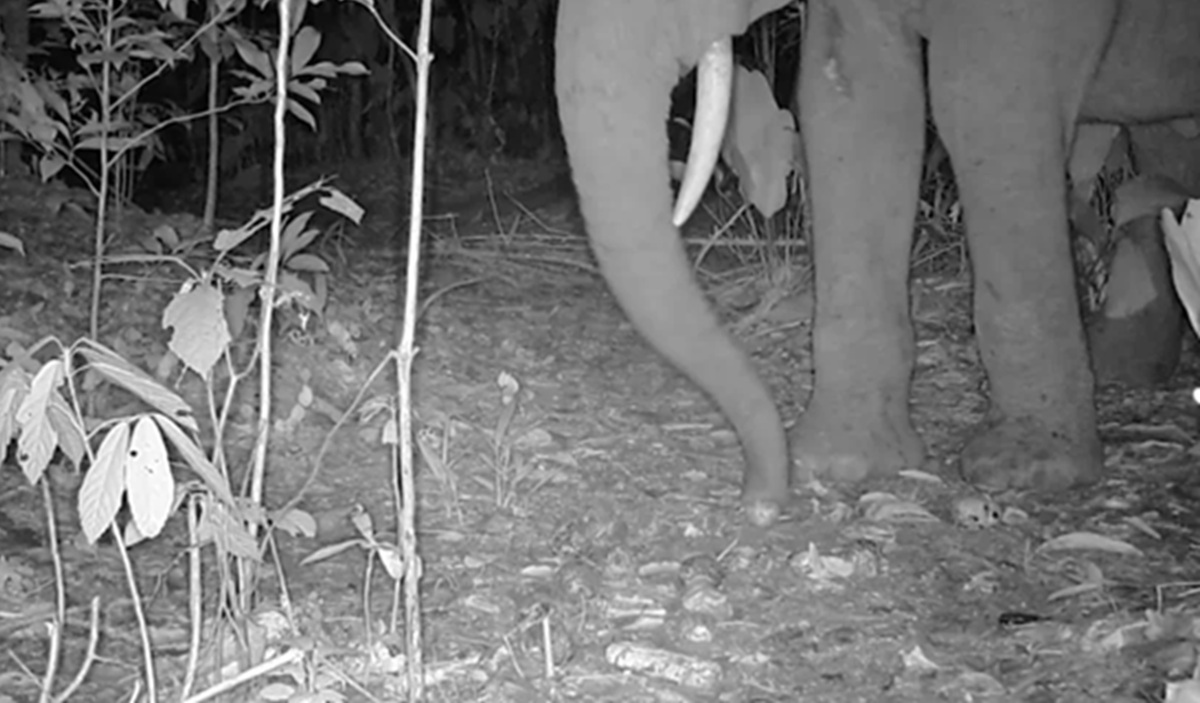
According to the International Union for Conservation of Nature (IUCN), the African forest elephant population has declined by up to 80% in the last three decades due to habitat loss and illegal ivory poaching. This decline has catastrophic impacts on ebony trees. Through camera-trap data and analysis of elephant dung, it has emerged that this large mammal is a key driver in the dispersal and germination of ebony seeds.
Elephants eat ebony fruits and carry their seeds for miles before excreting them on the forest floor. This process broadens the growth range while protecting the seeds from rodents because of the scent of the dung. Nine-year research by the Congo Basin Institute (CBI) and UCLA found that forest areas without elephants experience a 68% reduction in ebony sapling recruitment. “The results are quite alarming,” said CBI assistant researcher Eric Onguene to CNN. “Initially, we thought ebony seeds might be dispersed by all kinds of animals… But if elephants vanish, we must brace for loss, a extinction, of the ebony species.”
This research was massively funded by Taylor Guitars, the California-based guitar maker whose products are used by world-renowned musicians such as Taylor Swift and Jason Mraz. Ebony wood, dense and durable, is a primary material for the bridges and fretboards of their guitars.
As co-owner of the Crelicam ebony mill in Yaoundé, Cameroon, Bob Taylor (founder of Taylor Guitars) realises the wood supply is increasingly scarce due to poaching by some of the region’s 80 million inhabitants. “In most places where ebony is harvested, supplies have run out,” said Crelicam Factory Director Matthew LeBreton to CNN.
This spurred Taylor to fund the Ebony Project since 2016. “You wake up one day and think, ‘Oh no. This won’t last forever,’” Taylor told CNN. “It’s very frustrating to use the word sustainable, but we can say it’s unsustainable: we will run out. So we must do something… It is now inevitable that we will run out of trees, so I will invest in planting trees.”
Because ebony trees take up to 100 years to mature, the Congo Basin Institute engaged the Baka Indigenous people to take part in planting. As an incentive, residents were given ownership of the ebony trees planted as well as fast-fruiting fruit trees like avocados and mangoes to meet short-term needs.
“To protect the Congo Basin ecosystem, you cannot simply set up protection or place police at every tree,” said CBI researcher Zac Tchoundjeu to CNN. “You must involve local people and show what they stand to gain from domestication because it meets their needs.”
The programme has transformed lives of locals such as Samuel Bambo Mempong from the village of Bifolone. “It has really changed our lives,” Mempong told CNN. “The money will flow to your descendants. My children, and then grandchildren: they are the ones who should benefit.”
By its tenth year, the Ebony Project has planted almost 50,000 ebony trees and 34,000 fruit trees. “We do not want to demolish the forest all at once again,” Mempong concluded. “We want to harvest the forest gently. When our time passes, our children and great-grandchildren will take the forest in the same way.” (CNN/Z-2)
Copyright © 2026 Media Group - mediaindonesia. All Rights Reserved