
How do scientists date prehistoric cave paintings?
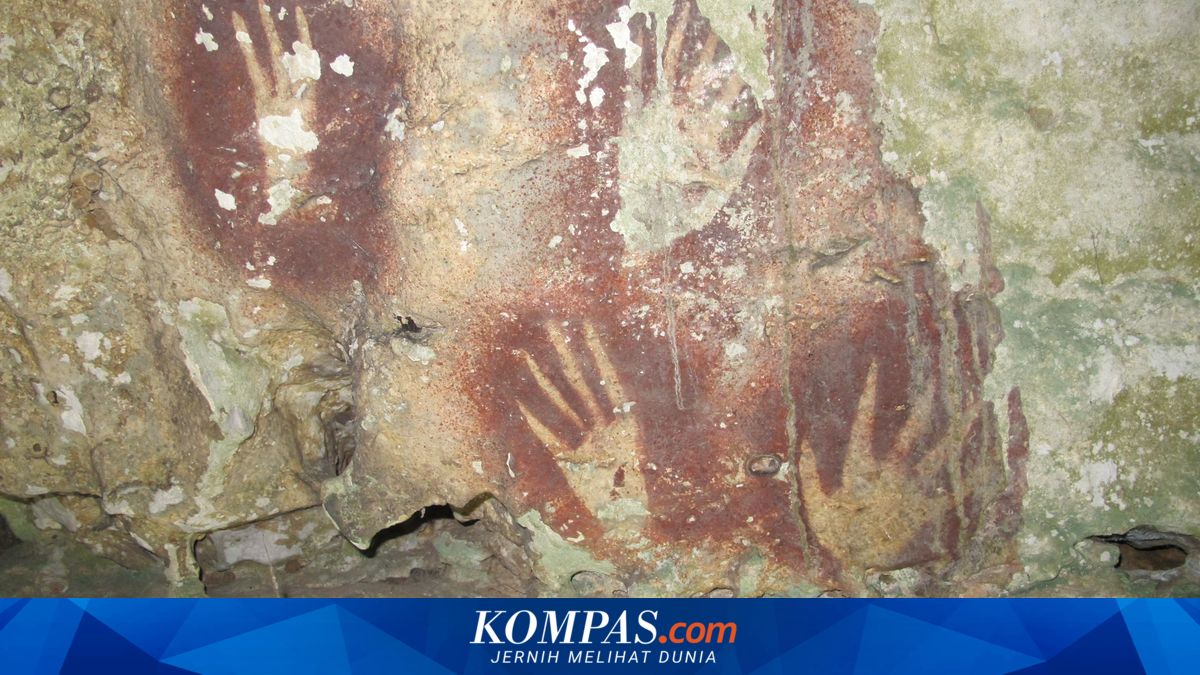
Have you ever wondered how archaeologists determine the age of handprints in pitch-black caves that are tens of thousands of years old?
Determining the age of prehistoric artwork is no simple task, as these ancient markings cannot be questioned directly.
This article takes you behind the scenes of archaeologists’ labs to explore the cutting-edge technology used to date prehistoric cave paintings.
In reality, most prehistoric cave paintings are made from ochre or limestone, which lack organic material, making conventional carbon dating impossible.
So how is it done? The secret lies in mineral deposits that form over the paintings, known as calcite or coraloid speleothem.
This calcite forms thin layers as water droplets from the cave ceiling slowly deposit minerals onto the painted walls.
Adhi Agus Oktaviana, a rock art researcher from Indonesia’s National Research and Innovation Agency (BRIN) and an archaeologist at Australia’s Griffith University, provides an analogy.
He compares the calcite layers extracted from caves to the thin layers of an onion.
By sampling calcite that forms directly above and below the paint pigment, scientists can establish the ‘minimum age’ of the artwork trapped in between.
Previously, from 2014 to 2021, scientists used conventional uranium-series dating. This method involved drilling into cave walls to collect coarse rock powder, but it was imprecise and yielded wide age ranges.
Now, science has advanced further. Researchers employ the cutting-edge Laser-Ablation Uranium-Series (LA-U-series) technique, praised for its exceptional precision and accuracy.
‘With laser ablation, we collect the powder using a laser,’ explained Dr. Adhi to Kompas.com on Thursday, 28 May 2026.
The sample size is incredibly microscopic, measuring just 44 microns by 44 microns.
‘A slight difference in microns—about half the width of a human hair,’ Dr. Adhi added to illustrate the minuscule sample size.