
How Do Gulf States View the Prospects of US-Iran War and Dialogue?
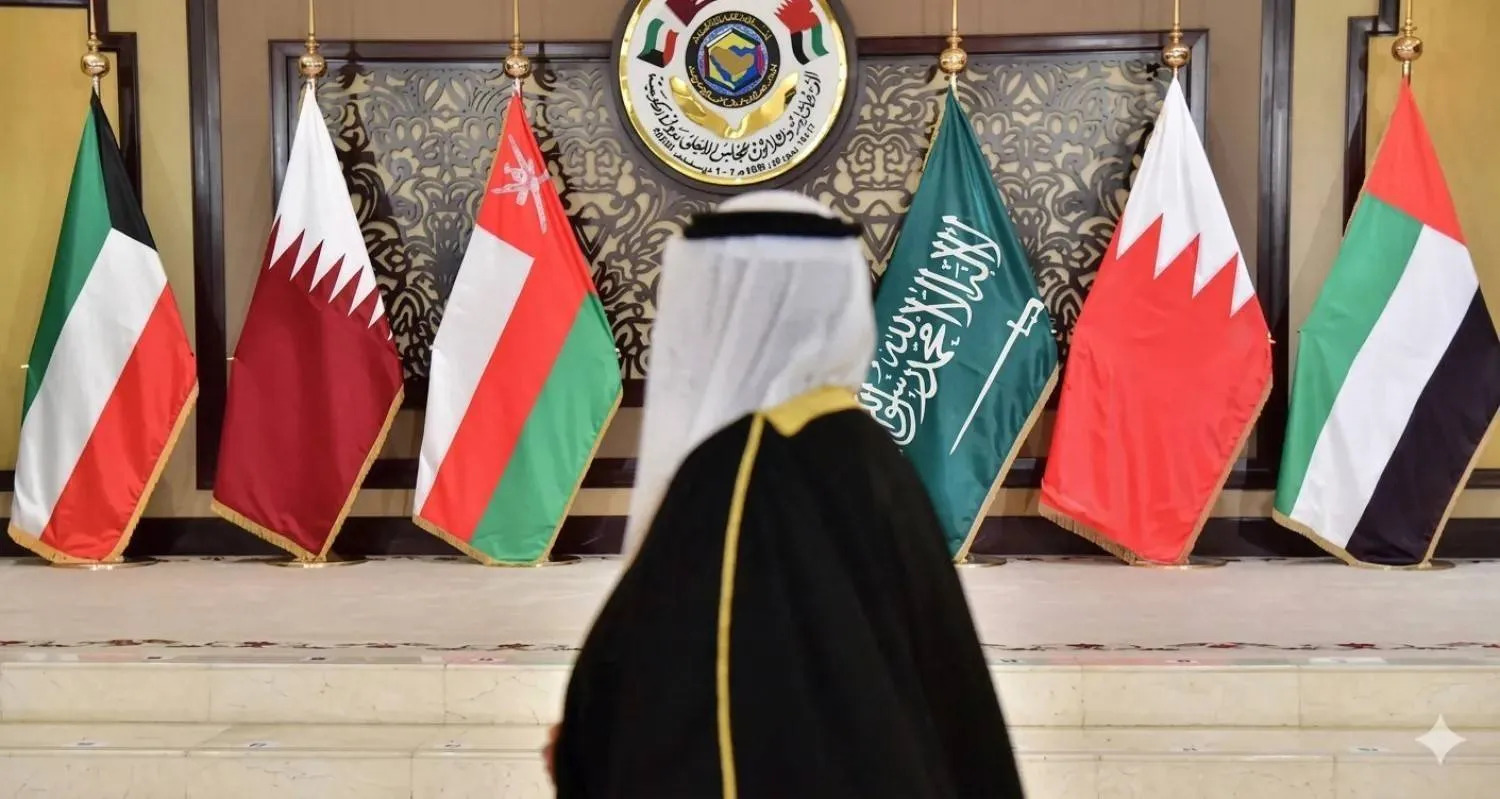
Gulf Cooperation Council (GCC) states, whose territories have also been targeted by Iranian attacks, are closely monitoring indirect negotiations between the United States (US) and Iran. Pakistan stated on Thursday (26/3) that it is facilitating those communications by conveying messages between the two parties.
Data monitored by Asharq Al-Awsat media shows that, up to Wednesday night, around 83% of Iranian missile and drone attacks since the war entered its fourth week have been directed at Gulf Arab countries, while the remaining 17% targeted Israel.
In total, 4,391 missiles and drones have struck Gulf countries, hitting vital infrastructure and civilian sites. In contrast, 930 projectiles were launched at Israel, which is leading the war operations.
In response to this situation, Gulf states on Thursday reaffirmed their stance on any future negotiations. GCC Secretary-General Jasem Albudaiwi emphasised that the bloc must be involved in every discussion or agreement to guarantee security and prevent further aggression in the future.
Albudaiwi stated that the bloc must be involved “in every discussion or agreement to resolve this crisis,” in order to maintain regional security and prevent further attacks.
He also rejected any frameworks, initiatives, or regional arrangements aimed at reshaping the Middle East post-conflict without the participation of Gulf states. According to him, the GCC insists on playing a role in determining the direction of the next phase in the region.
Albudaiwi said international law provides various options to countries based on the UN Charter. However, he emphasised that the diplomatic and political path is the most rational and effective choice.
A political analyst focused on US affairs, Ahmed Al-Ibrahim, said Gulf states view the US-Iran negotiations with a realistic but cautious attitude.
According to him, the GCC does not reject negotiations but wants outcomes that address what they consider the main threats. For Gulf states, the issue is not just Iran’s nuclear programme, but also the development of ballistic missiles and Tehran’s regional influence in Yemen, Lebanon, and Iraq.
In a joint statement from five Gulf countries and Jordan on Wednesday, they condemned attacks by groups allied with Iran in Iraq against regional countries and infrastructure. They urged the Iraqi government to immediately act to stop attacks launched from its territory and prevent further escalation.
Al-Ibrahim assessed that the level of trust Gulf states have in both parties—Washington and Tehran—is limited. That view was strengthened after Saudi Arabia’s Foreign Minister stated last week that “trust in Iran has been shattered.”
Albudaiwi said GCC countries were shocked by the joint US-Israel attack on Iran. He affirmed that Gulf states have conveyed they will not engage in military actions or allow their territories to be used to attack Iran.
Nevertheless, Tehran continues to launch what it calls “acts of betrayal” against GCC countries.
He predicted that Gulf states will pursue a two-track approach, supporting de-escalation while strengthening defences and expanding security partnerships. According to him, the Gulf region rejects “half-hearted agreements” that do not change Iran’s behaviour or fail to guarantee regional security.
Gulf security expert Dhafer Al-Ajmi stated that GCC participation in every US-Iran negotiation on regional security is a “sovereign right,” not just a request.
“We will not accept our future being shaped without our presence. Our seat at the negotiating table is the only guarantee for real and sustainable peace,” he said.
Al-Ajmi assessed that Gulf states have borne the greatest burden of the war’s costs and tensions. Therefore, their participation aims to obtain binding guarantees to protect stability and livelihoods.
He emphasised that any agreement ignoring the principles of sovereignty and non-intervention would be incomplete and at risk of failure.
Political analyst Ibrahim Raihan said Gulf states are showing wisdom in handling the crisis and in principle support de-escalation. However, he assessed that the root of the problem remains Iran’s behaviour, particularly violations of Gulf sovereignty, even though pre-war efforts had been made to prevent conflict.
Raihan noted that both Iran and Israel are attempting to expand the war. He outlined three main priorities in any negotiation: de-escalation, guarantees for protecting shipping routes, and an official apology from Iran to neighbouring Arab countries for violating their sovereignty.