
How Did Iran Go from Sunni to a Shia State?
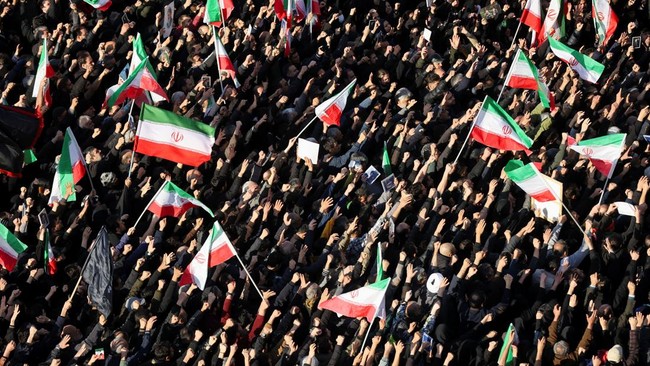
Iran is currently rocked by war. Since 28 February, it has been attacked by the United States (US) and Israel. The Supreme Leader of Iran, Ayatollah Ali Khamenei, was killed in the attack. Iran retaliated by striking Israel and American interests, including American military bases in Middle Eastern countries, including Qatar, Bahrain, Kuwait, Saudi Arabia and the United Arab Emirates (UAE). The conflict has already lasted a week. Yet there are no signs of the war ending, with worries it could widen across the region.
When talking about Iran, the country is in fact a centre of politics and Shia Islam, the largest of the two major Islam sects. The majority of the population, about 90-95%, identify as Shia Muslims.
So how did Iran come to be the world’s largest Shia state as it is today?
Before Islam: Zoroastrian Persia
According to NDTV on Sunday 8 March 2026, before Islam arrived, the territory that is now Iran was the heart of the ancient Persian empire. From around 1000 BCE until the Arab conquest in 651 CE, the dominant religion was Zoroastrianism. Under the Achaemenid, Parthian, and Sassanian empires, Zoroastrianism shaped political and social life. The religion centred on the worship of Ahura Mazda and the moral struggle between good and evil. Fire temples and the priestly class known as the Magi played key roles. Other religions lived side by side on Persian soil, including Judaism and Christianity. The empire was religiously diverse, though Zoroastrianism held a leading role.
Muslim Conquest, Sunni–Shia
Islam entered Iran via the Arab conquest in 651 CE. For centuries thereafter, most Iranians embraced Islam. The split between Sunni and Shia Islam began earlier, after the death of the Prophet Muhammad in 632 CE. The dispute concerned leadership. One faction supported Abu Bakr as caliph; the other believed leadership belonged to Ali, the Prophet’s cousin and son-in-law. Husayn, Ali’s son, was killed at Karbala in 680 CE, deepening the schism. His death became a central element of Shia identity, with the mourning ritual during Ashura commemorating the event.
For centuries, Iran was largely Sunni. That changed in the 16th century.
Declaration by Shah Ismail I as a Shia State
In 1501, Shah Ismail I founded the Safavid dynasty and declared Twelver Shia Islam as the state religion. This decision permanently transformed Iran. The Safavids were initially Sunni with Sufi roots. Their shift to Shia was political. It differentiated Iran from the Sunni Ottoman Empire, their rival of the time, and helped centralise power. Clerics were brought in from the Arab region of present-day Lebanon and Iraq to build Shia religious institutions. Over time, Iranian Shia scholars emerged and gained influence.
Under figures such as Mohammad Baqir Majlisi in the 17th century, Shia jurisprudence became central to governance. Rituals such as Ashura were promoted. Holy sites in Mashhad and Qom grew more important. Alternative religious expressions, particularly Sufi movements, were restricted. Since this period, Iran’s identity has been closely tied to Shia Islam. Yet in 1906 everything changed to constitutional.
Constitutional Era
In 1906, Iran experienced the Constitutional Revolution. Parliament was introduced. Monarchical power was limited. Although Shia Islam remained the state religion, recognised minorities such as Jews, Christians and Zoroastrians enjoyed legal recognition. Western ideas such as nationalism and constitutionalism influenced reformers. This marked the beginning of the modern nation-state of Iran.
Pahlavi Dynasty
From 1925 to 1979, Iran was ruled by the Pahlavi dynasty. Reza Shah Pahlavi reduced clerical power, centralised authority, and introduced European-inspired legal reforms. He banned the hijab in 1936 and promoted Western dress. Religious courts lost control of education and law. His son, Mohammad Reza Shah, continued these policies. The White Revolution of 1963 introduced agrarian reform and women’s suffrage. The state, not the clerics, controlled religious endowments. During this period, Iran could be described as a hybrid secular state. Shia Islam remained the official religion under the 1906 constitution, but religious authority was politically marginalised. The Shah also promoted pre-Islamic Persian heritage, celebrating figures such as Cyrus the Great. This reportedly angered conservative religious groups, who saw it as cultural Westernisation. While cities modernised, much of rural society remained deeply religious. Tensions between secular reforms and religious identity rose.
Islamic Revolution 1979
Dissatisfaction with the Shah’s rule, economic inequality and perceptions of Western interference spurred mass protests in 1978–79. Ayatollah Ruhollah Khomeini, a cleric in exile, returned from France as leader of the revolution. He advocated a government based on Islamic principles. After the Shah fled, the Islamic Republic of Iran was established. The new constitution declared Twelver Shi’ism as the state religion and introduced the concept of Velayat-e Faqih (Guardianship of the Islamic Jurist). The Supreme Leader, a senior cleric, became the ultimate authority. Sharia law shaped the legal and social order. The clergy dominated key institutions. Religious codes on dress and behaviour were enforced. Recognised minorities retained limited rights, while unrecognised groups such as the Bahá’í faced persecution. Iran had shifted from a monarchy with secular reforms to a modern theocracy. In this era, Iran became a leader of some 15% of the global Shia Muslim population, concentrated along a corridor stretching from Lebanon through Iraq to Iran, often referred to as the Shia Crescent.