
How Deputy Police Chief Subamia Boosts Bangli Residents' Economy Through Elephant Ginger Cultivation
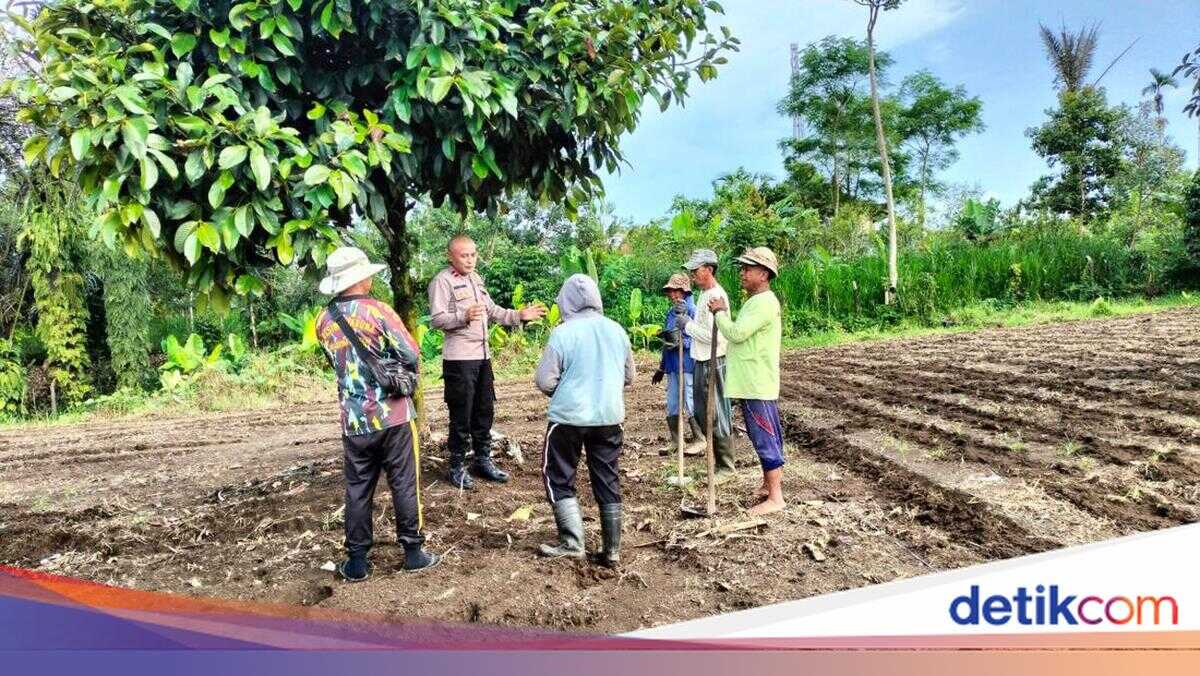
The Deputy Chief of the Susut Police Sector, Bangli Police, Bali Regional Police, Ipda I Nyoman Subamia, has become one of the candidates nominated for the 2026 Hoegeng Awards for encouraging farmers to cultivate elephant ginger. Ipda Subamia has also developed compost fertiliser for agricultural use.
Local resident I Nengah Sudiasa said Ipda Subamia’s initiative has had a positive impact on local farmers. Ipda Subamia is known for dedicating his time after duty hours to assist farmers with elephant ginger cultivation.
“The impact has been very good for the community, especially for me personally, as I now have work,” Sudiasa told detikcom on Tuesday (10 February 2026).
Sudiasa noted that the majority of local residents are farmers. They frequently consult Ipda Subamia on how to cultivate elephant ginger to achieve good harvests.
“He often teaches technical methods, because most people in the village grow ginger. If neighbours go to the garden, they ask Pak Subamia for advice on how to tend the plants, what fertiliser to use, and how to do the spraying,” he explained.
Ipda Subamia is also known for promoting the use of compost fertiliser in agriculture. The composting process involves collaboration with universities in Bali.
“The fertiliser comes from compost and also chemical sources; the spraying uses chemicals. Initially, composting is done for the soil, and once the plants have successfully grown, chemical fertiliser is then applied,” Sudiasa said.
For Sudiasa, Ipda Subamia is a good person. He believes Subamia has helped many farmers and improved the local economy.
“In my opinion, he’s a good person. Sometimes he goes straight to the garden after leaving the office,” he said.
Providing Technical Assistance to Farmers
Local farming group member Ardana Putra said Ipda Subamia provides technical mentoring to farmers. Farmers are guided on processing techniques to maximise their harvests.
“He happens to serve as our field technical mentor. From pre-land preparation, there are actions that require farmer accompaniment, especially beginner farmers in ginger cultivation who need guidance from the start — from land preparation, seed selection, through cultivation, maintenance, and post-harvest, all require mentoring,” Ardana told detikcom.
Ardana said the predominant commodity grown by local farmers is elephant ginger. He noted that elephant ginger sales have been quite satisfactory.
“For ginger, each clump produces a minimum of 3-4 kilogrammes, so 1 kg of seed can yield approximately 15-16 kg,” he said.
Farmers, Ardana added, are also taught how to use compost fertiliser for elephant ginger cultivation. Ipda Subamia provides direct mentoring to farmers in cooperation with field agricultural extension workers and universities.
“The mandatory primary fertiliser for pre-planting is compost. Pak Subamia has implemented composting that does not use raw manure — so before planting, the fertiliser is fermented first, and this has become a standard in our group. This is for the resilience of the ginger plants themselves and also to maintain soil nutrients, because using raw fertiliser is not good even if it is organic,” he said.
Encouraging Farmers to Grow Ginger to Boost the Economy
Subamia has had a passion for agriculture since secondary school. He has continued to pursue this interest even after joining the police force.
When serving as a community policing officer (Bhabinkamtibmas) in Tiga Village in 2017, Ipda Subamia encouraged local residents to develop elephant ginger cultivation. He explained that elephant ginger farming is very straightforward yet commands a high selling price.
“The planting method is the same, but the results differ, because elephant ginger is very easy to maintain, and the yield is perhaps ten times higher than ordinary ginger,” Subamia said.
Subamia noted that the impact of elephant ginger cultivation has been highly significant. Farmers can earn tens of millions of rupiah at harvest time.
“Sometimes residents earn tens of millions from elephant ginger sales. This has had a positive impact, leading to a reduction in unemployment and other criminal activity,” he said.
Subamia explained that local residents have varying sizes of ginger plots. Planting varies, with some residents cultivating ginger on plots ranging from 3 are to 10 are. Each are requires approximately 20 kg of ginger seed. Meanwhile, the harvest from one are can reach 300 kg.
“A farmer can produce at least 5 tonnes per year. Two people I have mentored have produced 20-30 tonnes — multiply that by Rp 15,000 per kg, with a mature harvest at eleven months, or a young harvest at six months,” he explained.
“Recently, one person I guided earned up to Rp 1 billion, because his production benefited from good weather, good yields, and good prices,” he said.
Elephant ginger prices once surged during the COVID-19 pandemic. He noted that elephant ginger prices at the time reached Rp 40,000 per kg.
“During COVID, prices went up to Rp 40,000, especially red ginger — I once sold it for Rp 100,000,” he said.
Subamia said the local population’s livelihoods are based on farming and poultry rearing. Before ginger cultivation was introduced, farmers typically grew citrus fruits and rice. Given the promising elephant ginger harvests, Ipda Subamia encouraged farmers to allocate part of their land to growing elephant ginger.
“There are many here — from Tiga Village, each household grows ginger, with a population of around 7,000,” he explained.
Ipda Subamia said elephant ginger cultivation has successfully raised residents’ living standards. He noted that residents have been able to renovate their homes from the proceeds of their harvests.
“Community members have been able to improve their homes after participating in elephant ginger cultivation for the second time,” he said.
Becoming a Resource Person on Ginger Cultivation
Due to his work in elephant ginger, Ipda Subamia was sent to the Bogor Agricultural Institute (IPB) for training. Following this, he became a regular speaker in the Bali Regional Police’s annual food security programme.
“We were indeed sent for training at the Bogor Agricultural Institute previously, but before that it was self-taught. At the Regional Police, we serve as the resource person — it has been running for five years for the elephant ginger cultivation programme. We regularly serve as a speaker every year in August and September, during the ginger planting season,” he said.
Ipda Subamia said he is also currently entrusted with supporting the national police’s food security programme. He has prepared approximately 2 hectares of land for maize cultivation.
“For maize, we plan to plant 2 hectares for the police. We also work with the community — when the time comes, we will mobilise community policing officers to plant maize as well,” he explained.
Partnering with Universities to Develop Compost Fertiliser
In elephant ginger cultivation, Ipda Subamia also utilises compost fertiliser sourced from local livestock farms. He has partnered with Mahasaraswati University Denpasar for the composting process.
“We source organic fertiliser from livestock farmers, and through cooperation with Mahasaraswati University, we also have Trichoderma culture available, and we have received recognition for this collaboration,” he said.
Subamia said the compost fertiliser is not produced for sale. Rather, farmers are taught how to make their own compost for use on their individual plots.
“For organic fertiliser, we use it ourselves. We direct farmers to collect it from there, then process it at their respective locations — fermented and mixed with EM4. It is all done manually; we do not produce it for sale, just for personal use,” he said.
Ipda Subamia and local farmers have also established farming groups. This facilitates the planting, maintenance, harvesting, and sale of agricultural produce.
“I always provide continuous guidance so that residents feel they are being looked after. Now the results are being felt by the community,” he concluded.