
How Daihatsu Survives the Crisis: After-Sales Service Becomes Key
Jakarta — Vehicle sales in Indonesia continue to face pressure from the previous year. Incomplete economic recovery has weakened consumer purchasing power, whilst high interest rates and tightened automotive credit lending have also affected the market.
The Association of Indonesian Vehicle Manufacturers recorded that throughout 2025, vehicle sales on a wholesale basis totalled 803,687 units, representing a 7.2 per cent decline compared with the previous year’s 865,723 units. Entering the first two months of 2026, automotive sales remain weak, reaching a cumulative figure of 145,228 units.
“These conditions are especially felt in the vehicle segment targeting middle-class consumers who rely on credit financing schemes. Financing institutions are now more selective in extending vehicle credit, thereby affecting new vehicle sales,” said Tri Mulyono, Marketing and Customer Relation Division Head of PT Astra International Tbk, Daihatsu Sales Operation, to journalists in Jakarta on Thursday (12 March 2026).
Throughout 2025, Daihatsu recorded sales of 130,677 units. On a cumulative basis in January and February 2026, Daihatsu achieved sales of 25,965 units, up from the same period in the previous year of 21,942 units.
Tri Mulyono assessed that beyond domestic factors, the automotive industry also faces external risks, particularly currency exchange rate fluctuations resulting from global geopolitical dynamics. This is because some vehicle components in Indonesia’s production process remain dependent on imports.
“Should component prices increase due to currency depreciation, producers could potentially raise vehicle prices. Price increases amid weakening consumer purchasing power are considered a serious challenge for the national automotive industry,” he said.
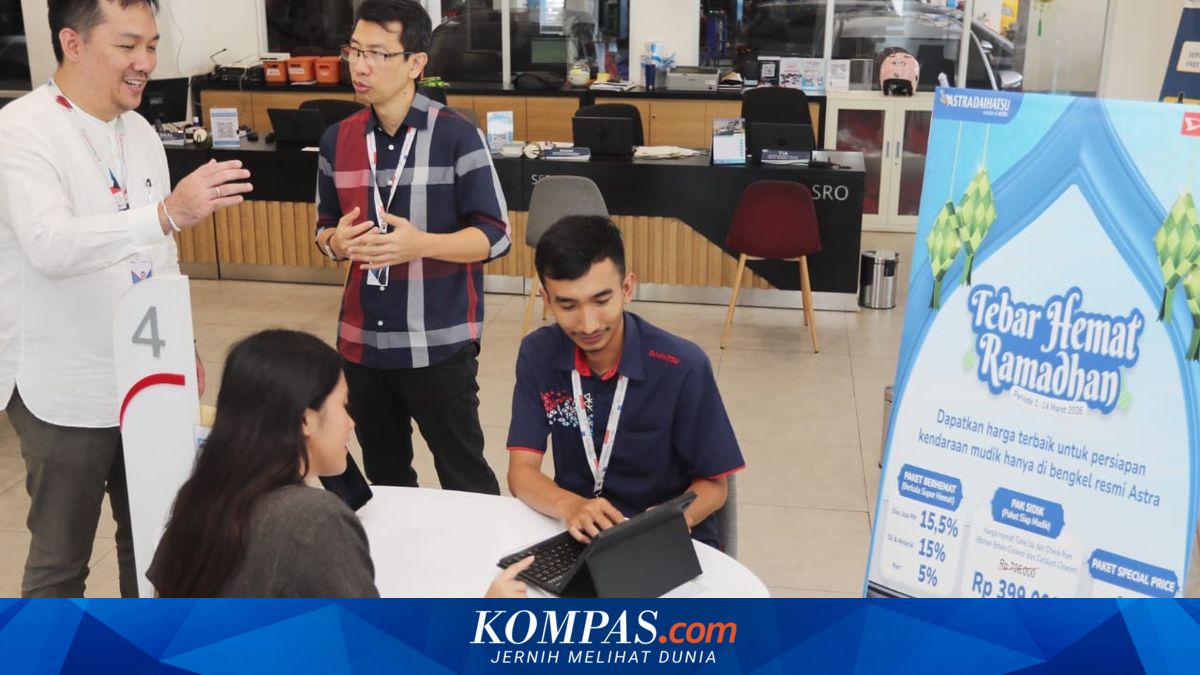
According to Tri, to maintain market attractiveness, marketing strategy now focuses on consumer education regarding fuel efficiency, an area in which Daihatsu products are widely recognised as fuel-efficient. Additionally, the company continues to strengthen after-sales service. One such initiative during this year’s Ramadan and Eid al-Fitr is the introduction of the DAIFIT 2026 promotional programme.