
Houthis Enter the Battlefield as Iran-US-Israel Conflict Escalates
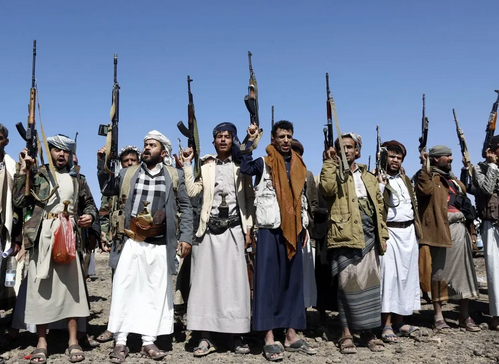
The Houthi group in Yemen has, for the first time, launched direct attacks on Israel, approximately one month after the start of joint US and Israeli military operations against Iran. This move opens a new front in the increasingly widespread conflict, which has killed thousands, displaced millions of people, and shaken the global economy. The group, which controls much of northern Yemen, launched two missile and drone attacks within less than 24 hours on Saturday (28/3). Israel’s military stated that all attacks were successfully intercepted, but the Houthis affirmed they would continue military operations as support for the resistance fronts in Palestine, Lebanon, Iraq, and Iran. Previously, the Houthis were not directly involved in this conflict, unlike their role in the Gaza war, when attacks on ships in the Red Sea disrupted global trade routes worth trillions of dollars. This long-anticipated involvement by the Houthis occurs amid rising tensions in global energy routes. Iran is known to have restricted traffic in the Strait of Hormuz, raising concerns that the Houthis could expand their actions by disrupting the Bab al-Mandeb Strait. Reporting from Sanaa, Al Jazeera journalist Yousef Mawry described Bab al-Mandeb as the group’s key weapon. “They want to make Israel pay economically. They want to disrupt their trade routes. They want to disrupt imports and exports in and out of Israel,” he said, as quoted by Al Jazeera on Sunday (29/3). Amid the escalation, US Secretary of State Marco Rubio stated that Washington hopes to end its military operations against Iran in a few weeks, although additional deployment of US Marines continues to give President Donald Trump strategic flexibility. However, without a diplomatic breakthrough, concerns are growing that the conflict could expand further and become harder to control. In the last 24 hours, US-Israeli airstrikes have continued. Israel’s military claimed to have targeted Iranian naval weapons research facilities, while a large explosion was reported in Tehran. Iranian media reported at least five people killed in an attack on a residential area in Zanjan. In Tehran, local authorities said the University of Science and Technology was one of the latest attack targets, prompting threats from Iran’s Islamic Revolutionary Guard Corps (IRGC) against educational institutions in the US and Israel. The Fars news agency also reported an attack on a water dam in the city of Haftgel, Khuzestan province. Iran’s Ministry of Health stated that the death toll since the start of the conflict has reached 1,937 people, including 230 children. The Iranian Red Crescent reported that more than 93,000 civilian properties have been damaged. “Civilians are bearing the heaviest burden of this war,” said Mohamed Vall from Al Jazeera, reporting from Tehran. Meanwhile, in Lebanon, Israeli attacks continue with high intensity. Lebanon’s Ministry of Health reported 1,189 people killed since 2 March. Israel’s military operations in the south are said to aim at creating a buffer zone around the Litani River. In the latest developments, Israeli attacks reportedly killed three journalists and nine medical personnel in southern Lebanon. The total number of healthcare workers killed in this conflict now stands at 51. The Hezbollah group claimed to have launched dozens of attacks on Israeli forces in the last 24 hours, in response to the ongoing attacks. On the diplomatic side, messages remain varied. Trump previously threatened to attack Iran’s energy infrastructure if Tehran does not open the Strait of Hormuz, but then extended that deadline by 10 days. Trump’s envoy, Steve Witkoff, expressed optimism about negotiation prospects. “We have a 15-point plan on the table. We hope Iran will respond. It could resolve everything,” he said. Mediation efforts are also ongoing. Pakistan, acting as an intermediary between Washington and Tehran, is scheduled to host a meeting of foreign ministers from several regional countries, including Saudi Arabia, Turkey, and Egypt. Pakistan’s Foreign Minister Ishaq Dar, in talks with Iranian Foreign Minister Abbas Araghchi, urged an end to all attacks and hostilities in the region. In his statement, he affirmed Islamabad’s commitment to supporting regional stability. Dar also revealed that Iran has approved permission for 20 Pakistani-flagged ships to pass through the Strait of Hormuz, seen as an important step in easing pressure on the global energy crisis.