
Housing and Settlement Minister urges Bali SMEs to utilise government housing credit programme for economic growth
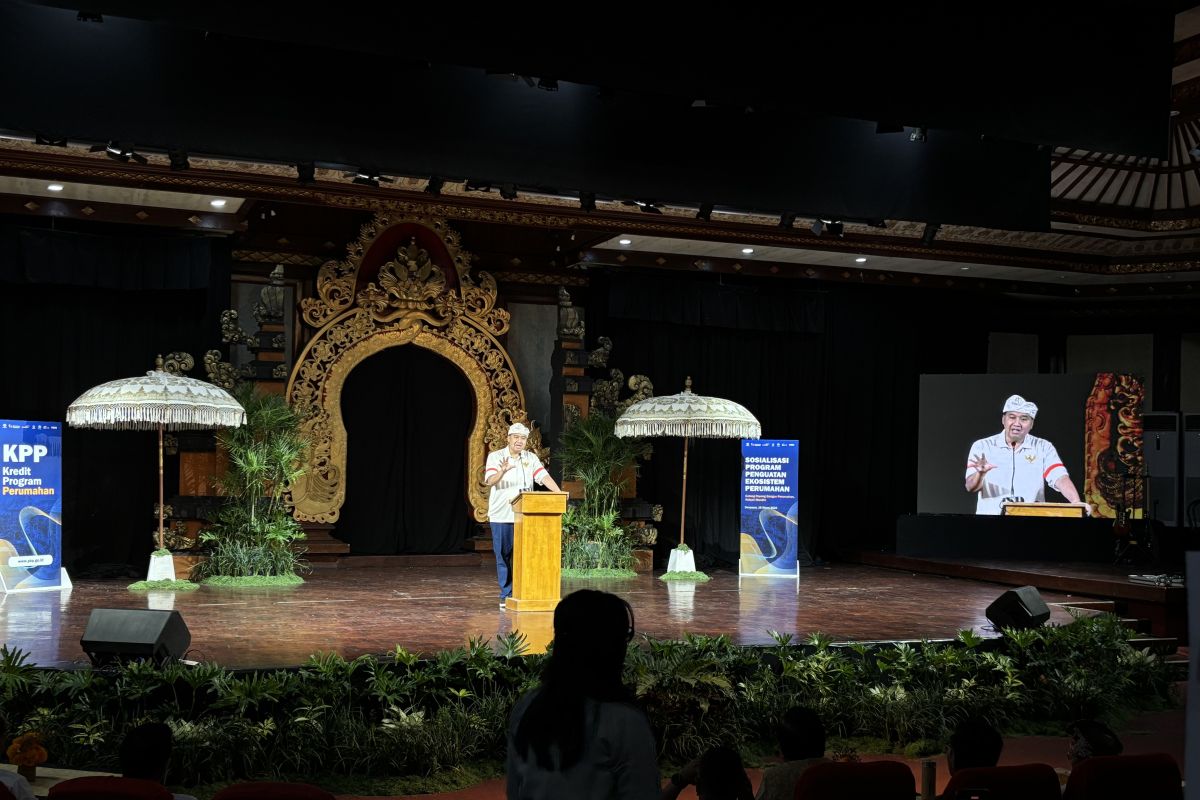
Denpasar — Housing and Settlement Minister Maruarar Sirait has urged SMEs in Bali to promptly utilise the government’s Kredit Program Perumahan (KPP), a housing credit programme distributed through banks, to drive economic growth.
“In Bali, I am confident there are tens of thousands of SMEs operating shops and stalls—please make the best use of this programme so the economy moves and grows. Growth is already good, so let’s make it leap further,” Sirait said whilst attending a KPP socialisation event by Bank Mandiri in Denpasar on Monday.
Sirait, commonly known as Ara, reminded attendees that the government has allocated IDR 130 trillion for the KPP or housing credit scheme. He hopes the budget will be absorbed by Bali’s SMEs, particularly given that borrowers can access loans up to IDR 20 billion with 5 per cent subsidised interest rates.
This would allow people to build business premises or residences to support their enterprises and enable them to move up in economic class, he added.
“For example, if you borrow IDR 110 million from a bank with 5 per cent subsidy, you only pay IDR 60 million. This is an extraordinary programme, and I hope Bali’s people, especially SMEs, can benefit from it. Moreover, for loans below IDR 100 million, no collateral is required, and the interest rate is just 6 per cent per annum, so there will be no more loan sharks,” he said.
Beyond SMEs, Sirait also called on banks cooperating with the government to help as many citizens as possible build homes or business premises. He challenged the banks to break records in distributing KPP to SMEs.
“So there is healthy competition among these banks—competition to serve the common people, to help SMEs, to help the nation. Do not let credit only go to conglomerates; also give it to the ordinary people. That is what the President says,” he stated.
Bank Mandiri Deputy President Henry Panjaitan expressed the bank’s commitment to supporting the government in distributing KPP to SMEs, particularly business operators in the housing ecosystem such as developers, contractors, and building suppliers to access affordable capital.
“The KPP being socialised today not only opens financing access for the public but also creates business opportunities for SMEs across various sectors—everyone gets the space to grow and develop,” he said.
Panjaitan noted that Mandiri’s KPP ceiling for 2026 stands at IDR 1.5 trillion, a 328.6 per cent increase from 2025’s IDR 350 billion. For 2026, Bank Mandiri has an allocation of IDR 500 billion, of which IDR 169.7 billion had been disbursed by mid-March, with a target of IDR 419 billion disbursed by month’s end.
For Bali specifically, Panjaitan said Bank Mandiri has a supply-side allocation of IDR 25 billion with IDR 7.5 billion disbursed to Monday, and a demand-side allocation of IDR 120 billion with IDR 33 billion disbursed by the same period.
“Going forward, we will continue to synergise, collaborate, and support government initiatives and programmes, particularly from the Housing and Settlement Ministry, so they can run successfully,” Panjaitan said.