
Housewife Transforms Waste into Food Self-Sufficiency Through EcoGrow
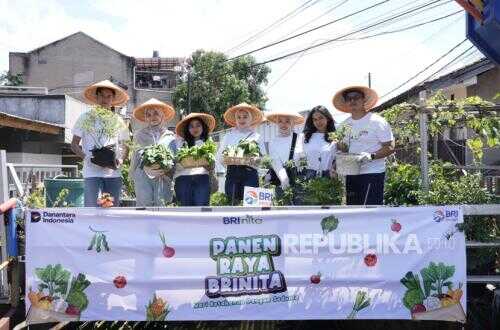
In the verandah of a modest house in Tanjung Karangan Village, Muara Enim, discarded sacks that would ordinarily end up in landfills now stand in neat rows, sprouting fresh green foliage that pleases the eye. Behind this attractive scene lies a quiet movement of housewives transforming waste into food self-sufficiency. Through their efforts, residential plots that were once barren have been transformed into “living markets” providing daily kitchen needs.
This movement is known as EcoGrow Mom, a women’s empowerment initiative based on urban farming launched by PT Bukit Asam (PTBA) Tbk. The programme is not merely ordinary gardening activity; it is a continuation of a nursery tradition that has long flourished in the village.
Since late 2025, its focus has broadened. Women are no longer just raising seedlings for sale, but are beginning to cultivate food crops that directly reach their families’ dinner tables.
Eko Prayitno, Corporate Secretary Division Head of PTBA, explained that urban farming in this remote village is a clever solution for building a circular economy. By using simple growing media such as discarded sacks and processing household waste, low-income communities and former artisanal miners (PETI) now have new economic opportunities.
“We want to strengthen the role of women as drivers of independent village development through sustainable agriculture,” said Eko during a conversation in Palembang on Friday.
For local residents, the benefits far exceed economic figures. Tuti, Head of the Women Farmers’ Group (KWT) Utun Makmur, described how the programme has changed her life rhythm. From merely household chores, she and other women now have space to learn farming knowledge whilst strengthening social bonds.
“Our house yards are now neatly organised and full of vegetables. Besides for our own consumption, some can be shared with neighbours or sold,” she said with evident happiness.
Technically, the mentoring provided by PTBA is carried out in stages and measured carefully. Training ranges from basic waste utilisation to production targets of approximately 5,000 vegetable seedlings using simple growing media.
Indeed, village land covering one hectare is now being optimised into productive green spaces. Through regular monitoring, the programme ensures that every plot of land in Tanjung Karangan Village contributes to household food security.
However, behind the success of this urban farming movement at the grassroots level lies a larger foundation that must be maintained at the national level: strategic policy. Agriculture Minister Andi Amran Sulaiman emphasised that progress in the agricultural sector, both at large scale and household level, depends greatly on a collection of systematically designed policies.