
House of Representatives Urges Forestry Ministry to Rehabilitate Watersheds Following Morowali Mine Flooding
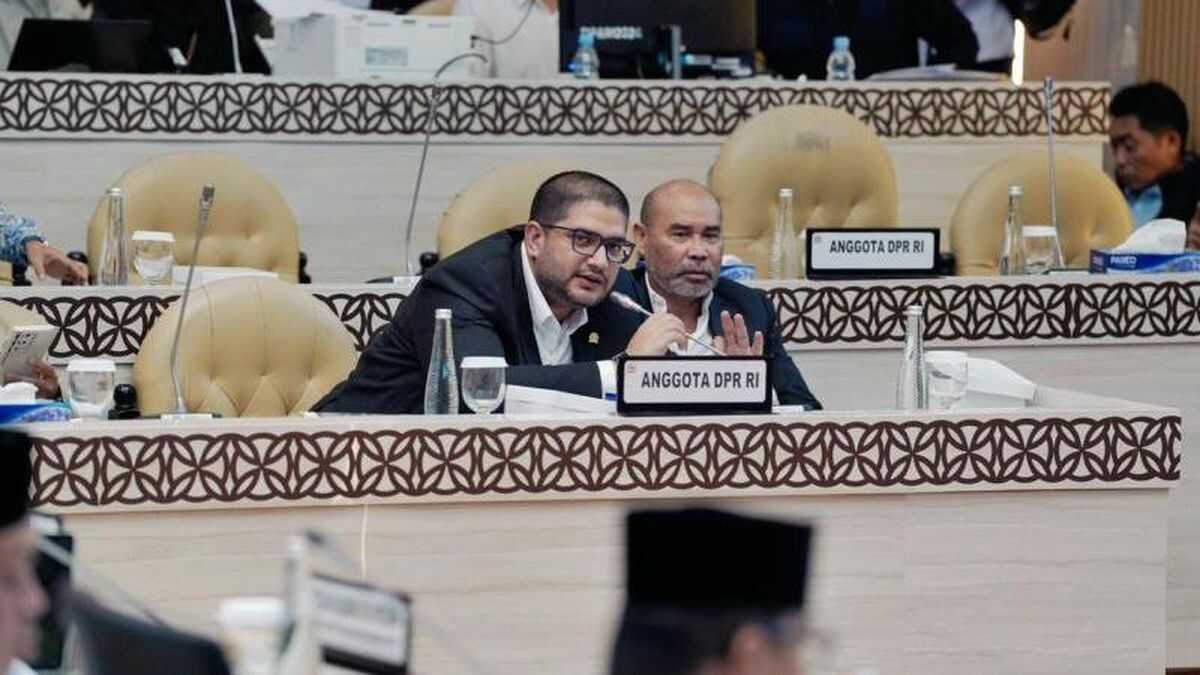
Member of Commission IV of the House of Representatives (DPR RI), Rajiv, has called on the government to immediately reform the management of watersheds in mining and mineral processing industrial zones.
“Watershed rehabilitation is the foundation of sustainable industry. If the upstream areas are damaged and permit oversight is lax, the risks will keep recurring. We cannot wait for the next victim,” Rajiv said, as quoted by Antara on Monday (23 February).
His remarks were made in response to the fatal flooding at the PT Indonesia Morowali Industrial Park (IMIP) complex in Morowali Regency, Central Sulawesi.
He argued that the rehabilitation of watersheds around Morowali must be made a priority by both the government and the businesses profiting economically from the area. He stressed that reforestation, strengthening of riverbank buffer zones, and erosion control cannot be delayed.
He stated that every industrial zone has an obligation to ensure its flood control and water management systems function effectively. IMIP is known as the epicentre of national nickel downstreaming, underpinning the global supply chain for battery and electric vehicle industries.
However, the tragedy has raised questions about ecological vulnerability and worker safety.
“If lives are lost, it means there is a link in the oversight chain that needs deeper examination. We cannot simply blame the weather. Industrial zones like IMIP must have measurable flood mitigation systems, from spatial planning and drainage capacity to catchment area management,” he said.
He therefore urged a comprehensive audit of watershed conditions in Morowali Regency, including the identification of active and former mining areas that have not been optimally rehabilitated.
Meanwhile, the Ministry of Environment, the Ministry of Forestry, and local governments were asked to release the latest data on the extent of critical land, erosion levels, and water storage capacity in the area.
Furthermore, he emphasised that oversight cannot stop at verifying work plan documents or companies’ periodic reports. The government must ensure rehabilitation is implemented in accordance with technical standards.
“The Ministry of Forestry must be stricter in overseeing the granting and evaluation of permits, particularly those related to forest areas for mining activities. Every permit holder must carry out genuine watershed rehabilitation, not just on paper,” Rajiv asserted.
He added that the involvement of industrial players in financing and carrying out rehabilitation must be clarified. He referenced the obligation of environmental permit holders to undertake forest and land rehabilitation as part of their ecological responsibility.
“Industries that grow downstream have a moral and legal responsibility for upstream conditions. It is unfair if the burden of recovery falls entirely on the state. If rehabilitation is not carried out effectively, permits must be reviewed,” he explained.
Additionally, Rajiv called for an integrated monitoring system based on satellite data and hydrological sensors to be installed in the catchment areas around Morowali. This would enable potential surges in water discharge to be detected earlier and mitigation measures to be taken before water overflows into industrial zones.
“With the support of satellite technology and field sensors, potential discharge surges can be anticipated earlier,” added the legislator from the West Java II constituency.
Rajiv also warned that the flood tragedy claiming workers’ lives at the IMIP complex must serve as a moment for correcting natural resource-based industrial development policies.
He said that downstreaming is important for national economic resilience, but ecological sustainability and occupational safety are also foundations that must not be neglected. To that end, he called for an evaluation of the entire occupational health and safety system, particularly during extreme weather conditions.
“If watershed rehabilitation is neglected, we are accumulating risk. Every rainy season will become a test, and the most vulnerable are the workers on the ground. Industry may grow and investment may flow in, but a single life lost must prompt collective reflection,” he said.
Rajiv further called on the company to take full responsibility for the victims’ families, including ensuring that social security entitlements and compensation are fulfilled without convoluted procedures.
“Moral and legal responsibility must be upheld,” Rajiv said.
According to information from the National Disaster Mitigation Agency (BNPB), a landslide occurred at the PT Indonesia Morowali Industrial Park (IMIP) complex in Labota Village, Bahodopi District, Morowali Regency, Central Sulawesi on Wednesday (18 February). One person was reported dead and a number of heavy equipment units were buried. The search and rescue team successfully located and identified the victim, who was subsequently handed over to the family on Thursday (19 February).