
House of Representatives to oversee teacher restructuring while prioritising education quality
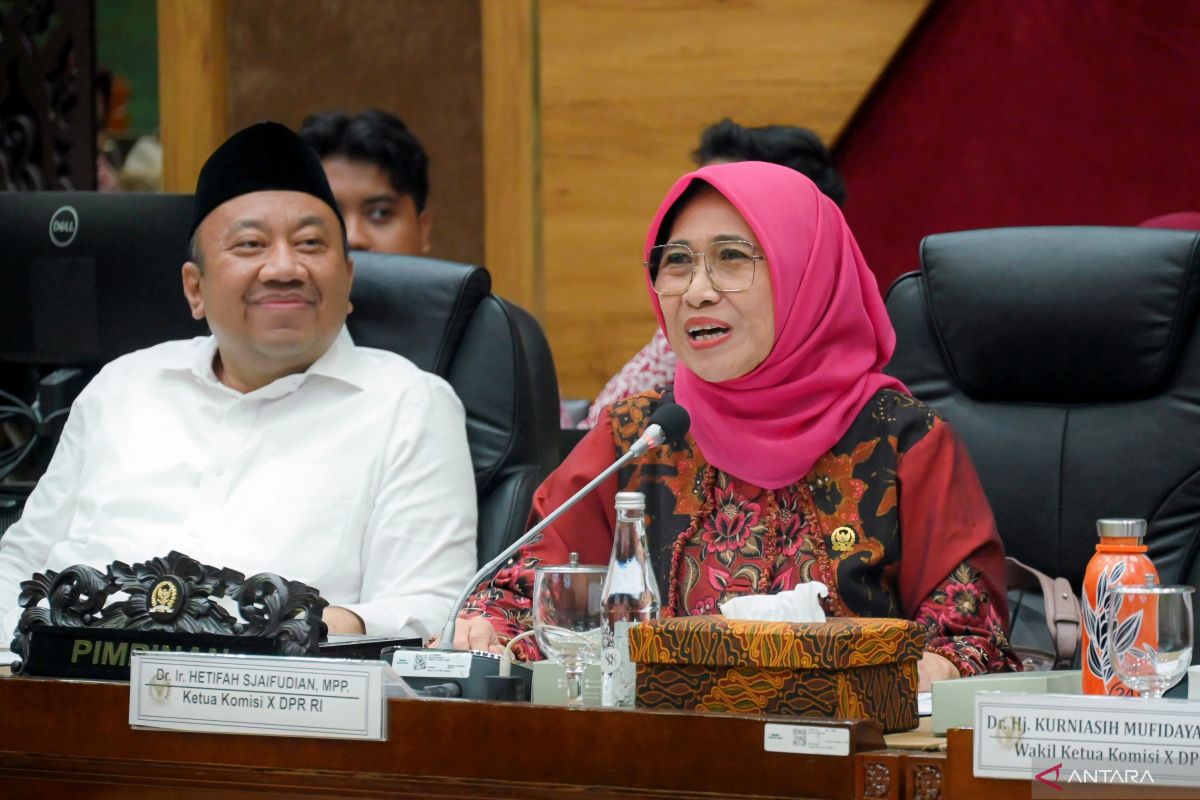
Commission X of the House of Representatives has stated its readiness to oversee the restructuring of educators in Indonesia to ensure it remains committed to national education quality and the protection of teachers.
“Education is a basic service that must not be disrupted by the policy transition process. Teachers must be protected, and students must continue to receive optimal education services,” said Chair of Commission X of the House of Representatives, Hetifah Sjaifudian, quoted in Jakarta on Monday.
She made this statement in response to the issuance of Circular Letter (CL) No. 7 of 2026 from the Minister of Basic and Secondary Education.
The policy is known to be part of the educator restructuring in line with the mandate of the ASN Law, as well as the elimination of the term honorary teacher starting in 2027, with a scheme for transitioning to Civil Servants with Work Agreements (PPPK).
Furthermore, Hetifah urged the government to ensure that the restructuring of non-ASN teachers is carried out gradually, measurably, and prioritises the continuity of education services in public schools.
“Restructuring the system is indeed necessary so that the status and governance of educators become clearer. But the most important thing is to ensure that the transition process runs fairly and does not sacrifice the quality of education services,” she said.
Next, Hetifah highlighted that there are currently around 1.6 million non-ASN teachers who have for years been an important part of maintaining national education continuity, especially in remote areas, 3T regions, and schools that still face shortages of ASN teachers.
According to her, without anticipatory steps in the form of large-scale ASN and PPPK recruitment, many schools are at risk of facing serious shortages of educators.
Hetifah also assessed that the issue of teacher distribution remains a major homework for the government. Therefore, she called on the central and regional governments to immediately conduct more accurate mapping of teacher needs based on the real conditions of each region.
“We cannot view education issues uniformly. There are regions that are relatively sufficient in teachers, but many areas are highly dependent on non-ASN personnel to keep the teaching and learning process running,” she said.
In addition, Hetifah welcomed the government’s proposed part-time PPPK option as a temporary transition scheme. According to her, this step can serve as a safety net so that schools do not experience teacher vacancies during the restructuring process.