
House of Representatives Spotlights Strengthening of Defence Industry and Consistency of Indonesian Policies
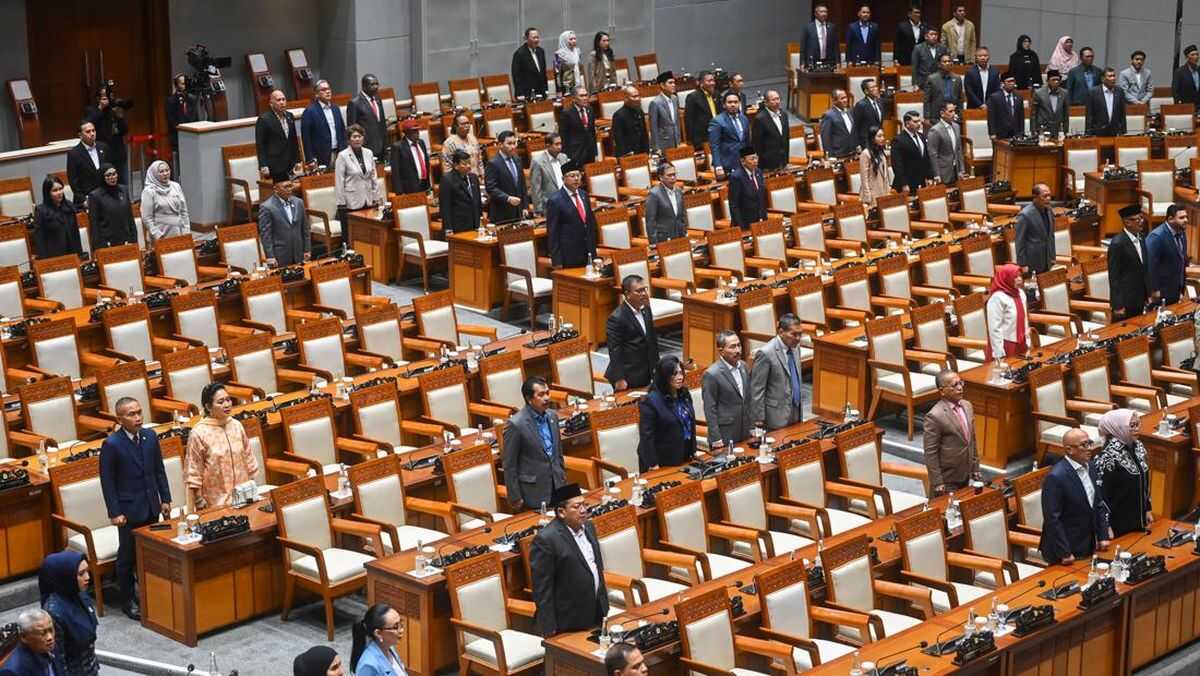
Jakarta, CNN Indonesia – Member of Commission I of the Indonesian House of Representatives, Amelia Anggraini, assesses that the strengthening of the national defence industry does not solely depend on the size of the budget, but on the consistency of long-term policies and sustained financial support from the government. Amelia stated that through Law Number 16 of 2012 on the Defence Industry, the state mandates the prioritisation of domestic products, technology transfer, and offset schemes in every foreign procurement. Additionally, the government creates a captive market through TNI procurement, ensuring demand certainty for the national industry.
The government holds a central role as regulator, facilitator, and primary buyer of national defence products. This role is crucial in maintaining the continuity of domestic industry production, she said, quoting Antara on Sunday (15 February). She argued that the modernisation programme for forces through the Minimum Essential Forces (MEF) scheme, which is now transitioning to Optimum Essential Forces (OEF), must serve as a strategic instrument to ensure the sustainability of the domestic defence industry.
Nevertheless, strengthening the national defence industry faces several structural challenges, particularly in financing. This industry is often perceived as high-risk due to its capital-intensive nature, long production and payment cycles, and dependence on state budget allocations. Furthermore, the specific characteristics of defence industry assets mean they do not always meet the criteria for “bankable” collateral for loans. This situation results in limited support from banks, including state-owned banks.
Several state-owned banks have begun to enter this sector through schemes such as contract-based working capital loans and financing for specific projects like shipyards. However, the scale is deemed insufficient to accelerate the industry comprehensively. On the other hand, TNI defence spending creates a “captive market” that provides demand certainty for the national industry. This market assurance is a key element in building long-term investment sustainability.
Amelia emphasised that the primary challenges facing the national defence industry today are not merely production capacity, but the consistency of long-term policies, bold investment in technology, and the integration of state-owned enterprises (BUMN) and private national companies (BUMS) into a solid national supply chain. “If policy consistency, financial support, and integration of the industrial ecosystem can be maintained, then self-reliance in the defence industry is not only realistic but also strategic in strengthening Indonesia’s position in the regional security architecture,” she said.
Several strategic state-owned enterprises, such as PT Pindad, PT PAL Indonesia, and PT Dirgantara Indonesia, have demonstrated improvements in production capacity, ranging from tactical vehicles and warships to aircraft like the CN-235 and NC-212, with increasing levels of local content. Beyond state-owned enterprises, the role of domestic private defence industries is becoming more prominent. Investigations into the supply chain show that several private companies are no longer just component suppliers but have advanced to precision manufacturing and system integration.
One example is PT Nanggala Kencana Rekatama Indonesia (NKRI), based in Bandung. This is a purely private entity that has obtained an official licence from the Ministry of Defence to produce certain defence components. NKRI manufactures ammunition casings, projectiles, and precision mechanical components used in weaponry systems, tactical vehicle platforms, ships, and certain structural components. NKRI is said to have received recommendations from the Ministry of Defence for capacity development towards producing complete weapon systems, while remaining within regulatory frameworks and state oversight.
Another private company, PT Republik Defensindo, has also shown capacity expansion. This firm produces specialised military vehicles, including 4x4 tactical vehicles, personnel transport trucks, and prototypes of amphibious tracked vehicles. Collaboration between state-owned enterprises as prime contractors and system integrators, and private national companies as suppliers of sub-systems, composite materials, military electronics, unmanned technology, and cyber systems, forms an integrated national defence industry ecosystem from upstream to downstream.
With increasingly complex geopolitical dynamics, Amelia added, consistent policy direction and adequate financial support are absolute prerequisites for the national defence industry to transform from merely meeting domestic needs to becoming a competitive regional player.