
House of Representatives Says Sealing of Tiffany & Co Jewellery Stores Aligns with Prabowo's Directives
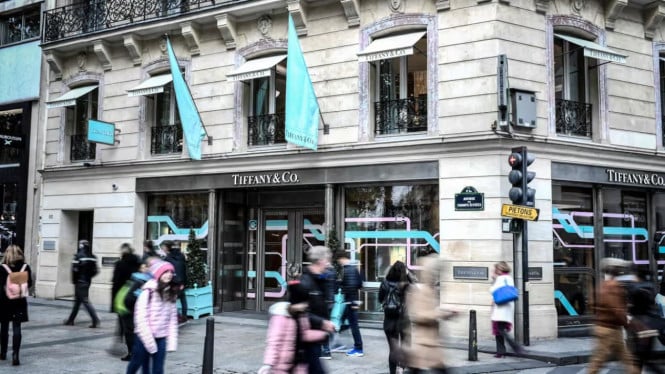
Jakarta, VIVA – Democratic Party faction member of the House of Representatives (DPR), Benny K Harman, has expressed his appreciation for the Directorate General of Customs and Excise’s move to seal a number of luxury Tiffany & Co jewellery stores.
The sealing was carried out by the Directorate General of Customs and Excise’s Jakarta Regional Office against Tiffany & Co over suspected administrative violations involving imported goods. Harman expressed his hope that the case would be thoroughly investigated through to the exposure of all those involved.
“I fully support the legal measures taken by the Head of the Jakarta Customs and Excise Regional Office. This should be made a model and example for other regions,” he said on Monday, 16 February 2026.
Benny also emphasised that the bold action taken by the Directorate General of Customs and Excise was in line with President Prabowo Subianto’s commitment to eradicating legal mafias and corrupt practices prevalent in the customs sector.
“To cleanse customs of corrupt practices, firm measures like these are needed. The public has long been waiting for decisive action such as this,” said the Commission III member of the DPR.
Similar support was expressed by Deputy Chairman of the Indonesian Jewellery Producers Association (APPI), Arief Budiman. According to Arief, APPI strongly backs the government’s enforcement actions against business operators who can be proven to have failed to comply with customs regulations.
“We support all government policies,” Arief said on a separate occasion.
He explained that jewellery import regulations governed by customs, particularly through HS Code classifications, are intended to protect jewellery manufacturers and craftspeople operating at the micro, small and medium enterprise (MSME) scale across Indonesia, enabling them to be masters in their own country.
“I see the government making breakthroughs in law enforcement, especially within the customs domain,” he added.
Separately, researcher at the Anti-Corruption Studies Centre at Gadjah Mada University’s Faculty of Law (Pukat UGM), Zaenur Rohman, said that import and export violations are indeed rampant, with the common modus operandi being the falsification of import declaration requirements.
“For instance, it starts with the classification, or perhaps semi-finished goods being declared as finished goods. This enables them to evade obligations that importers should fulfil. The aim is to obtain price differentials and then avoid paying the obligations mandated under the Customs Law,” he told reporters.