
House of Representatives Commission VIII Supports Cancellation of Online Schooling to Maintain Education Quality
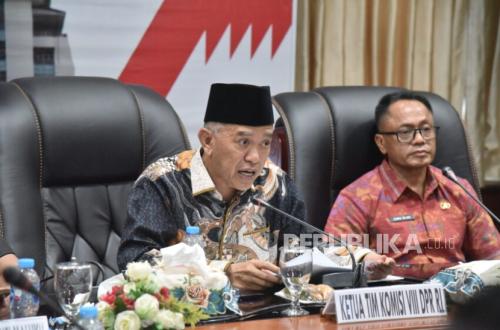
REPUBLIKA.CO.ID, JAKARTA — The House of Representatives Commission VIII has endorsed the cancellation of the planned online learning initiative, which was previously prepared as a response to the global crisis and energy efficiency. Parliament assesses this policy as realistic because not all schools are ready with the infrastructure for distance learning. The government’s step is deemed important to maintain education quality while preventing learning access gaps between regions. Deputy Chairman of Commission VIII of the House of Representatives, Singgih Januratmoko, stated that the cancellation of the online schooling policy is a response to field conditions and the aspirations of various education stakeholders. Singgih views this decision as necessary to keep education quality intact. “Education quality is the main foundation of human development. A policy that prioritises a balance between energy efficiency and learning quality is a necessity,” said Singgih in his statement on Thursday (26/3/2026). Commission VIII of the House of Representatives notes that face-to-face learning remains the primary choice because it is considered effective in shaping character and conceptual understanding for students, especially in madrasah environments. According to Singgih, direct classroom learning not only serves as knowledge transfer but also moral guidance. As a working partner of the Ministry of Religious Affairs, Commission VIII of the House of Representatives refers to several education evaluation data points. Based on the 2024 National Assessment, the numeracy and literacy competency index dropped by 5.2 points in regions with high online learning intensity over the past three years. Data from the Ministry of Religious Affairs’ Management Information System for Supervision also shows that around 34 percent of madrasahs in frontier, outermost, and underdeveloped areas face serious challenges with internet access and signal stability. This condition contributes to the increasing risk of school dropout at the Tsanawiyah and Aliyah levels. “Online learning is not a bad thing, but if forced in conditions where infrastructure is not evenly distributed, it is feared to widen the education quality gap. This is where adaptive policy is important. Do not let energy savings erode our long-term investment in human resources,” said Singgih. Commission VIII of the House of Representatives also offers a blended learning approach with a composition of 70 percent face-to-face and 30 percent online according to regional needs. “This can be arranged based on zoning and infrastructure availability,” said Singgih. In addition, energy efficiency is assessed as able to be redirected into more targeted internet quota subsidies by utilising the Integrated Social Welfare Data and the Ministry of Religious Affairs’ database. “Focus on santri, students, and educators in madrasahs and religious higher education who fall into the economically disadvantaged category,” said Singgih. For long-term energy efficiency, Commission VIII of the House of Representatives encourages the acceleration of rooftop solar power plant installations in madrasahs through central and regional government cooperation. Of around 83,000 madrasahs in Indonesia, only about 15 percent utilise solar energy. “This will be a permanent solution to rising electricity costs without reducing learning hours,” said the Golkar legislator from the Central Java V electoral district. Commission VIII of the House of Representatives emphasises that it will continue to monitor the implementation of the policy so that energy efficiency runs in tandem with improvements in national education quality. “Education is the nation’s long-term investment. Therefore, every policy must consider its impact on the quality of future generations,” said Singgih.