
House of Representatives: Agricultural Irrigation as a Strategic Investment for the Economy
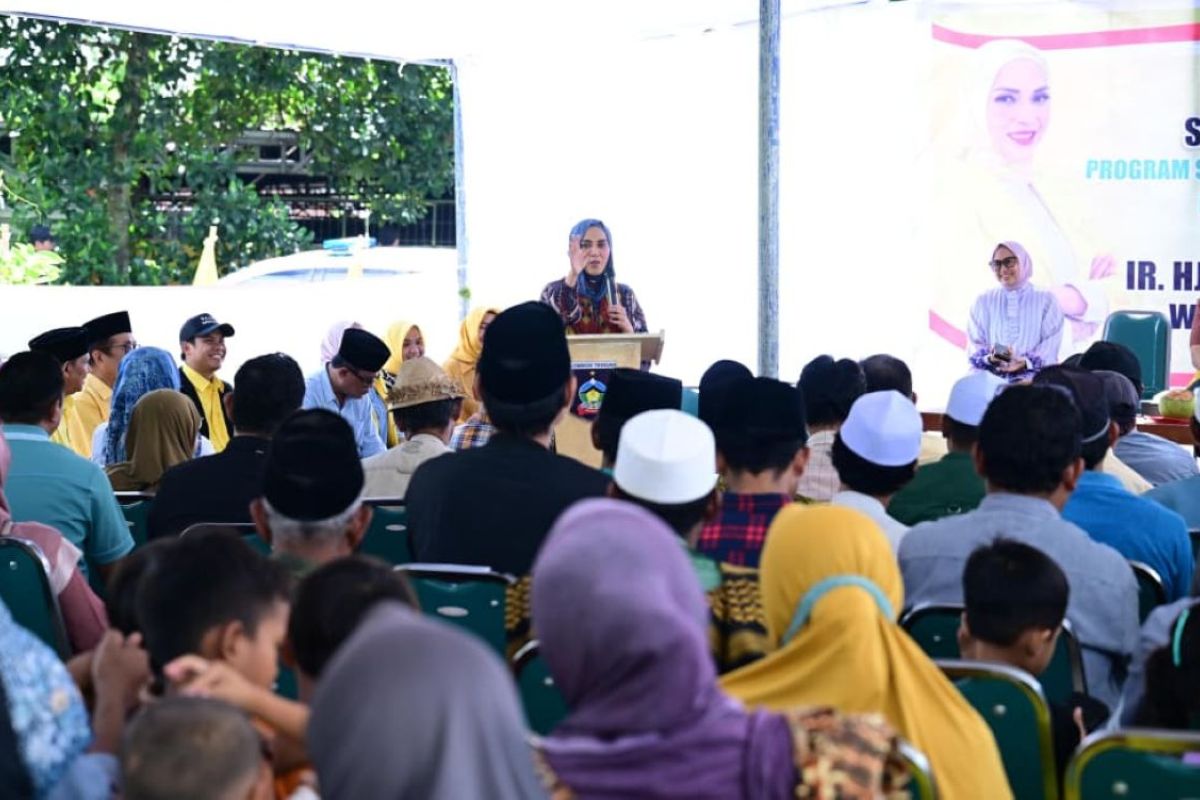
Jakarta (ANTARA) - Deputy Speaker of the House of Representatives for Economic and Financial Affairs, Sari Yuliati, stated that the construction and rehabilitation of agricultural irrigation networks is not merely a physical project, but a strategic investment that directly touches the lifeline of the people’s economy.
“This irrigation assistance is not just about channelling water to the fields, but about ensuring our farmers are no longer dependent on the seasons and can increase harvests sustainably,” said Sari in a statement received in Jakarta on Monday.
This was conveyed by Sari during the handover of rice field irrigation assistance in Penujak Village, West Praya, Lombok, West Nusa Tenggara, on Sunday (3/5).
The rice field irrigation assistance serves as an important momentum in efforts to strengthen national food security while affirming the state’s commitment to farmers.
According to Sari, classic issues such as uneven water distribution, damaged irrigation infrastructure, and minimal maintenance have long been serious obstacles for farmers.
Sari conveyed that the Indonesian House of Representatives will continue to monitor the use of state funds to ensure they do not stop at ceremonies but are truly felt by the community.
She also reminded that programmes funded by the State Budget must be accompanied by strict oversight and active community participation. Without active participation, the potential for budget leakages and stalled projects will continue to “haunt” agricultural development.
“The state is already present through the State Budget; what is now needed is collective commitment from local governments, farmer groups, and the community to maintain and utilise it optimally,” she said.
She also hopes that the irrigation assistance will drive an increase in the cropping index in the West Praya region, so farmers can harvest not just once or twice a year but become more productive.
Therefore, the handover also serves as a reminder that the success of government programmes is not measured merely by the amount of funds disbursed, but by the extent of their impact on people’s lives, especially those at the forefront of national food production.