
House Commission XIII: Strengthen Technocracy in KSP to Oversee Priority Programmes
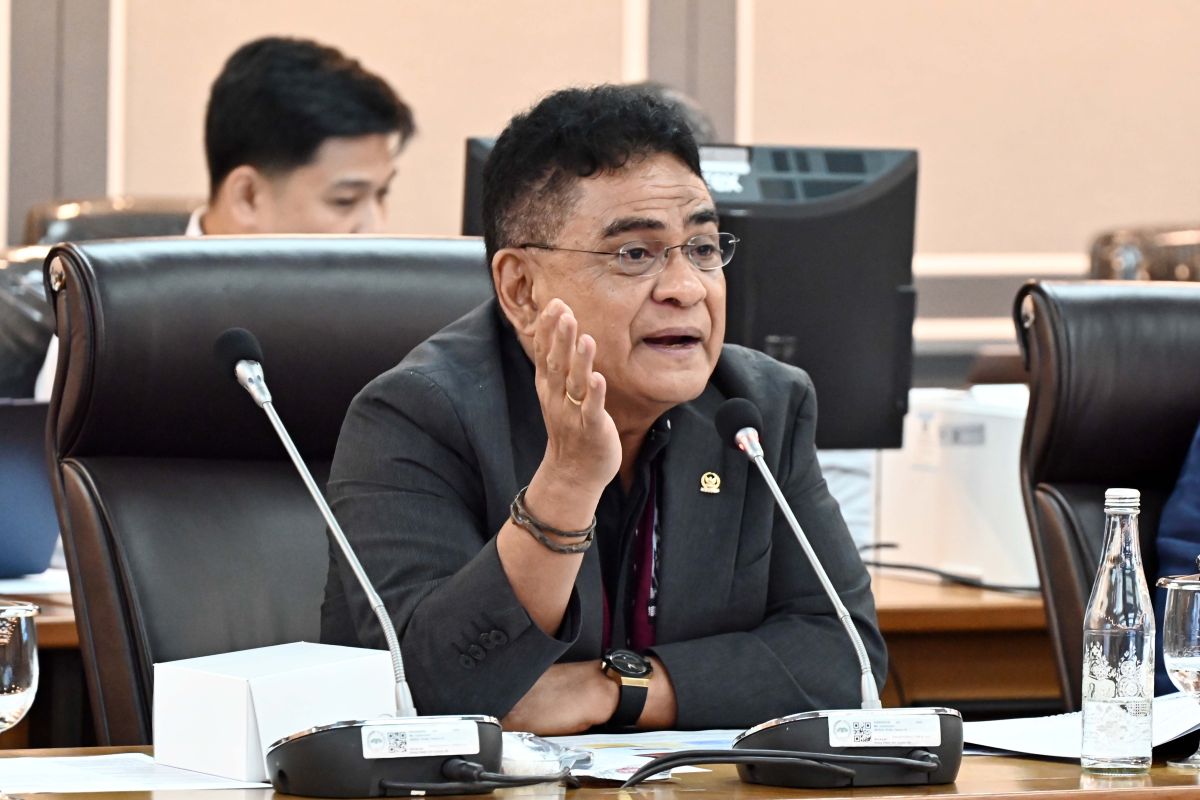
Jakarta (ANTARA) - Deputy Chairman of the House of Representatives’ Commission XIII, Andreas Hugo Pareira, stated that strengthening the technocratic aspect within the Presidential Staff Office (KSP) is necessary to oversee the government’s priority programmes.
Andreas, in a written statement received in Jakarta on Tuesday, emphasised that placing human resources with adequate technocratic capacity is key to the success of presidential policies.
“Regarding technocracy, this has actually been the case from the start. I think the Head should just discuss it with the President. If the problem is technocracy, find technocrats who are capable of implementing those programmes,” he said.
The statement was delivered by Andreas during a hearing meeting of Commission XIII of the House of Representatives with KSP Head Muhammad Qodari in the Commission XIII meeting room at the parliamentary complex in Senayan, Jakarta, on Monday (13/4).
The meeting’s agenda was the optimisation of KSP’s role in coordinating and accelerating government priority programmes.
Andreas reminded that the implementation of strategic policies should not be filled by parties lacking adequate technical competence, as this could potentially hinder programme implementation in the field.
“These presidential policy programmes should not have people without technocratic capabilities placed in policies that require high technocratic skills,” he said.
He cited the issue of geothermal energy development in the East Nusa Tenggara region, which has sparked debates.
“For example, in my electoral district, one issue that is very strong in NTT, especially Flores, is geothermal. Many people talking about geothermal do not understand what it is. So, in the end, they just reject it, some just reject it, leading to unproductive pro-contra debates,” he explained.
According to him, the lack of technical understanding in the public sphere can trigger non-constructive polemics. Meanwhile, the programme has the potential to become a strategic policy for national energy development.
“I think this is something that should be important as policy because it’s not technocrats speaking there,” he said.
For this reason, Andreas encouraged KSP, as the president’s “eyes and ears,” to play a more active role in bridging such issues, while ensuring policy communication is based on data and technical expertise.
“KSP can act as a connector to overcome bottlenecks as mentioned earlier, so that government programmes can run optimally and on target,” he said.