
House Commission X Awaits Constitutional Court Ruling, Pledges to Include Non-Civil Servant Lecturer Salary Issue in National Education System Bill
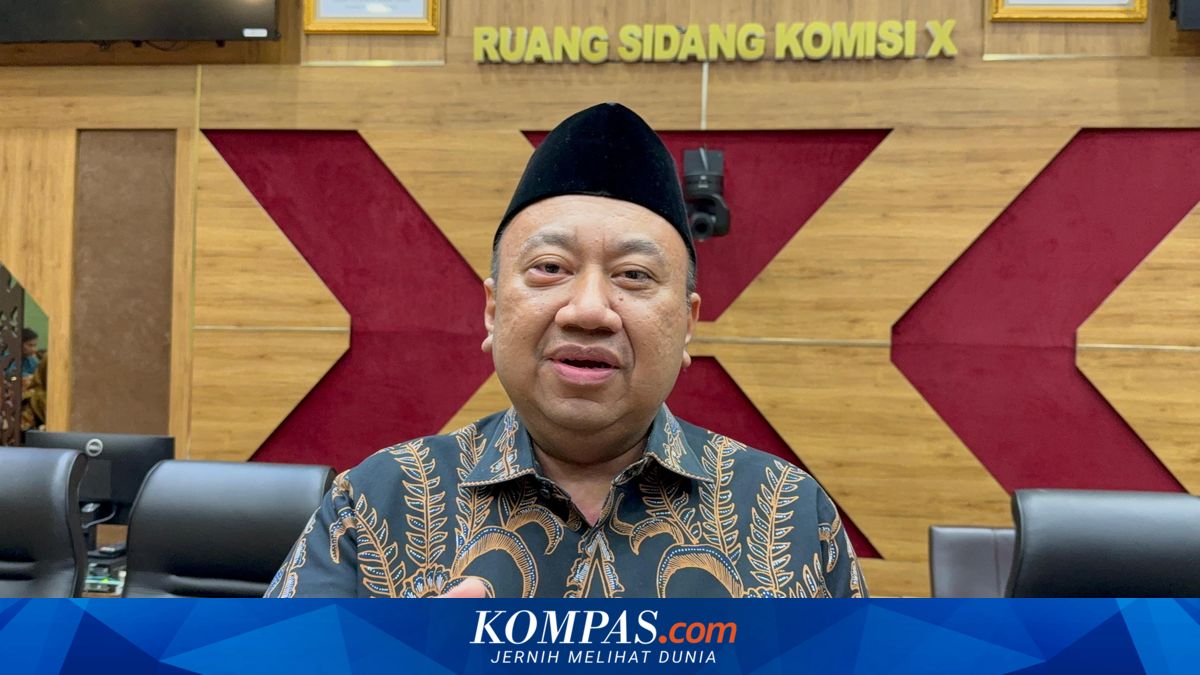
Jakarta - Deputy Chairman of the House of Representatives Commission X, Lalu Hadrian Irfani, stated that the House will await the Constitutional Court’s decision on the material review of Law Number 14 of 2005 on Teachers and Lecturers before formulating further steps. The ruling will serve as the basis for discussions on the National Education System Bill (RUU Sisdiknas), particularly regarding lecturer welfare issues up to demands for a minimum base salary equivalent to the minimum wage in the area where the higher education institution is located. “The RUU Sisdiknas will certainly incorporate whatever the Constitutional Court’s decision is, related to these lecturers’ demands, so that the base salary for lecturers is at least equivalent to the regional minimum wage applicable in the area where the higher education unit is located,” Lalu said when contacted by Kompas.com on Tuesday (5/5/2026). Nevertheless, Lalu stressed that the House of Representatives will not intervene in the material review trial process at the Constitutional Court. The PKB politician assessed that the welfare issues of non-civil servant (non-ASN) lecturers cannot be ignored because they concern justice and respect for the teaching profession. According to him, the government needs to take action to address the disparities that occur, including the gap between ASN and non-ASN lecturers at public legal entity universities (PTNBH). “Do not let the ‘market’ determine lecturers’ salaries. The government must be present to ensure there is a fair standard for all educators,” Lalu said. “If relying only on a base salary of Rp 3,390,500, that amount is below the Depok city minimum wage (UMK) applicable in 2025-2026,” said Irwansyah in the trial for case number 272/PUU-XXII/2025 on Tuesday. He explained that the lecturer wage system is highly dependent on campus autonomy policies regulated through rector’s regulations, thus not providing equal protection for all educators. “Lecturer income components are highly variable and based on performance or incentives, not on a guaranteed minimum decent living standard on a fixed basis,” he said. In agreement, Chair of the Gadjah Mada University Workers’ Union (SEJAGAT), Amalinda Savirani, assessed that the wage system at PTNBH does not yet reflect a sense of justice. In fact, more than 40 percent of lecturers work up to 12 hours a day. “Unworthy wages drive lecturers to work hard to meet their living needs, thus having less time and energy to carry out their duties in producing quality knowledge,” said Amalinda. She also revealed the impact of these conditions on lecturers’ mental health. Nearly 40 percent of respondents experience depression, stress, and anxiety due to high workloads.