
House Commission VIII Provides Input on Recruiting Street Children as Students for People's School
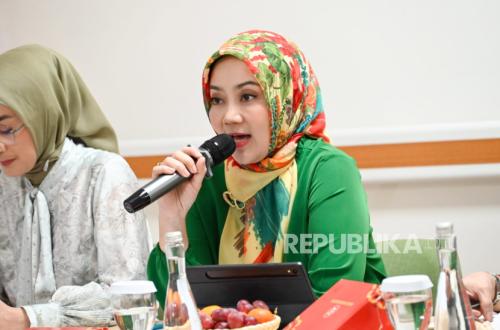
The Ministry of Social Affairs’ (Kemensos) efforts to seek potential students for the People’s School from street and market areas in Pejompongan, Central Jakarta, have been deemed worthy of appreciation. This is viewed as a progressive initiative to broaden educational access for vulnerable groups. According to the data provided, 77 children have been identified as potential students for the 2026/2027 academic year, with 29 of them being out-of-school street children working in the informal sector. DPR RI Commission VIII member from the Golkar Party faction, Atalia Praratya, considers the proactive approach through direct outreach to the field as an important breakthrough to complement data-based mechanisms such as the National Integrated Social-Economic Data (DTSEN). However, she believes this approach needs to be reinforced with a more comprehensive system to avoid being temporary or partial. “The proactive outreach to street child hotspots is a tangible form of the state’s presence. But what is more important is ensuring that this process does not stop at initial data collection and recruitment, but continues with ongoing support,” said Atalia in her statement on Saturday (25/4/2026). Nationally, data shows that the number of out-of-school children (ATS) in Indonesia remains a serious challenge. According to data from the Ministry of Education, Culture, Research, and Technology, the number of ATS still reaches hundreds of thousands of school-age children, with high concentrations in densely populated urban areas and poverty pockets. Street children are the most vulnerable group due to facing multidimensional barriers: economic, social, and protection-related. In this context, Atalia provides several recommendations. First, data integration and field validation must be strengthened. According to her, a combination approach between DTSEN and field verification needs clear operational standards to avoid bias or data exclusion. “Validation must involve local government, neighbourhood associations (RT/RW), and social workers who understand the real conditions of the children,” said Atalia. Second, Atalia highlights a family-based approach as key. Because many street children work not merely by choice, but due to family economic pressures. Thus, interventions should not only target the children but also their families through social assistance, economic empowerment, and parenting education. “Third, guarantees for educational continuity and social adaptation. Entering the People’s School is not the end of the process, but the beginning of a long journey. Children with street backgrounds need psychosocial support, character building, and an adaptive curriculum to prevent them from dropping out again,” said Atalia. Fourth, Atalia spotlights cross-sector collaboration because handling street children cannot be done by one ministry alone. Atalia encourages synergy between Kemensos, the Ministry of Education, local government, and civil society organisations. “We will continue to push for the People’s School programme not to become just a short-term affirmative programme, but a model for inclusive policy that is sustainable and measurable in its impact,” said Atalia. Atalia also states that the success of this programme must be measured not only by the number of children reached, but by how many can persist, develop, and escape the cycle of vulnerability. Atalia reminds that every Indonesian child has the right to decent education in accordance with the constitutional mandate. “The state must be present not only to find those who are left behind, but also to ensure they can move forward with dignity and a better future,” said Atalia.