
House Commission VII: Use Domestic Products in Village Cooperative Vehicle Procurement
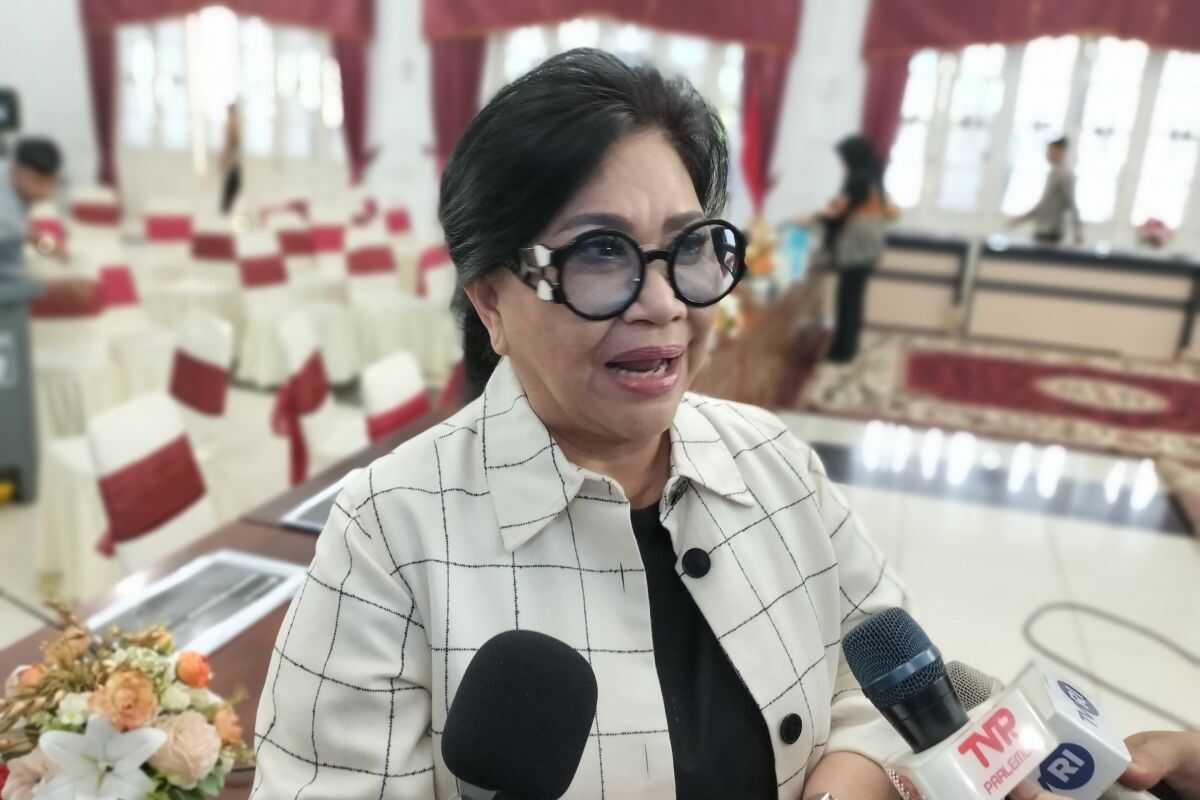
Jakarta (ANTARA) — Deputy Chair of House of Representatives Commission VII Evita Nursanty has stressed the importance of using domestic products in the procurement of vehicles for the operational needs of Village/Kelurahan Cooperatives (Kopdes) under the Merah Putih programme, following the announcement of a commercial vehicle procurement contract worth Rp24.66 trillion.
She argued that such a large-scale procurement project must serve as a moment to strengthen the national automotive industry, rather than merely fulfilling village logistics distribution needs.
“This is a very large-scale procurement. Its impact extends beyond village logistics to the structure of the national automotive industry,” Evita said in a statement in Jakarta on Friday.
The contract covers the procurement of a total of 105,000 vehicles from two Indian automotive manufacturers: 35,000 Scorpio Pick-Up units from Mahindra & Mahindra, and 70,000 units from Tata Motors comprising 35,000 Yodha Pick-Up units and 35,000 Ultra T.7 Light Truck units.
As the working partner of the Ministry of Industry, House Commission VII also expressed support for the government’s position that the national automotive industry possesses the production capacity for pick-up vehicles of approximately one million units per year.
“We are aligned with the Ministry of Industry in that government procurement must serve as an instrument to strengthen domestic industry. Our national production capacity is more than adequate,” she affirmed.
Evita added that there is a need to rationalise technical vehicle specifications transparently, particularly if the procurement is directed towards four-wheel-drive (4x4) vehicle types. According to her, not all village areas require vehicles with such specifications.
“If there are indeed areas with extreme geographical conditions that require 4x4 vehicles, these must be mapped specifically. It cannot be generalised. There must be a needs assessment based on data and actual field conditions,” she said.
She cautioned that 4x4 vehicles carry higher purchase prices and operational costs compared to 4x2 variants, meaning that specification decisions must take into account budgetary efficiency and the operational sustainability of cooperatives.
Furthermore, Evita emphasised that the obligation to use domestic products is regulated under Law Number 3 of 2014 and Presidential Regulation Number 46 of 2025. These regulations require ministries and institutions to prioritise products with a minimum Domestic Component Level (TKDN) of 25 per cent, or a combined TKDN and corporate benefit weighting of at least 40 per cent, whilst imports may only be carried out if domestic products are unavailable or insufficient in volume.
“Therefore, the argument of unavailability must be explained objectively. Technical specifications must not be used to render domestic products as deemed unavailable,” Evita said.
She stressed that strengthening national industry must form part of the direction of government procurement policy.
“A procurement of this scale must become a catalyst for strengthening national manufacturing and driving import substitution. This is in line with the President’s policy direction to strengthen economic self-reliance,” she said.