
House Commission VI Appreciates Energy Minister's Performance on Energy Resilience
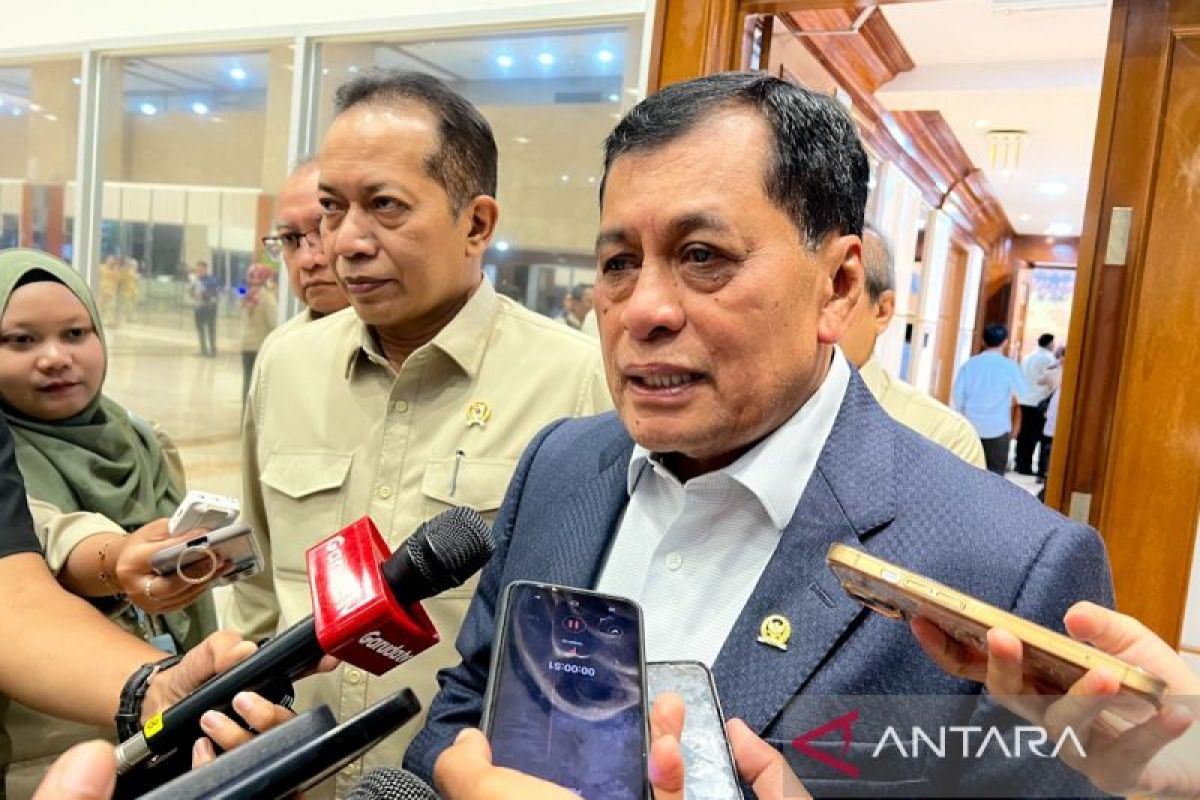
Jakarta (ANTARA) - Deputy Chairman of House of Representatives Commission VI Nurdin Halid has praised the performance of Energy and Mineral Resources Minister Bahlil Lahadalia following Indonesia’s achievements in becoming increasingly resilient against global energy fluctuations. Nurdin stated that these accomplishments are inseparable from the government’s strategic policies, particularly under Bahlil’s leadership in the energy sector. The steps taken by the government have strengthened the foundation of national energy independence. “This is not an achievement that came out of nowhere. There is systematic work from upstream to downstream carried out by the government. I see that the Energy and Mineral Resources Minister has successfully read the global situation and prepared Indonesia to be more resilient against shocks,” said Nurdin Halid in Jakarta on Thursday. In JP Morgan’s latest report titled “Pandora’s Bog: The Global Energy Shock of 2026”, Indonesia ranks second in the world as the most resilient country against energy crises, particularly in the oil and gas sector. Energy and Mineral Resources Minister Bahlil Lahadalia employs three main strategies promoted by the government, namely increasing domestic oil and gas production, diversifying energy through the biodiesel programme, and developing alternative fuels such as bioethanol. According to Nurdin, policies like B50 and E20 are concrete steps to curb dependence on energy imports, which has long been a weak point for many countries. “Advanced countries are instead hit hard because they are too reliant on imports. Indonesia is now showing a different direction, utilising its own resources as the main strength,” he said. Nurdin also stated that energy diversification measures, such as developing dimethyl ether and compressed natural gas (CNG) as substitutes for imported LPG, are strategic decisions amid global supply chain uncertainties. In the JP Morgan report, Indonesia’s energy resilience is supported by high domestic coal production and its capacity as a major exporter of thermal coal worldwide. Additionally, Indonesia is recorded as one of the important global natural gas producers. Nurdin emphasised that this achievement must become momentum to accelerate the national energy transition, including the development of renewable energy so that energy resilience is not only strong in the short term but also sustainable. “Going forward, we must not stop. Energy resilience must be accompanied by a transition to clean energy so that Indonesia is not only resilient to crises but also competitive in the future,” he said. Nurdin hopes that synergy between the government, industry players, and society continues to be strengthened to maintain this positive momentum amid increasingly complex global energy dynamics.