
Hotel Sultan Execution Deemed Impossible Due to Legal Defect
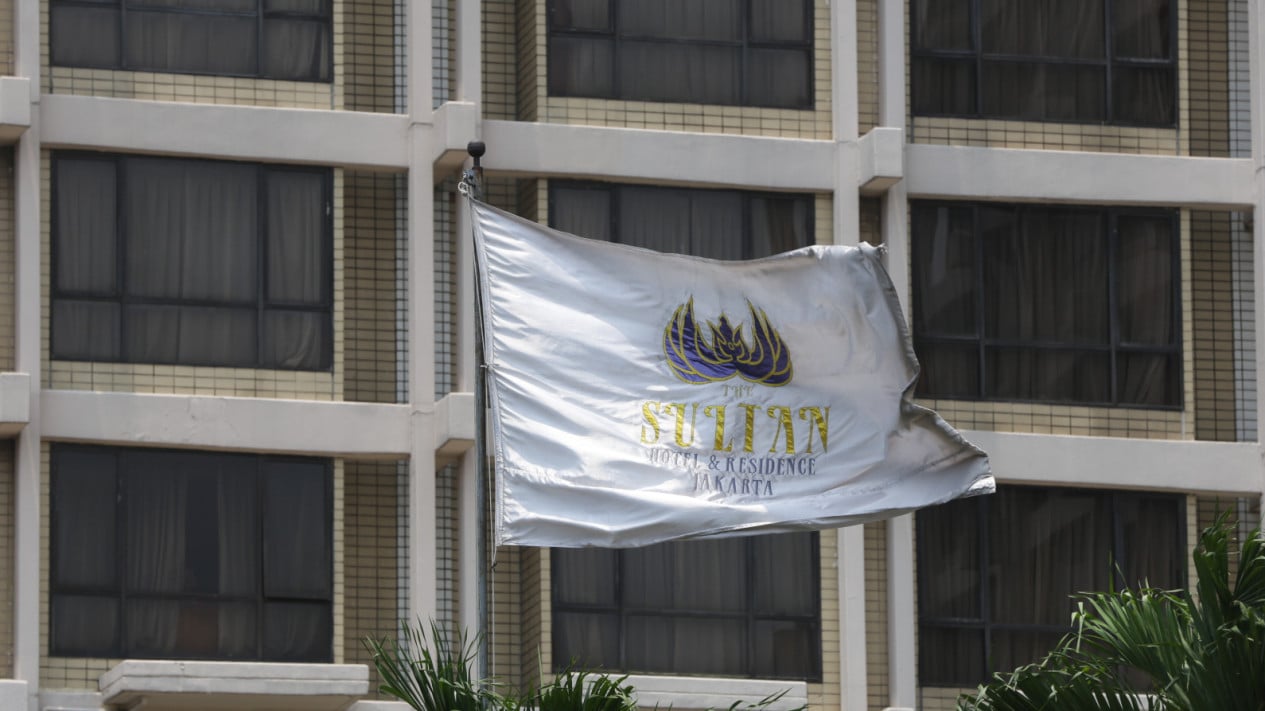
Planned execution proceedings against the Hotel Sultan property have been declared unfeasible due to alleged legal defects. The assessment was presented by the legal team of PT Indobuildco following a constatation process, or field inspection of the disputed property, conducted on Monday, 16 March 2026.
Hamdan Zoelva, legal counsel for PT Indobuildco and former Chief Justice of the Constitutional Court, stated that the inspection results revealed significant discrepancies between the land described in the court case and the actual conditions on the ground.
“The land registered under Land Use Rights Certificates No. 26/Gelora and No. 27/Gelora in the name of PT Indobuildco has a different area than the object currently cited as the basis for execution,” he explained.
According to Zoelva, the field inspection revealed that the disputed land has shrunk by approximately 4.5 hectares compared to the area documented in the case file. This reduction in area means the property subject to execution is no longer identical to the property as described in the court judgment.
In addition to the change in area, the legal team discovered that portions of the land formerly subject to dispute are no longer under the control of PT Indobuildco. “The inspection results show that part of the area is now registered as owned by the Jakarta Provincial Government, with other portions owned by third parties,” Zoelva stated.
Zoelva explained that under civil procedure law, clarity regarding the boundaries, area, and ownership of the disputed property is a mandatory requirement for executing a judgment. “If the property mentioned in the judgment differs from the property found on the ground, the judgment cannot be enforced,” he added.
Citing precedent from the Supreme Court establishing that if a field inspection reveals land under control differs from the boundaries and area mentioned in the claim or judgment, the case cannot be executed, Zoelva characterised the situation as an obscure libel — where the subject matter of the case is unclear.
“If the property subject to execution has changed in area and ownership, the execution becomes legally defective and cannot be carried out, rendering it non-executable,” Zoelva concluded.