
Hotel Owners Cry Out: Illegal 'Hotels' Proliferate Amid Weak Supervision
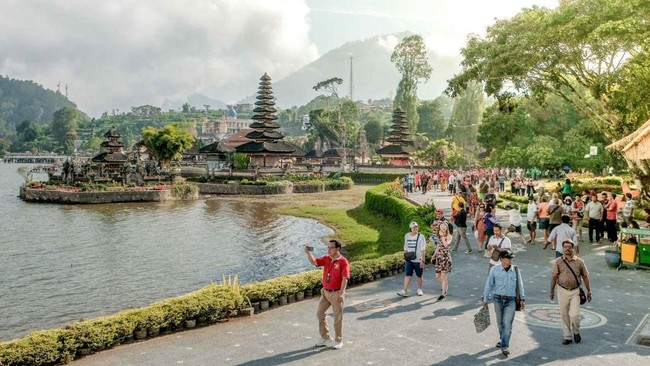
The issue of illegal lodging in tourist destinations has come under spotlight amid the surge in foreign tourists to Indonesia. To date, the proliferation of unlicensed accommodations is still seen as a hindrance to the official hotel industry, particularly in Bali. Secretary General of the Indonesian Hotel and Restaurant Association (PHRI), Maulana Yusran, assesses that the root of the main problem is not at the central government level, but rather the weak supervision at the regional level. “The supervision issue is actually the domain of the regional government. When we talk about the integrated OSS at the centre, the issuance of business permits is indeed national, but the supervision of businesses in the area is the responsibility of the district and city governments,” Maulana told CNBC Indonesia on Thursday (7/5/2026). PHRI views that the increase in tourist visits should be proportional to the rise in hotel occupancy and regional revenue. However, this has not yet occurred because many tourists choose to stay in non-formal accommodations. “Many tourists choose to stay in boarding houses, residential homes, or other accommodations that are rampant there. That ultimately does not contribute to the hotel business or regional own-source revenue,” he said. On the other hand, local governments are seen as the most interested party because the hotel and restaurant sector has a significant contribution to Regional Own-Source Revenue (PAD). That situation makes supervision a top priority. “The increase in visits should be followed by an increase in occupancy. All businesses must contribute to PAD and employment absorption. But why do illegal accommodations still emerge? That becomes a big question,” he stated. Regional autonomy has given significant authority to district and city governments to manage and supervise business activities in their respective areas. Therefore, the issue of illegal accommodations cannot continually be shifted to the central government. Maulana also highlighted the many regional agencies that actually have supervision authority, from the tourism office, spatial planning, to the environment. However, coordination between agencies is deemed not yet effective. “If asked who has the responsibility, it’s the second-level regional government. They who enjoy the PAD, they also must carry out supervision in their respective areas,” he emphasised. PHRI assesses that cracking down on illegal accommodations is not just about licensing administration. Further, the situation impacts the quality of tourist destinations, spatial planning, and potential social and environmental damage. According to Maulana, quality tourist destinations can only be created if all business actors operate according to the rules and provide real economic impacts to the surrounding community. “If we talk about quality destinations, the businesses must be orderly, spatial planning correct, employment absorption clear. But if the second-level regions are not serious about that, it will be difficult,” he said. “The issue of illegal accommodations is the easiest to crack down on by district and city governments. The Ministry of Tourism also cannot do anything significant if the second-level regional governments are not aggressive,” Maulana stated.