
Hotel Occupancy Drops During Holiday-Return Season, Here's the Reason
Indonesia’s hotel sector performance in March 2026 showed monthly pressure. The room occupancy rate (TPK) or occupancy for star-rated hotels declined, in line with changes in public travel patterns during Ramadan through to Eid al-Fitr.
Statistics Indonesia (BPS) recorded the TPK or occupancy for star-classified hotels in March 2026 at 42.78%. This figure fell 2.11 points month-to-month, but still rose 9.22 points year-on-year. Notably, for Eid al-Fitr and Nyepi holidays in 2026, both fell in March.
“TPK for star-classified hotels in March 2026 reached 42.78%, a monthly decline of 2.11 percentage points. Meanwhile, the annual TPK rose by 9.22 percentage points,” stated Deputy for Distribution and Services Statistics at BPS, Ateng Hartono, during a press conference on Monday (4/5/2026).
This decline reflects weakening hotel occupancy in the short term, though annual figures still indicate recovery.
Spatially, the decline occurred in most regions of Indonesia. Compared to the previous period, only a small portion of areas still recorded occupancy increases.
“For TPK of star hotels in February and March 2026, most provinces experienced a decline in star hotel TPK in March 2026 compared to the previous year,” he said.
BPS noted that only 12 provinces saw an increase in star hotel TPK.
“Looking at it, only 12 provinces experienced an increase in star hotel TPK,” he added.
Although nationally weakening, several areas still recorded high occupancy. West Kalimantan became the province with the highest star hotel occupancy rate.
“The highest TPK for star-classified hotels was recorded in West Kalimantan province at 55.78%, followed by Bali at 52.54% and South Papua at 47.76%,” he explained.
These figures show that certain destinations remain pillars of the national hospitality sector, particularly areas with ongoing economic and tourism activities.
Holiday Season, Returnees Do Not Stay in Hotels
BPS stated that the TPK or hotel occupancy decline is inseparable from seasonal factors. The momentum of Ramadan, Eid al-Fitr, and Nyepi significantly altered public travel patterns.
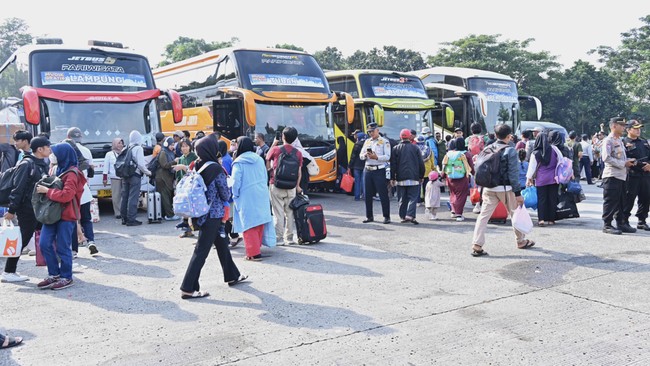
“The decline in star hotel TPK figures is generally influenced by the moments of Ramadan, Eid al-Fitr, and Nyepi, where travellers returning home tend to stay at relatives’ homes during those moments,” he clarified.
This led to reduced demand for hotel rooms, especially during the peak return period.
Star Hotels Still Higher Than Non-Star
Amid the decline, BPS also recorded that star hotel occupancy rates remained higher than non-star hotels in nearly all provinces.
“Star hotel TPK is generally higher than non-star hotel TPK,” Ateng noted.
Nationally, the average non-star hotel TPK was around 23.47%.