
Hostilities in the Middle East disrupt aid delivery
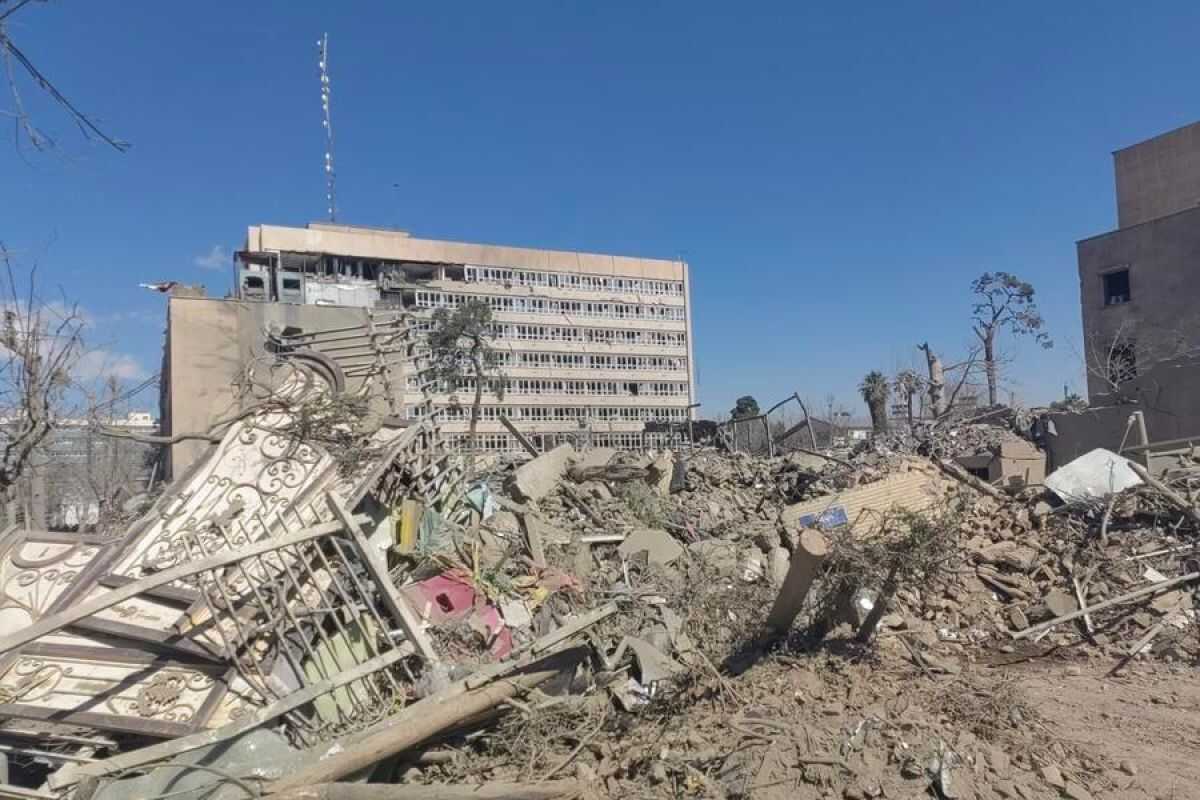
UN (ANTARA) - Falling debris from missiles and drones, restricted airspace, and hostilities are driving up civilian casualties, damaging infrastructure, and disrupting a range of essential services in the Middle East, the United Nations humanitarian agency said on Tuesday (3/3).
The humanitarian operations across the region have been severely affected by insecurity, disrupted supply chains, and airspace closures, said the United Nations Office for the Coordination of Humanitarian Affairs (OCHA).
OCHA stated that in Iran, local authorities and the Iranian Red Crescent Society reported attacks launched since Saturday (28 February) affected more than 1,000 locations, resulting in around 790 deaths and nearly 750 injuries. Several attacks were reported to have struck densely populated residential areas, indicating damage to civilian infrastructure.
Stephane Dujarric, the UN Secretary‑General Antonio Guterres’ principal spokesperson, told reporters at a routine briefing on Monday (2/3) that Guterres is monitoring the situation with deep concern.
“He is very worried about the emergence of multiple new fronts. We are also witnessing an increase in civilian casualties and severe humanitarian impacts on the well‑being of people across the region,” he said.
Dujarric said that ongoing attacks on energy infrastructure in the Gulf could have a dramatic impact on the global economy, which remains heavily dependent on fossil fuels.
According to the spokesperson, Guterres assessed activity along the Blue Line between Israel and Lebanon, overseen by UN peacekeepers in the area, the United Nations Interim Force in Lebanon (UNIFIL), as highly concerning.
“In the last two days, our UNIFIL peacekeepers have recorded dozens of rockets and missiles fired at Israel claimed by Hizbullah, as well as several air strikes and shooting incidents from south of the Blue Line by Israel into Lebanon,” Dujarric said.
Despite the worsening situation in the region, OCHA said Israeli authorities reopened the Kerem Shalom/Karem Abu Salem border crossing on Tuesday to allow the entry of 500,000 litres of fuel and humanitarian aid arriving via Israel and Egypt.
OCHA said around 300,000 litres of fuel per day are required to sustain Gaza’s vital humanitarian operations, so it is crucial that fuel supplies continue to enter consistently until a long-term solution to power Gaza is secured. The Rafah and Zikim crossings remain closed, and international humanitarian staff rotations remain paused.
In the West Bank, OCHA said Israeli forces continue to close most checkpoints, severely restricting the freedom of movement of Palestinians and their ability to access services and livelihoods. This also affects the ability of humanitarian partners to deliver aid and carry out their operations.
OCHA stated that on Monday, Israeli settlers killed two residents and wounded three other Palestinians when they stormed the village of Qaryut in Nablus.
“The humanitarian impact of the escalating violence in the Middle East is increasingly worrying,” said Tom Fletcher, the UN under‑secretary‑general for humanitarian affairs and emergency relief coordinator.
Fletcher said OCHA is scaling up operations at locations of need and enabling, activating contingency plans across Iran and the region, including Lebanon, the occupied Palestinian territories, Syria, and Yemen.
“The limitations of the presence of international non‑governmental organisations and the operating space in Iran make the challenges there greater,” Fletcher said in a statement released in New York on Tuesday.
“Respect for international humanitarian law is once again being tested and eroded. Every time civilian infrastructure is hit, access is restricted, and aid is politicised, the space for humanitarian action narrows, making it increasingly difficult to reach the communities we serve,” he added.