
Hospital Clarifies Controversy Over Husband Admitting Wife to Psychiatric Hospital; Medical Records Cannot Be Disclosed
Jakarta — The controversy surrounding a woman with the initials EO, who was allegedly forcibly admitted to a psychiatric hospital by her husband in West Jakarta, has finally come to light following the hospital’s clarification.
The case went viral on social media after the woman’s mother recorded her daughter restrained on a hospital bed and claimed that her child had no mental health disorder.
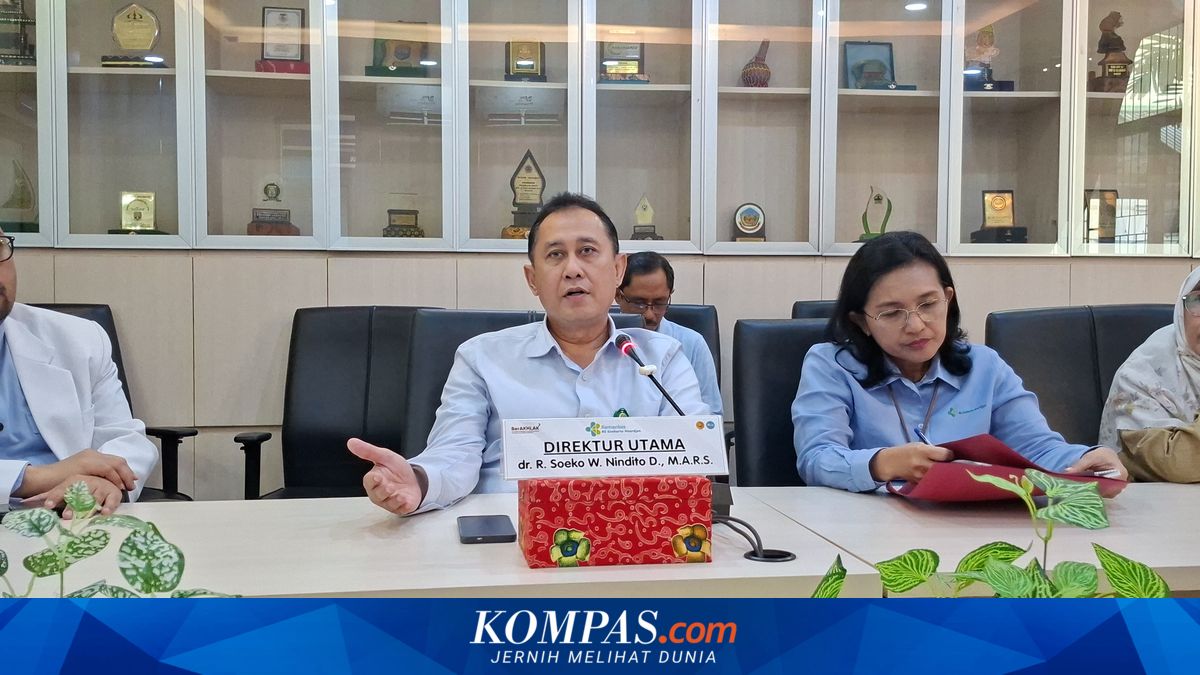
In response to the controversy, the management of Soeharto Heerdjan Hospital (RSSH) held a press conference on Monday (9 March 2026) to provide clarification.
The patient arrived at the emergency department on 31 January 2026 at the family’s own initiative. “Ms EO, whose video went viral, came to Soeharto Heerdjan Hospital accompanied by her husband, her father, and with knowledge of her mother,” said Soeko during the press conference at RSSH on Monday.
EO was initially taken to another hospital. However, due to the lack of mental health treatment facilities there, she was referred to RSSH.
Upon arrival at the emergency department, a psychiatrist examined her and recommended inpatient hospitalisation. The decision for inpatient care was approved through informed consent signed by the family, specifically the husband.
Regarding the visitation restriction, the hospital stated that this was a request from the husband as the patient’s closest relative included in the informed consent. “We do not know what happened between the husband and the mother; I do not wish to enter that territory. However, there was indeed a statement during informed consent that the patient should preferably not be visited by her mother. Perhaps my assumption is that if she were to see her mother, it could trigger emotional distress in the patient,” explained Soeko.
Meanwhile, the restraint procedure was described as an emergency measure taken for the safety of the patient and medical staff. The patient reportedly displayed aggressive behaviour that posed a danger, including ramming furniture and nearly taking a fire extinguisher to use as a weapon.
“During the care process, there were incidents where the patient became agitated, damaged sofas, and then nearly grabbed a fire extinguisher (APAR) to use in that manner,” said Soeko.