
Hormuz Strait Crisis: Between Energy Resilience and the Net Zero Emission Promise
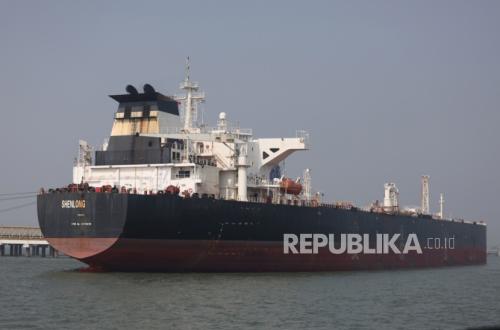
On 28 February 2026, the world witnessed an event that instantly altered the global energy risk map. The “Operation Epic Fury” launched by the United States and Israel against Iran transformed the Strait of Hormuz—a narrow 33-kilometre sea route connecting the Persian Gulf and the Gulf of Oman—into the hottest flashpoint in the world’s geopolitical landscape. Within hours, the pulse of global oil supply began to throb irregularly.
The Strait of Hormuz is no ordinary shipping lane. According to the International Energy Agency (IEA) in its March 2026 Oil Market Report, around 20 million barrels of oil flow through these waters daily. This figure is vital as it equates to 21 per cent of total world oil consumption.
The public can imagine that one in every five drops of oil consumed by the earth’s population must pass through this narrow funnel now shrouded in the smoke of armed conflict.
The commodity market’s response to this crisis was immediate and brutal. Brent crude oil prices, which were still in the $72–76 range per barrel at the start of January 2026, shot up sharply. On 1 March 2026—one day after the Strait of Hormuz was effectively closed—prices broke through $88 per barrel.
Two days later, panic swept through Asian markets, pushing prices to $98 per barrel, before the psychological $100 per barrel mark was surpassed on 5 March 2026. The crisis peaked on 9 March 2026 when Brent prices hit $119.50 per barrel, marking the highest level in the past four years.
Although diplomatic interventions and the release of strategic reserves by the IEA temporarily eased the panic, by 25 March 2026, oil prices were still hovering around $92 per barrel—still 18 to 22 dollars higher than pre-conflict levels. The wound in the global energy market has not yet healed.
For Indonesia, this alarm bell is not merely foreign news but a harsh slap to the national energy policy that has long ignored structural risks.