
Hormuz Hell: Only 5 Ships Dare Transit Under Missile Threat
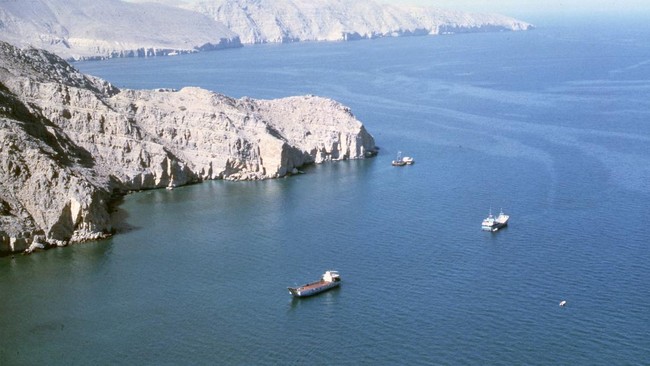
The latest conflict in the Middle East has jolted one of the world’s most crucial energy corridors. The Strait of Hormuz has abruptly transformed from the busiest oil trade route into a virtually empty passage.
Tanker vessels carrying crude oil, refined fuels, and liquefied natural gas have virtually halted transit following the commencement of military operations by the United States and Israel against Iran. According to The Economist, this tension has triggered a global energy shock that is immediately felt in the markets.
The strait has always been a challenging route for seafarers. The waterway is narrow, shallow, congested with traffic, and frequently obscured by dust haze. In a conflict situation, conditions become far more hazardous.
The barren mountains along Iran’s coast provide strategic positions for defence systems. Iran is reported to be preparing various maritime threats, including naval mines, fast attack craft, drones, as well as ballistic and cruise missiles capable of targeting vessels in shipping lanes.
US President Donald Trump has issued stern warnings to Iran, stating that military consequences would be severe if mines are actually deployed in the strait. According to Pentagon claims, 16 small vessels suspected of being used to lay mines have been destroyed by American forces. Washington also plans to provide military escorts for tanker convoys and help suppress soaring maritime insurance premiums.
This escorting measure echoes military operations from the 1980s during the Iran-Iraq War, when the United States conducted escort operations for Kuwaiti tankers to enable passage through the Gulf. However, the current situation is far more complex. Several European nations and Pakistan are beginning to consider sending their own escort vessels, whilst military convoy plans have not yet fully materialised.
The strategic value of this route is immense. More than a quarter of global seaborne oil exports pass through the Strait of Hormuz.
Unlike routes such as the Suez Canal, which have alternative pathways, energy carriers from the Gulf have virtually no other option but to transit the strait. The impact is evident at sea, with fully laden tankers piling up on the western side of the strait, whilst empty vessels wait on the eastern side.
Data from market intelligence firm Vortexa shows dramatic changes in vessel traffic. Before the war began on 28 February, an average of 46 tankers passed through the strait daily.
After the conflict commenced, the number fell to just five vessels or even fewer per day. Some ships continue to risk passage because of the potential for high profits, despite elevated attack risks.
Iran’s maritime threats are not isolated. The Houthi group in Yemen, allied with Tehran, has previously pressured global shipping lanes around Bab al-Mandab and the Red Sea. According to The Economist, low-cost drone and missile strikes from the group temporarily reduced vessel traffic on the route connecting the Red Sea and the Suez Canal. Maritime activity there has yet to fully recover.
Military analysts view geography as a determining factor in naval conflicts like this. Narrow regions such as the Strait of Hormuz provide advantages to those defending from land. Enemy vessels must approach the coastline, making them easier targets for missiles, drones, or fast attack craft.
The Economist reports that military researchers at various institutions assess that reopening the strait will not be straightforward. If Iran truly deploys mines, clearance operations must occur after missile, drone, and fast-attack threats are neutralised. Mine-sweeping vessels themselves are vulnerable to attack, whilst newer technologies using unmanned underwater vessels remain rarely tested in open warfare situations.
The impact on the global economy is already apparent. This route plays a critical role in worldwide energy flows. Even minor disruptions can trigger spikes in oil prices and vessel insurance premiums. Should tensions persist, the energy market risks suffering major shocks as supplies from the Persian Gulf struggle to reach international markets.