
Hormuz Crisis and Qatar's Helium Geoeconomics
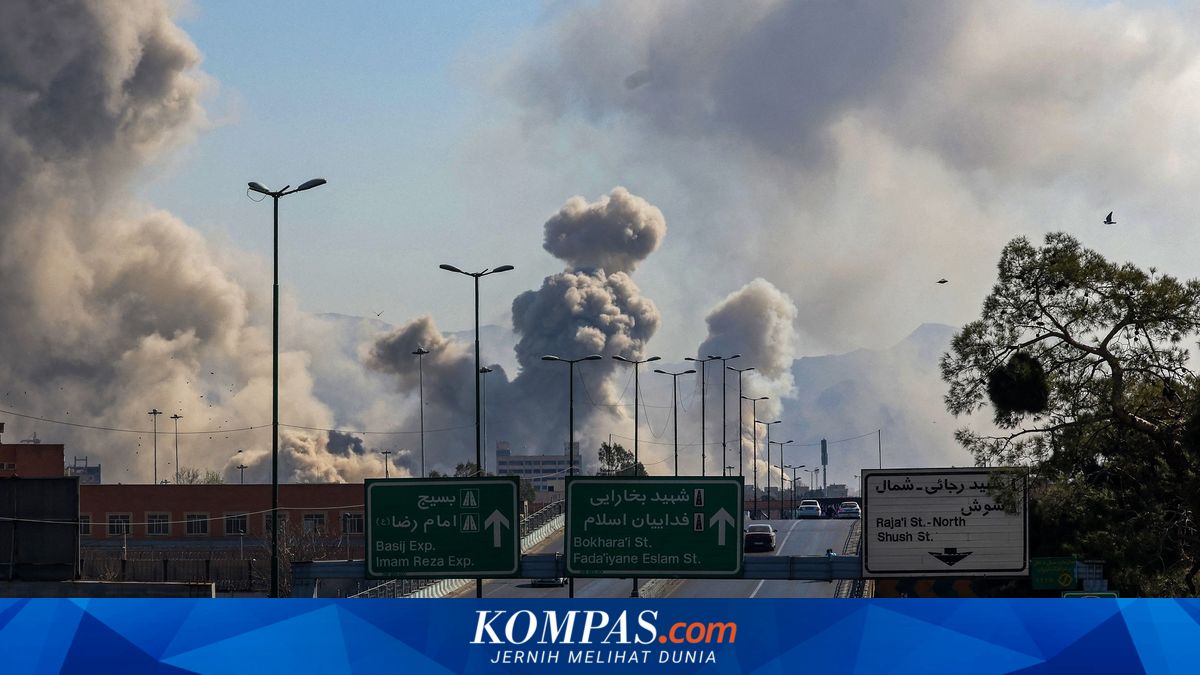
Geopolitics in the Middle East profoundly influences global economic performance in several respects. Consider, at the start of 2026, the narrative of conventional tensions between the US-Israel axis and Iran not only alarms the world regarding disruptions to oil and gas supplies but also interruptions to the vital pulse of modern technology that drives the digital civilisation. When Tehran realises its threat to blockade the Strait of Hormuz, the lifeline through which nearly a third of the world’s energy passes, international public attention immediately focuses on crude oil price charts. However, an equally fatal surprise emerges from a much lighter but more crucial commodity for the sustainability of high-tech industries: helium. Qatar, the natural gas giant, suddenly becomes the epicentre of the crisis after announcing force majeure status on all its helium export contracts. For the general public, helium may only be understood as the gas for filling hot air balloons or merely a substance that alters the voice. But for the semiconductor industry, helium is the “cold blood” that is absolutely necessary and has no technically equivalent substitute to date. Qatar controls around 33 per cent of the world’s helium supply, with production volumes reaching 63 to 64 million cubic metres per year. The importance of Qatar’s position lies not only in the size of its volume but in the integration of its production, which is inherent to Liquefied Natural Gas (LNG) processing. The most severe blow from this Qatar helium disruption will be directly felt by South Korea’s industry. The Land of Ginseng is not just an ordinary chip producer but holds absolute sovereignty over two-thirds or about 65-70 per cent of global memory chip production. Through the deadly duo of Samsung Electronics and SK Hynix, South Korea imports around 64.7 per cent of its helium needs directly from Qatar. When distribution routes at Ras Laffan halt and the Strait of Hormuz stops tanker traffic, South Korea’s memory industry practically enters emergency mode. Helium is required on a massive scale for cooling advanced lithography machines and heat management on silicon wafers. Without this gas, Extreme Ultraviolet (EUV) machines worth trillions of rupiah cannot operate stably due to the risk of excessive heat that would damage circuit precision. As a result, production speed will automatically slow dramatically, and product success rates (yield) will drop sharply. This is where the multiplier effect begins to work systematically. Memory chips are a basic commodity in the digital world, equivalent to wheat in the food industry. Disruptions in production in South Korea automatically become disruptions to the entire global technology supply.