
Honda Kicked Out by Chinese Cars, Early 2026 Sales Send Strong Signal
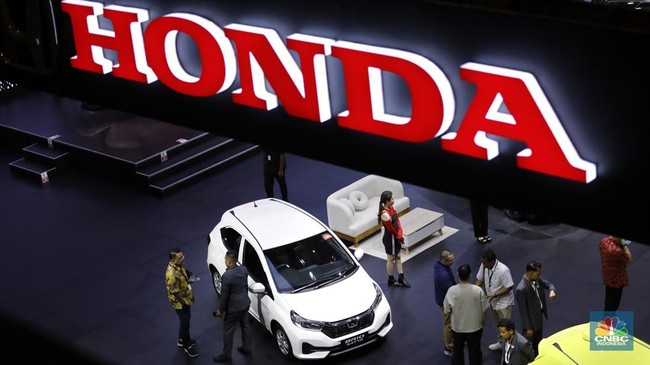
Honda’s sales performance in Indonesia is beginning to show increasingly evident pressure. While it managed to hold a top position or within the Big 5 alongside other Japanese brands throughout 2025, entering early 2026, its position is starting to erode, particularly due to the aggressiveness of new players like BYD.
Throughout 2025, Honda actually recorded relatively solid performance, though not dominant. In terms of wholesales (distribution from factory to dealers), Honda booked 56,500 units and ranked fifth nationally, behind Toyota (250,431 units), Daihatsu (130,677 units), Mitsubishi Motors (71,781 units), and Suzuki (66,345 units).
However, pressure is starting to be felt as the gap with competitors widens, while new entrants emerge behind. BYD, for instance, is closely trailing with 46,711 units, followed by Chery and Hyundai.
In terms of retail sales (sales to consumers), Honda’s position is even better. With 71,233 units, Honda occupies third place, behind Toyota (258,923 units) and Daihatsu (137,835 units), and still above Mitsubishi Motors (70,338 units) and Suzuki (64,838 units).
This means that throughout 2025, Honda still has a strong consumer base at the retail level, although wholesales distribution is starting to face pressure.
Entering 2026, signs of Honda’s weakening are becoming more apparent. Data from the first two months show Honda’s position beginning to be displaced by BYD, especially in wholesales.
In the January-February 2026 period, BYD recorded wholesales of 9,532 units or equivalent to 6.5% market share. This figure is slightly higher than Honda’s 9,401 units with a 6.4% share.
The difference is indeed slim, but it serves as an important signal: Honda, which was previously ahead, is now starting to be overtaken by the new player in a relatively short time.
In terms of retail sales, Honda still leads BYD. Honda recorded 8,921 units (6.1%), while BYD is at 6,112 units (4.2%). However, this gap is much smaller compared to previous conditions, indicating stronger pressure at the consumer level.
The entry of BYD and other Chinese brands is bringing significant changes to the competitive landscape. The products offered—particularly electric vehicles—are considered more competitive in terms of price, features, and technology.
On the other hand, Honda still relies on its conventional product line such as compact SUVs and MPVs, which now face market saturation and intense competition from various directions.
Additionally, shifting consumer preferences towards electrification give players more prepared in this segment a quicker advantage.
Early 2026 data serves as an alarm for Honda. If this trend continues, it is not impossible that Honda’s position in the top five wholesales will be increasingly threatened, especially with the aggressive expansion of new brands.
Nevertheless, Honda still has strengths in branding, consumer loyalty, and an extensive after-sales network. The current challenge is how to accelerate adaptation to market changes—both through electrification and fresher product strategies.
If not, the pressure starting to be felt in early 2026 could become a long-term trend that alters Honda’s position in the national automotive industry.