
Honda Dealers Closing Down, Automotive Bosses Starting to Embrace Chinese Cars
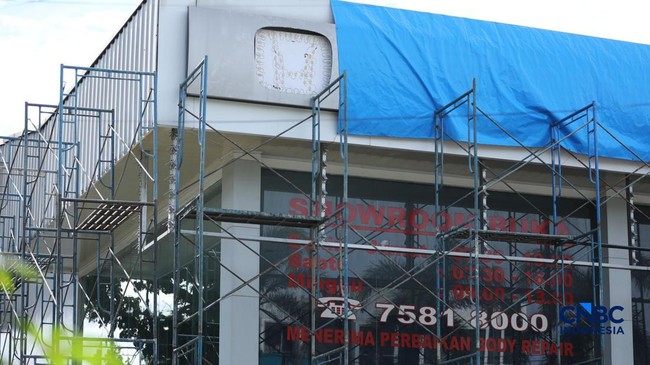
The phenomenon of Japanese car dealerships, such as Honda, closing and converting into showrooms for Chinese brands is increasingly common in major Indonesian cities. This shift is not merely a fleeting trend but a signal of changes in the national automotive business structure.
Automotive expert from Bandung Institute of Technology (ITB), Yannes Martinus Pasaribu, assesses that this dynamic cannot be separated from the fundamental nature of the dealership business model in Indonesia, which is based on local investment. Decisions by dealership owners are more driven by business considerations than loyalty to a specific brand.
“The widespread closure of Japanese brand dealerships, which then transform into Chinese car dealership networks in various cities, is actually rooted in the pragmatic reality of the dealership business model itself, where they are franchise entities owned by local investors whose movements are purely dictated by calculations of profitability and smooth cash flow,” he told CNBC Indonesia on Thursday (9/4/2026).
This business direction change occurs when market conditions begin to shift and no longer provide optimal benefits for business players. In such conditions, investors tend to take quick steps to ensure the sustainability of their businesses.
“When Japanese manufacturers’ products start experiencing a decline in showroom traffic due to their reluctance to aggressively compete in the BEV segment and maintaining high prices with outdated features,” he said.
Currently, the appeal of Chinese brands lies not only in the products but also in the cooperation schemes offered to dealers. Financial factors are one of the main drivers of this transition.
“These dealership entrepreneurs rationally choose to switch business partners to welcome offers from Chinese brands that dare to provide much higher profit margins per unit, massive subsidies for showroom renovation costs, and supplies of advanced technology products that can instantly satisfy the curiosity of middle-class consumers for modern mobility at prices that disrupt the market,” he concluded.
This landscape change serves as a strong signal that competition in the automotive industry is no longer determined solely by brand reputation, but also by business flexibility and the ability to quickly read market directions.
Meanwhile, starting this April, the Honda dealership in Pondok Pinang, South Jakarta, has officially closed. Sales & Marketing and After Sales Director of PT Honda Prospect Motor (HPM), Yusak Billy, claims that changes in the dealer network are a normal occurrence in the ever-dynamic automotive industry.
“We understand that adjusting the dealer network is part of the changing dynamics of the automotive industry. For Honda, the most important thing is to ensure that every consumer still receives easily accessible, fast, and reliable service,” Billy told CNBC Indonesia on Thursday (9/4/2026).
Amid news of several dealers halting operations, Honda is instead changing its approach. Rather than chasing the number of networks alone, the company now emphasises service quality and coverage effectiveness in each region.
“As we have stated previously, our focus is not only on the number of dealers, but on the quality of the network and coverage effectiveness in every area. We want to ensure that every existing dealer network remains strong, relevant, and able to provide optimal service to consumers,” he said.