
Homeless Media Goes Viral on Social Media: Here's How It Differs from Other Media
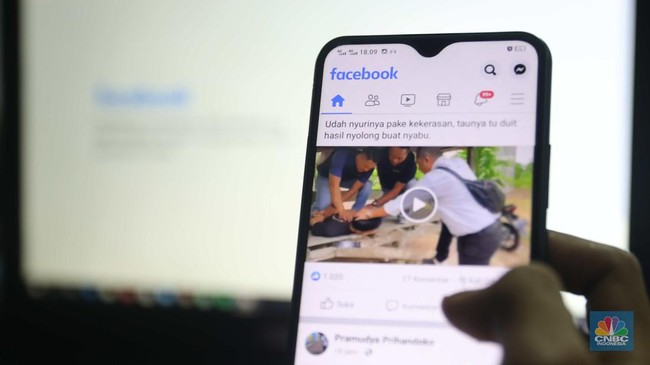
Jakarta, CNBC Indonesia - Discussions about homeless media are currently buzzing among netizens. This follows the Indonesian Communication Agency (Bakom) releasing a list of homeless media entities that are members of the Indonesia New Media Forum (INMF) as partners in the national digital media ecosystem.
Bakom Head Muhammad Qodari stated that these new media players were previously known as homeless media. These homeless media have now transformed into new media.
“The New Media Forum is a collaborative platform for several new media players. Previously, they were known as homeless media, but they have strived to transform into new media,” Qodari said during a press conference at the Bakom office in Central Jakarta.
So, what is homeless media?
According to Remotivi research, homeless media refers to news outlets that initially distribute information only through social media, mostly based on Instagram or other social platforms.
Unlike conventional media, homeless media do not operate with a clear editorial structure or correction mechanisms.
Remotivi’s research indicates that homeless media are generally run informally, with only a few employees.
Citing Paramadina University, due to lacking an editorial team, homeless media bring several contradictions. They operate without layered verification, without correction obligations, and without accountability.
Misinformation is also a key concern for homeless media audiences.
“Because they prioritise speed of delivery and high engagement, they are vulnerable to reposting incorrect information,” states Remotivi’s research titled Understanding Homeless Media, quoted on Friday (8/5/2026).
Another key finding from Remotivi, USAID, and Internews research is that homeless media operators fund their organisations through paid support, such as promotions for local commercial places, hotels, restaurants, cafes, events, and so on.
Unlike conventional media, the vulnerability of homeless media, which are not protected by the Press Law and often have limited understanding of the law, also needs attention.
Pioneers of homeless media
The homeless media business model was pioneered by several entities that later evolved into large companies. Here are some examples:
BuzzFeed
BuzzFeed is the most legendary example of the success of the homeless media strategy.
Initially, BuzzFeed did not aim to drive audiences to their website. They focused on creating listicle and quiz content designed specifically for direct sharing on Facebook and Pinterest.
BuzzFeed later developed into a global media conglomerate with dedicated divisions like BuzzFeed News that operate like traditional media. At its peak, BuzzFeed reached a market capitalisation of US$1.7 billion on the NASDAQ stock exchange.
LADBible Group
Headquartered in the UK, LADBible is one of the most successful social media companies.
LADBible started as just a Facebook Page in 2012 for uploading memes and funny videos. They did not have a traditional editorial team initially.
This Facebook account grew into the LBG Media Group, which now owns several major brands (such as UNILAD and SPORTbible). In 2021, the company listed on the London Stock Exchange with a valuation of around 360 million pounds.
Brut
Brut is a French media company that has become a news benchmark for Gen Z worldwide.
Brut was deliberately founded as a media without a website. All its content consists of square-format videos with text (subtitles) optimised for Facebook, Instagram, and TikTok.
Brut expanded to the US, India, and across Europe. They have raised over US$150 million in funding and are now the most-watched media on social networks in Europe.
Why has the homeless media model succeeded globally?
Based on several sources, here are the differences between homeless media and traditional media: