
Homecomers Complain of Limited Seating and Heat at Pasar Senen Station
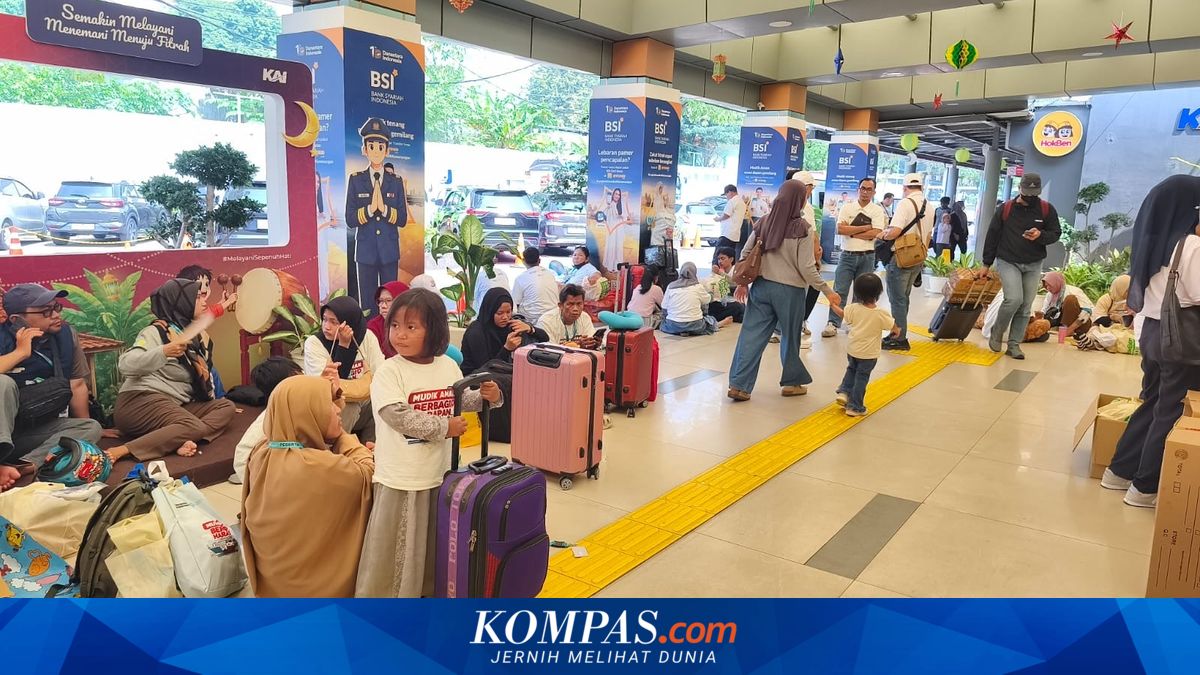
JAKARTA, KOMPAS.com - Several homecomers have complained about the conditions in the waiting area at Pasar Senen Station in Central Jakarta, which they deem inadequate on the day before Eid (H-1 Lebaran), Friday (20/3/2026).
The density of passengers has left many of them without seats and waiting in hot conditions due to limited cooling facilities in the room.
One homecomer bound for Semarang, Novi (27), said that the station’s waiting room felt uncomfortable because the number of chairs was limited compared to the number of passengers.
“There are so many people queuing up, and many who don’t get a seat to wait,” Novi told Kompas.com on Friday.
According to Novi, the situation is quite challenging, especially for passengers who arrive early to wait for their train departure schedule.
In addition to the seating issue, she also complained about the stifling hot air in the station area, suspected to be due to a lack of cooling machines in the outdoor waiting area.
“It feels really hot; the AC is only inside. Maybe they could add more waiting space or seats to make it more adequate,” said Novi.
Nurul (20), a homecomer from South Jakarta heading to Kutoarjo, experienced similar conditions.
Since arriving at the station and finding no empty seats, she and her family had to spread out a mat and sit on the departure area floor.
“We ended up sitting on the floor because it’s completely full, no empty chairs,” said Nurul.
Observations at the location showed passenger density at several strategic points, especially in the waiting room and departure gates.
Many passengers were seen sitting on the floor or standing while waiting for the call to board their respective trains, in line with the increased volume of departures on H-1 Lebaran.
In response to the complaints, Manager of Public Relations for KAI’s Daop 1 Jakarta, Franoto Wibowo, stated that the capacity of seats available in the waiting room at Pasar Senen Station is actually still considered sufficient. According to his data, there are around 1,800 waiting seats provided for prospective passengers.
“Based on the frequency and interval between one train and the next, it is sufficient,” explained Franoto.