
Home Affairs Ministry Prepares Strategy as Many Regions Face Corruption Risks
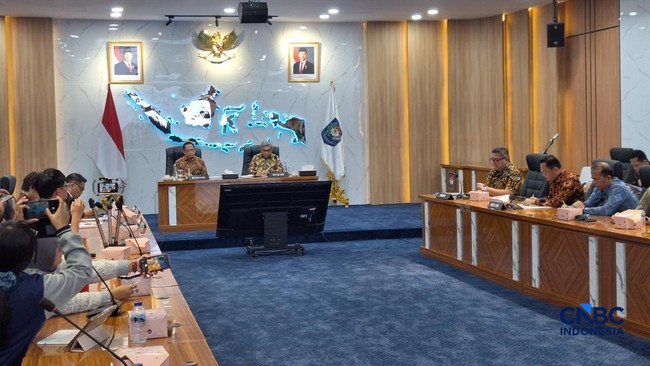
Jakarta, CNBC Indonesia – The Ministry of Home Affairs is collaborating with the Corruption Eradication Commission (KPK) to prevent acts of corruption across the regions. This step is specifically aimed at preventing corrupt practices in local governments.
Minister of Home Affairs Tito Karnavian explained that there are a number of points vulnerable to corruption. These include earmarked programmes, misaligned budget proposals, and projects created without genuine need. In addition, the procurement of goods and services, as well as unjustified budget reallocations, are also corruption-prone areas.
Further vulnerabilities include rigged winner selection, package splitting, and irregular self-estimated prices (HPS). Other weak points include fictitious work, volume reductions, and improper addenda.
In the payment area, vulnerable points include payments made before work is completed and invalid supporting evidence. In the area of civil servant (ASN) management, there are the buying and selling of positions and transfers based on personal proximity. Regarding permits, vulnerabilities include speed bribes, unofficial levies, and interference in spatial planning. There are also tax and levy leakages and database manipulation.
In the area of Regional Owned Assets (BMD), regional owned enterprises (BUMD/BLUD), and grants, vulnerabilities include asset takeover by other parties, utilisation without contributions, affiliated transactions, interference by administrators in procurement, invalid recipients, political interests, and fictitious accountability. To prevent these potential vulnerabilities, eight areas have been identified as the focus of corruption prevention efforts.
“Starting with planning and budgeting, procurement of goods and services, public services, permits, oversight by the Government Internal Supervisory Apparatus (APIP), then also governance, ASN management, the issue of positions, management of regional owned assets, tax and levy issues, and gratuities,” Tito said at a press conference with the leadership of the KPK on Friday (24/7/2026).
In addition, there are several areas of particular concern: the management of regional owned assets, regional owned enterprises, regional public service agencies, social assistance grants, Pokir (regional legislative budget proposals), regional parliament (DPRD), and village funds.
The Ministry of Home Affairs will collaborate with the KPK to provide education to regional heads and their deputies, DPRD chairpersons, DPRD members, regional secretaries, and regional apparatus. The education will be delivered across ten regional clusters.
“It will be followed by two or three provinces, and will be held at the governor’s office, at the provincial service offices, with the host province designated as the organiser,” said Tito.
According to Tito, the programme is planned to take place next week or from August onwards. The first regions to host it will be East Java and Bali.
“The activities will focus on the corruption-prone areas mentioned earlier. The Ministry of Home Affairs and the KPK will develop the materials, map the regions and their risks, prepare resource persons, and formulate the corrective steps that regional governments must take,” he concluded.