
Home Affairs Minister States SIMPEG System to Monitor Civil Servants Working from Home: If They're Out and About, It'll Be Detected
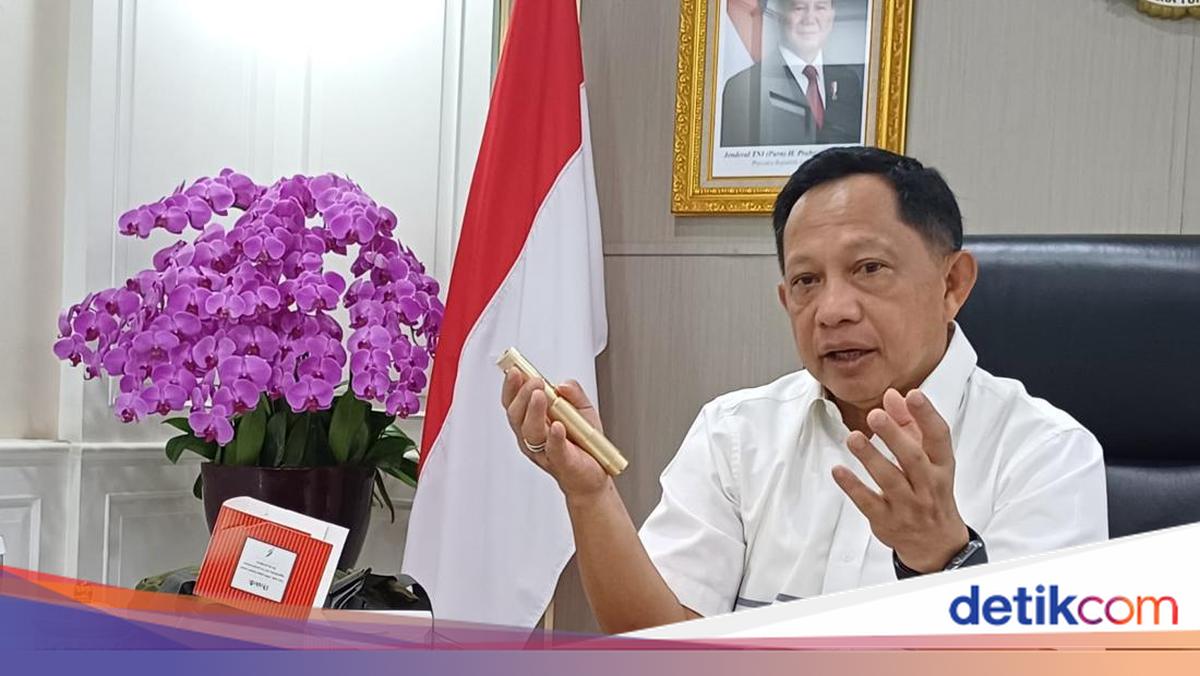
Home Affairs Minister Tito Karnavian has emphasised that the proposal to implement one day of work from home (WFH) per week will not hinder government services. He noted that the government has prior experience with such arrangements during the COVID-19 outbreak.
“No problem for me. I’m confident it won’t be an issue, as this isn’t our first experience. During the COVID era, WFH was implemented, with work from office (WFO) sometimes as low as 25%. The Home Affairs Ministry operated at 25% WFO and it ran smoothly. So, it’s nothing new; we have the experience,” Tito told reporters on Wednesday (25/3/2026).
Tito stated that his ministry will provide guidance to new regional heads if the scheme is approved by President Prabowo Subianto. He explained that for critical public services, WFH implementation will be adjusted, such as for public transportation and hospitals.
“No problem. Local governments also have plenty of experience. It’s just that some regions have new heads, so I’ll explain it to them. Essential matters like transportation, emergency services, hospitals, and cleanliness must continue to operate,” he said.
Furthermore, Tito highlighted that the government possesses the Employee Management Information System (SIMPEG). This mechanism, he clarified, can monitor whether civil servants are truly productive at home to reduce fuel consumption, rather than going out sightseeing.
“We can actually use the mechanisms from the COVID period. For example, turn off the lights first; don’t leave the office with lights and AC still on. Then, for attendance, there was a system called SIMPEG, the employee administration system,” Tito said.
“So, that’s to ensure employees are really working from home, that they’re at home, so they don’t go wandering around, which would only increase fuel use. During COVID, they were required to keep their mobile phones on,” he added.
Tito explained that the system will connect to detect employees’ locations via the GPS on their gadgets, which must be activated. This way, civil servants’ positions can be monitored during working hours.
“After that, they register; at 07:30, they do online attendance, and then their mobile phones must be on. From there, the on-duty officers can know their location; the GPS must be enabled. So, if their location shows they’re out and about, it’ll be detected. Perhaps one of the mechanisms we can use is the SIMPEG system,” he concluded.
Previously, Tito revealed that several coordinating ministers and technical ministers have agreed on the day for weekly WFH to save on fuel. He said the implementation of the WFH day is just awaiting a report to President Prabowo and an official announcement to the public.
Tito mentioned that the agreement was reached in a meeting involving Coordinating Minister for Political, Legal, and Security Affairs Pratikno, Coordinating Minister for the Economy Airlangga Hartarto, Cabinet Secretary Prasetyo Hadi, and Deputy Cabinet Secretary Teddy Indra Wijaya. The meeting discussed government measures to address potential crises stemming from the Middle East conflict.
“We had a meeting yesterday, lasting nearly 3 or 4 hours. But we agreed to speak with one voice, meaning whoever delivers it—I don’t know who—will announce it at the Palace. Whether it’s the Coordinating Minister for Political Affairs, the Coordinating Minister for the Economy, or the Cabinet Secretary. So, we just provide inputs, but I’m not authorised to communicate it to the public,” Tito said after a press conference on PHTC updates at the Presidential Palace Complex in Jakarta, on Wednesday (25/3).