
Home Affairs Minister Reveals Challenges in Building Permanent Housing for Sumatra Disaster Victims
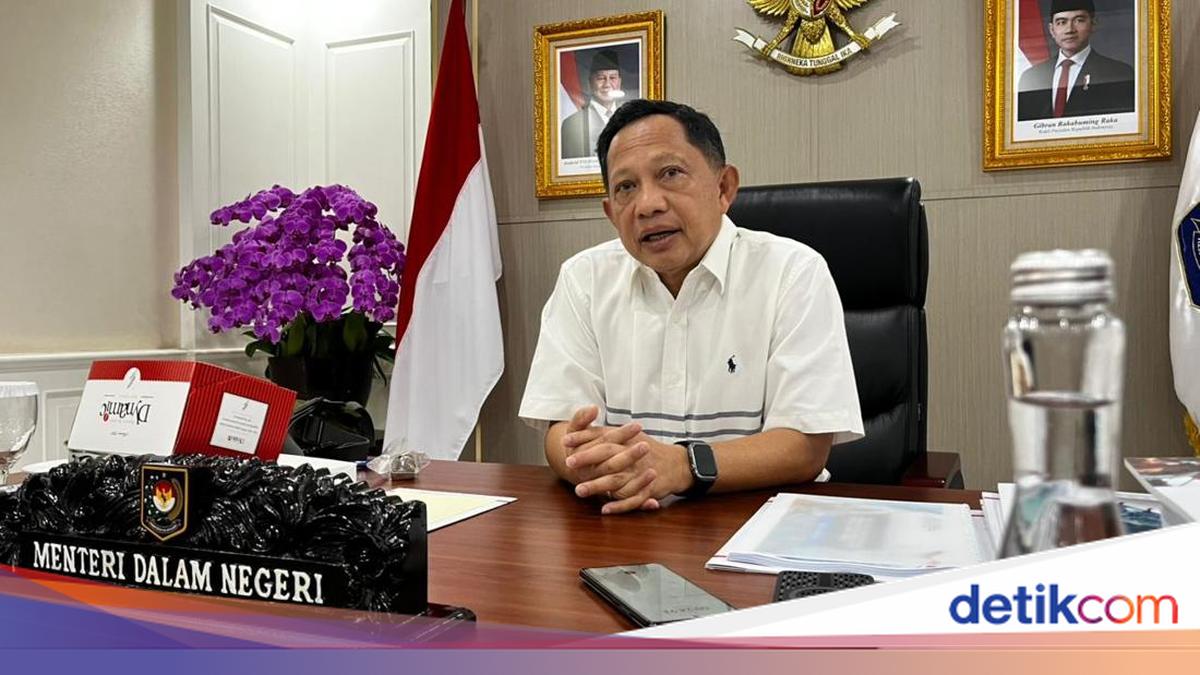
Home Affairs Minister (Mendagri) Tito Karnavian has revealed the challenges in building permanent housing (huntap) for disaster victims in the Sumatra region. He stated that the slow pace of data collection by local governments (pemda) is preventing construction from proceeding promptly.
“The issue with huntap, to be honest, I’ve already held multiple meetings with pemda,” Tito told reporters in the Senayan area, South Jakarta, on Monday (23/3/2026).
Tito explained that accelerating huntap construction heavily depends on the completeness of victim data compiled by pemda, particularly district and city governments. This data forms the basis for determining the housing construction scheme for affected residents.
“Pemda must visit directly (the residents) whose homes are severely damaged or lost, then ask for their choices, whether they want to build themselves with an index of Rp 60 million or have BNPB build it on their existing land,” Tito said.
“Or they want to relocate, with pemda preparing the land and the Minister of Housing and Settlement Areas (PKP) building communal complexes,” he continued.
He stated that many pemda have yet to complete this data collection. Meanwhile, the scale of disaster response in Sumatra is far more complex, covering 52 districts/cities.
Tito compared this situation to disaster handling in smaller areas, such as the recent Mount Lewotobi eruption in East Nusa Tenggara, which only affected a limited region.
“If this (Sumatra disaster) covers 52 districts/cities. So, data collection in one sub-district versus 52 districts/cities also has a high level of difficulty,” Tito remarked.
Therefore, he asked regional heads to form special task forces (satgas) to speed up the data collection process. Tito emphasised the importance of clarifying residents’ choices from the outset to avoid later changes that could delay construction.
Once data collection is complete, Tito continued, the Central Statistics Agency (BPS) will conduct verification to ensure aid reaches the right targets. This verification is necessary because huntap construction uses state budget funds.
“BPS must be absolutely certain that the recipients are residents whose homes are truly severely damaged or lost,” Tito said.
After the validation process is finished, huntap construction will be executed by the National Disaster Management Agency (BNPB) for in-situ rebuilding. Meanwhile, communal housing construction will be handled by the Ministry of Housing and Settlement Areas (PKP).
“Or there might be special assignments, perhaps from the Ministry of Public Works (PU) or Danantara again for speed,” he added.
On the other hand, Tito noted that the number of refugees in tents has seen a significant decline. From an initial around 2.1 million people, now only about 173 people or 47 households remain.
“From over 2 million refugees at the beginning of December, now only about 173 people left. This has decreased very significantly,” Tito said.
The government provides two schemes for affected residents: temporary housing (huntara) or housing waiting funds (DTH) of Rp 600,000 per month for three months. In line with that, Tito assured that the government will continue to accelerate permanent housing construction as well as repairs to basic infrastructure in priority areas.