
Home Affairs Minister: Post-Disaster Refugees in Sumatra Drop Significantly
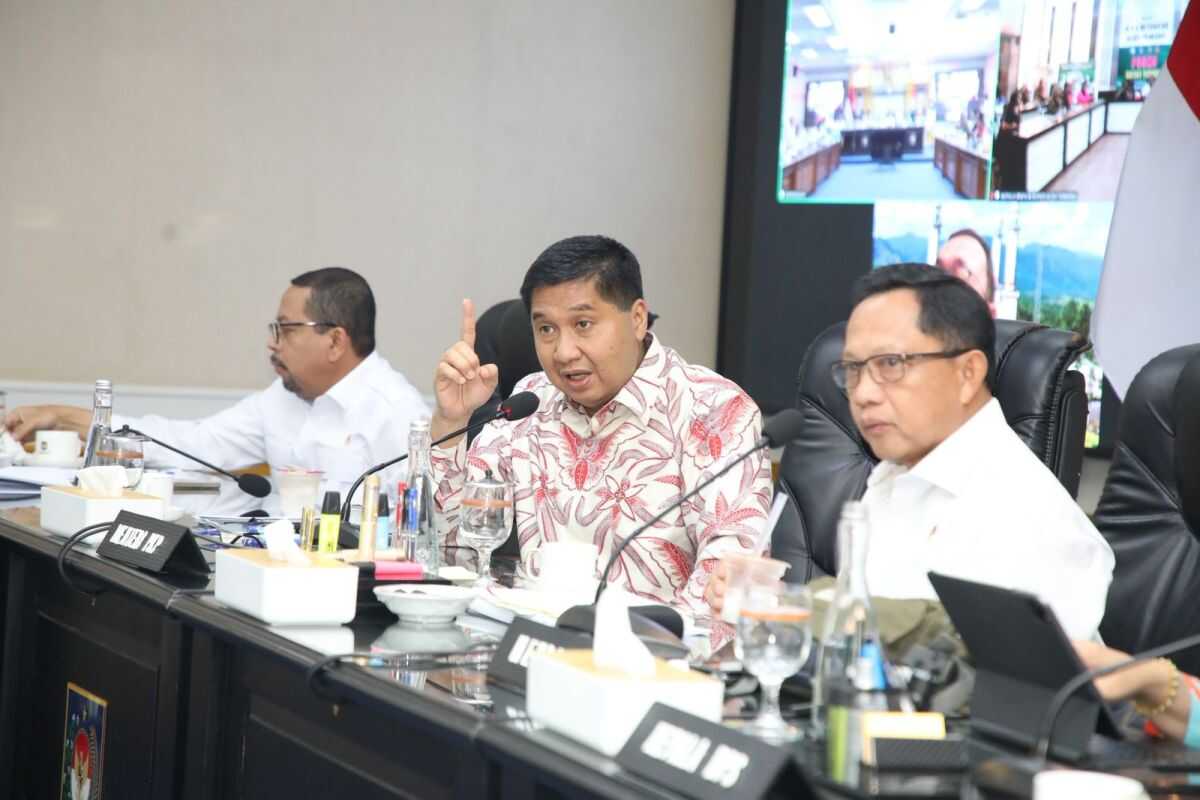
Jakarta – Indonesia’s Home Affairs Minister Tito Karnavian, serving as head of the Task Force for Accelerating Post-Disaster Reconstruction and Rehabilitation (PRR) in the Sumatran region, has announced that the number of post-disaster refugees in Sumatra has dropped significantly.
According to data from the National Disaster Management Agency (BNPB) as of 25 February 2026, the number of refugees across three provinces has fallen dramatically from the original 2,108,582 to just 11,250 people. The remaining refugees are distributed as follows: 10,400 in Aceh Province and 850 in North Sumatra Province (Sumut).
“In West Sumatra Province, thank goodness there are no more refugees in our records. There are no longer any refugees in tents – everyone has been relocated to temporary housing,” Tito stated during a press briefing in Jakarta on Friday.
Tito made the announcement during a ministerial coordination meeting of the Post-Natural Disaster Rehabilitation and Reconstruction Task Force in the Sumatran region, held at the Ministry of Human Development and Culture office in Jakarta.
During the meeting, he reported that five villages across two provinces require restructuring due to disaster impact. These comprise three villages in Aceh Province and two villages in North Sumatra. West Sumatra requires no village restructuring.
Tito also reported that of 52 affected districts and cities, 38 have returned to normal conditions. Additionally, three districts and cities are approaching normalcy, whilst 11 still require special attention.
Tito explained that indicators of regional normalcy are determined by several variables, including governance, public services, land access, economy, social conditions, and basic infrastructure including petrol stations, electricity, water supply systems, internet, LPG gas, waste management facilities, waste banks, and river normalisation.
“Previously there was also the issue of rice fields, plantations, and aquaculture that were affected,” he added.
During the forum, he praised ministries, agencies, and local governments for their cooperation in promoting post-disaster recovery. He confirmed that reconstruction and rehabilitation efforts currently show positive progress, particularly regarding fully functional road access, restored electricity supply for communities, and petrol stations operating normally.
“If markets are all functioning, roads are working, but small and medium enterprises are not yet fully optimal. We still have tasks including sludge removal, bridge repairs, village roads, and areas we need to complete,” Tito said.
The meeting was also attended by the Minister of Human Development and Culture Pratikno, Minister of Political and Security Affairs Djamari Chaniago, Minister of Infrastructure and Regional Development Agus Harimurti Yudhoyono, Minister of Community Empowerment Muhaimin Iskandar, and representatives from relevant ministries, agencies, and local governments.