
Home Affairs Minister Explains Regional Approach for Local Government Awards
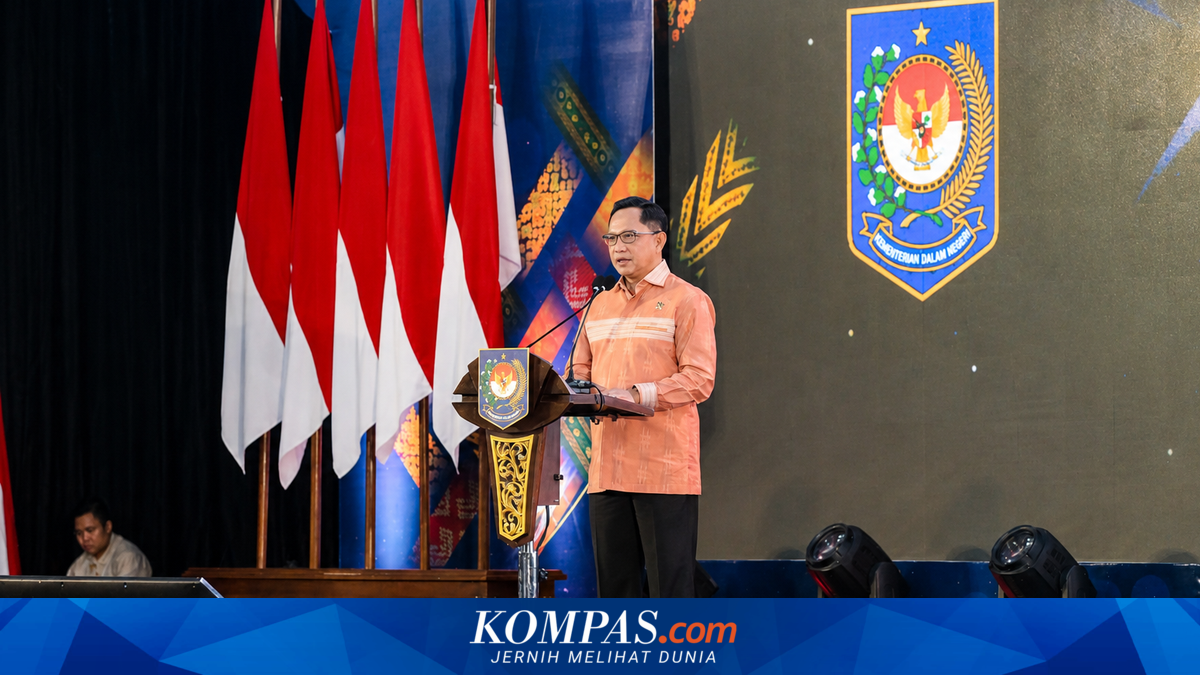
The Ministry of Home Affairs, in collaboration with Kompas.com, held the 2026 Outstanding Local Government Awards Regional Sulawesi in Kendari, Southeast Sulawesi, on Friday, 29 May 2026. The event serves as a platform to recognise high-performing local governments and is part of the ministry’s efforts to foster fairer inter-regional competition.
Home Affairs Minister Muhammad Tito Karnavian explained that the regional scheme was adopted to prevent areas with limited fiscal capacity from competing directly with larger regions with stronger budgets. “If judged nationally, winners would typically be large cities or regencies. Smaller regions could be at a disadvantage,” Tito stated in his speech.
Tito cited examples where regions with limited budgets would struggle to compete against larger regencies or cities with significantly higher Regional Revenue and Expenditure Budgets (APBD). Therefore, the ministry divided the awards into regional categories. For the Sulawesi region, competition occurs among local governments within Sulawesi. “The competition is among Sulawesi’s governors, regents, and mayors,” Tito said.
The 2026 Outstanding Local Government Awards Regional Sulawesi theme was “Boosting Regional Economies and Reducing Stunting”. The event features 28 award nominations across four categories. The four categories are unemployment reduction, creative financing, inflation control, and poverty alleviation and stunting reduction.
According to Tito, these categories were selected as their achievements can be measured quantitatively, ensuring regional performance assessments are based on data rather than claims alone. He noted that assessments for unemployment reduction, poverty and stunting control, and inflation are based on data from the Central Statistics Agency (BPS). “What we compete on are quantifiable metrics. Issues like unemployment, poverty, and inflation cannot be faked; the data comes from BPS,” Tito said.
Meanwhile, the creative financing category is assessed based on regions’ ability to generate and increase their regional original revenue (PAD). Tito stated that this category’s evaluation uses data from the Ministry of Home Affairs’ Directorate General of Regional Finance and the Regional Government Information System (SIPD). He emphasised that a data-driven approach is necessary to maintain award objectivity and confirmed he was unaware of which regions would receive awards beforehand.