
Home Affairs Minister Confirms Sumatra Disaster Recovery Enters Permanent Recovery Phase, Rp100.1 Trillion Budget Allocated
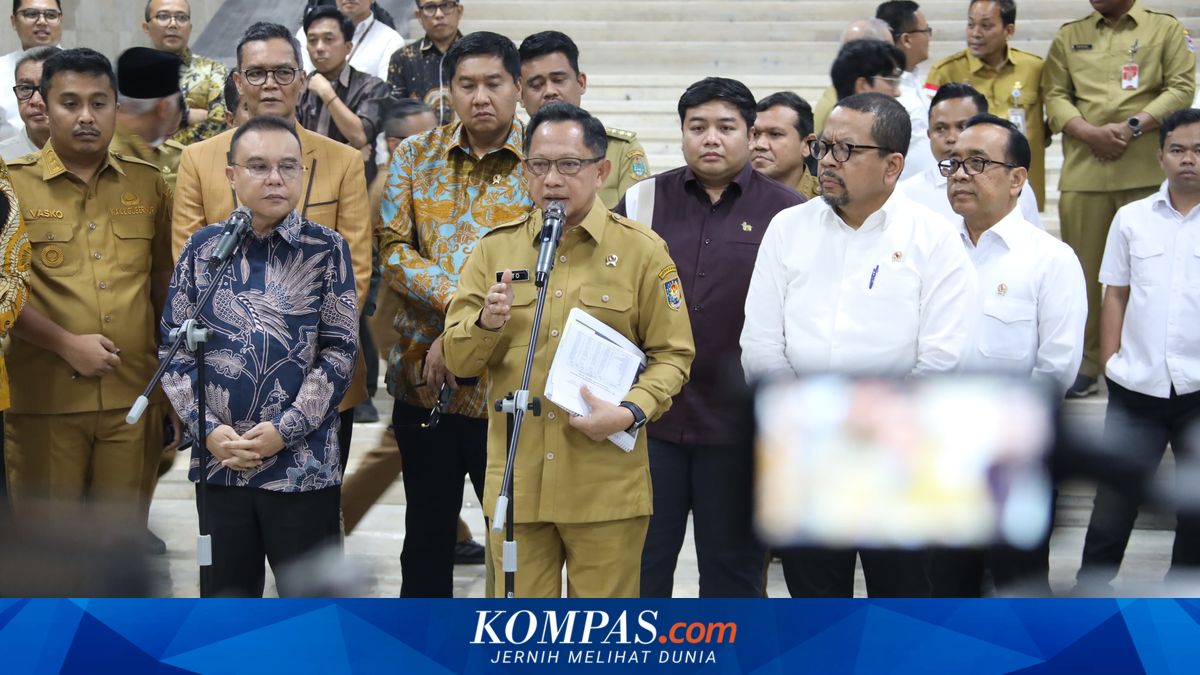
Home Affairs Minister Muhammad Tito Karnavian, as Chair of the Task Force for Accelerated Disaster Recovery and Reconstruction (PRR) in Sumatra, confirmed that disaster management in three Sumatran provinces has entered the permanent recovery phase, also known as rehabilitation and reconstruction (rehab rekon).
He made the statement following a Coordination Meeting with the House of Representatives’ Disaster Recovery Task Force at the Parliament Complex in Senayan, Jakarta, on Monday, 25 May 2026.
During the meeting, Tito outlined the progress of disaster management and the government’s plan to draft a master plan (renduk) for accelerated rehab and rekon in affected areas.
“I am reporting two things: first, the current situation update; second, what we will do next, particularly the approval of the master plan for accelerated rehab and rekon in the three Sumatran provinces,” he said.
Tito explained that disaster management is carried out in three phases: emergency response, transitional phase, and permanent recovery.
The former Police Chief of Indonesia (Kapolri) noted that government services in affected areas have resumed. Local government activities at district, sub-district, and village levels, which were previously disrupted, are gradually returning to normal, although some affected communities remain in temporary housing (huntara) or using the Housing Wait Fund (DTH).
Additionally, essential services such as electricity, fuel (BBM), petrol stations (SPBU), internet, hospitals, and health clinics (puskesmas) have resumed operations.
However, the government still faces challenges in some isolated villages due to landslide-affected roads. While some bridges remain temporary, using Bailey bridges, suspension bridges, and other emergency structures.
In the education sector, most affected schools have resumed classes. Of the 4,922 damaged schools, approximately 3,800 have been repaired and reopened. Meanwhile, schools in red zones still require relocation or emergency classrooms.