
Home Affairs Deputy Minister Stresses Integrity Training as Foundation of Public Service
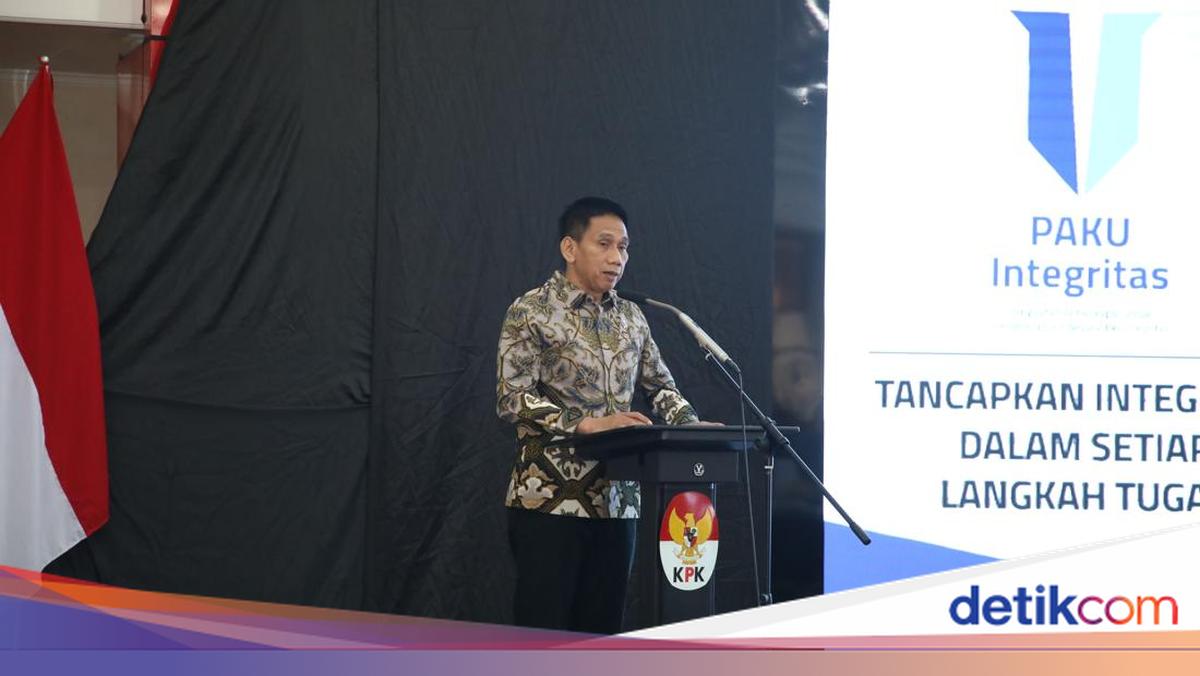
Deputy Minister of Home Affairs (Wamendagri), Akhmad Wiyagus, has asserted that the Anti-Corruption Strengthening Training for State Administrators with Integrity (PAKU Integritas) is not merely a legal matter, but is closely linked to public service. According to him, integrity is the main foundation for achieving the organisational goals expected collectively. Wiyagus made this statement whilst representing the Minister of Home Affairs (Mendagri), Muhammad Tito Karnavian, at the 2026 PAKU Integritas event themed ‘Embedding Integrity in Every Step of Duty’ at the Graha Makarti Bhakti Nagari Building, the Training and Education Centre of the National Institute of Public Administration (LAN). ‘In that context, PAKU Integritas becomes very relevant for preventing corruption, and this must not only be understood as a legal matter. Corruption prevention is a matter of public service, a matter of development, a matter of public trust, and a matter of the region’s future,’ Wiyagus said in a statement on Thursday. He continued that PAKU Integritas is not just a ceremonial forum that has been running for several years. More than that, PAKU Integritas is expected to be truly comprehended, understood, and implemented in the administration of regional government. According to him, the most important thing is how integrity is reflected in actual work. Integrity is also visible when programmes are structured based on the needs of the community, thereby reducing corrupt practices in public service. ‘In terms of corruption cases, the sector also touches many sectors that are very close to the community, such as state finances, infrastructure, law enforcement, bureaucracy, health, social assistance, food aid, fisheries, natural resources, energy, and other sectors,’ he revealed. Wiyagus explained that PAKU Integritas is closely related to efforts to build good governance. If governance runs well, the benefits will be enormous for the community. Conversely, if governance is weak, it is not just administration that suffers, but also public service. Therefore, regional governments must not only be busy with procedural matters. Wiyagus stated that regional governments must ensure that every policy, every programme, and every rupiah of the Regional Revenue and Expenditure Budget (APBD) truly works and that the benefits are felt by the people. ‘This has a very strategic value for state administration that is truly of high quality. It can then also become a hope for the people, especially in public service as stipulated in Law 23 of 2014,’ he said. He also advised regional governments to utilise the Regional Government Information System (SIPD) as a more effective instrument for preventing corruption. According to him, SIPD is not just an application for viewing data, but also an instrument of governance. SIPD helps ensure that regional money does not move without direction. In addition, regional governments also need to strengthen cooperation with the Government Internal Supervisory Apparatus (APIP) as a control mechanism in realising regional governance with integrity. ‘Once again, (PAKU Integritas) is not just ceremonial, this truly becomes our shared commitment that in the future we must be better, and the administration of regional government can be carried out cleanly and with integrity,’ he concluded.